
How Much Does Insulation Removal & Replacement Cost in Menlo Park?
Our Insulation Removal & Replacement services in Menlo Park, CA typically run between $2,800 and $7,500 for a standard single-story home with an attic of 1,000 to 1,800 square feet. Most jobs we complete in Menlo Park neighborhoods like Allied Arts, Felton Gables, and the Sharon Heights corridor land around $4,200 to $5,600 when you include attic air sealing, vacuuming out degraded blown-in fiberglass, and installing fresh blown cellulose or loose-fill fiberglass to current California Title 24 standards. Homes with contaminated insulation from rodent activity or a moisture event will sit at the higher end of that range.
Insulation Removal & Replacement Cost Breakdown (2026)
Insulation removal and replacement in Menlo Park costs between $2,800 and $7,500 for most homes. The table below reflects what jobs actually cost in this market in 2026, based on the work we scope and price every week. Every line item below assumes a written, flat price before any work begins – that is Haven Standard Clause 1, not a sales tactic.
| Scope of Work | Typical Cost Range (Menlo Park, 2026) |
|---|---|
| Attic insulation removal only (vacuum, bag, haul) – up to 1,200 sq ft | $900 – $1,600 |
| Attic insulation removal only – 1,200 to 1,800 sq ft | $1,400 – $2,200 |
| Attic air sealing (top plates, can lights, penetrations) | $800 – $1,800 |
| Blown-in fiberglass or cellulose reinstall – up to 1,200 sq ft (R-38) | $900 – $1,500 |
| Blown-in fiberglass or cellulose reinstall – 1,200 to 1,800 sq ft (R-38) | $1,300 – $2,200 |
| Spray foam at attic penetrations and rim joists | $400 – $900 |
| Radiant barrier installation (foil, staple-up method) | $600 – $1,200 |
| Rodent proofing and attic sanitation (added to removal scope) | $350 – $900 |
| Crawl space insulation removal and replacement | $1,800 – $4,200 |
| Full attic removal, air seal, and reinstall – 1,500 sq ft home | $3,800 – $6,400 |
Those ranges are not estimates of estimates. They are what jobs cost in Menlo Park when we pull permits where required, source materials from Owens Corning, GreenFiber, Knauf, and Johns Manville, and complete a blower-door test – a pressurization reading that shows, in one number, how much air your building envelope is losing – before and after the air sealing phase. Some contractors quote removal and reinstall without ever mentioning air sealing. That is why so many Menlo Park homeowners call us after spending $3,000 somewhere else and still seeing the same utility bills.
What pushes a job toward the high end of these ranges is almost always one of four things: unusually deep contamination from rodent activity (common in homes backing up to the Baylands or the Creek corridor near Flood Park), spray foam that a previous contractor applied directly over unsealed penetrations (which means more labor to cut it out cleanly), a very tight attic with low clearance that slows the crew down, or a combination of attic and crawl space work in the same mobilization.
What Affects Insulation Removal & Replacement Pricing in Menlo Park
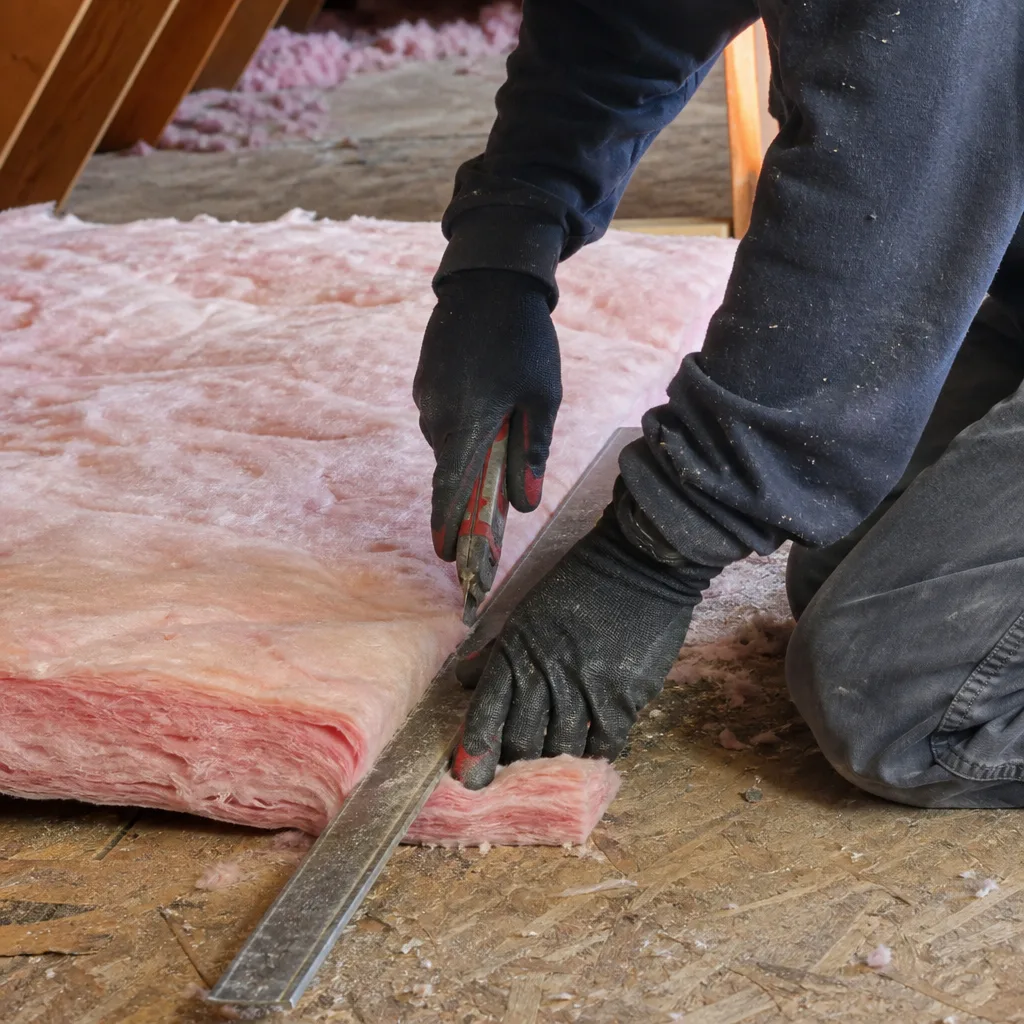
Six factors drive most of the price variation we see on jobs across Menlo Park. None of them are mysterious – once you know what they are, you can read any bid more clearly.
- Attic size and access. A 1,000-square-foot attic in a post-war ranch in the Willows neighborhood costs measurably less to clear out than a 1,800-square-foot attic in a two-story on Valparaiso Avenue with three separate attic hatches. More square footage means more vacuum time, more bag volume, and more haul-away weight.
- Type and condition of existing insulation. Degraded blown fiberglass that has settled to R-9 or less is the most common situation we find in Menlo Park homes built between 1955 and 1985. Old vermiculite (which may contain asbestiform minerals and requires testing before any disturbance) and wet or mold-affected batt insulation both add remediation steps that change the cost profile significantly. If asbestos testing is needed, budget an additional $200 to $400 for a third-party test before removal begins.
- Rodent contamination level. Homes near the Baylands, along Atherton Creek, and backing to open space in the Linfield Oaks area see higher rates of rodent-damaged insulation than homes in denser, sealed neighborhoods like downtown Menlo Park. When droppings, nesting material, and urine saturation are present, the insulation cannot simply be vacuumed out – it must be treated as a biohazard removal, which adds labor, PPE, and disposal costs.
- Whether air sealing is included. This is the line item most often dropped by contractors trying to win a bid on price. At Envelope Insulation Co., operating as Topside Attic Insulation Menlo Park, we treat air sealing as a prerequisite, not an add-on. Sealing top plates, can-light penetrations, and plumbing and electrical chases before insulation goes in is the only way the new insulation can perform at its rated R-value. Skipping it is the single most common reason a replacement job underperforms. The cost of air sealing is $800 to $1,800 for a typical Menlo Park attic – and the performance difference is measurable on a blower-door test.
- Material choice for reinstallation. GreenFiber cellulose, Knauf blown-in fiberglass, and Owens Corning EcoTouch batts each price slightly differently per square foot. Cellulose is generally the most cost-effective material for achieving R-38 in a standard attic, and it carries a higher recycled content. Spray foam from Icynene or Demilec at specific penetration points adds cost but permanently stops air movement at those locations in a way that blown-in material cannot.
- Local permit requirements. San Mateo County and the City of Menlo Park do not always require a permit for like-for-like insulation replacement, but permits are typically required when the scope includes structural modifications, when work is tied to a solar installation, or when the job is part of a broader Title 24 compliance project. We confirm the permit requirement for every job before a price is written. If a permit is needed, the fee is included in the written scope – no surprises on the day of inspection.
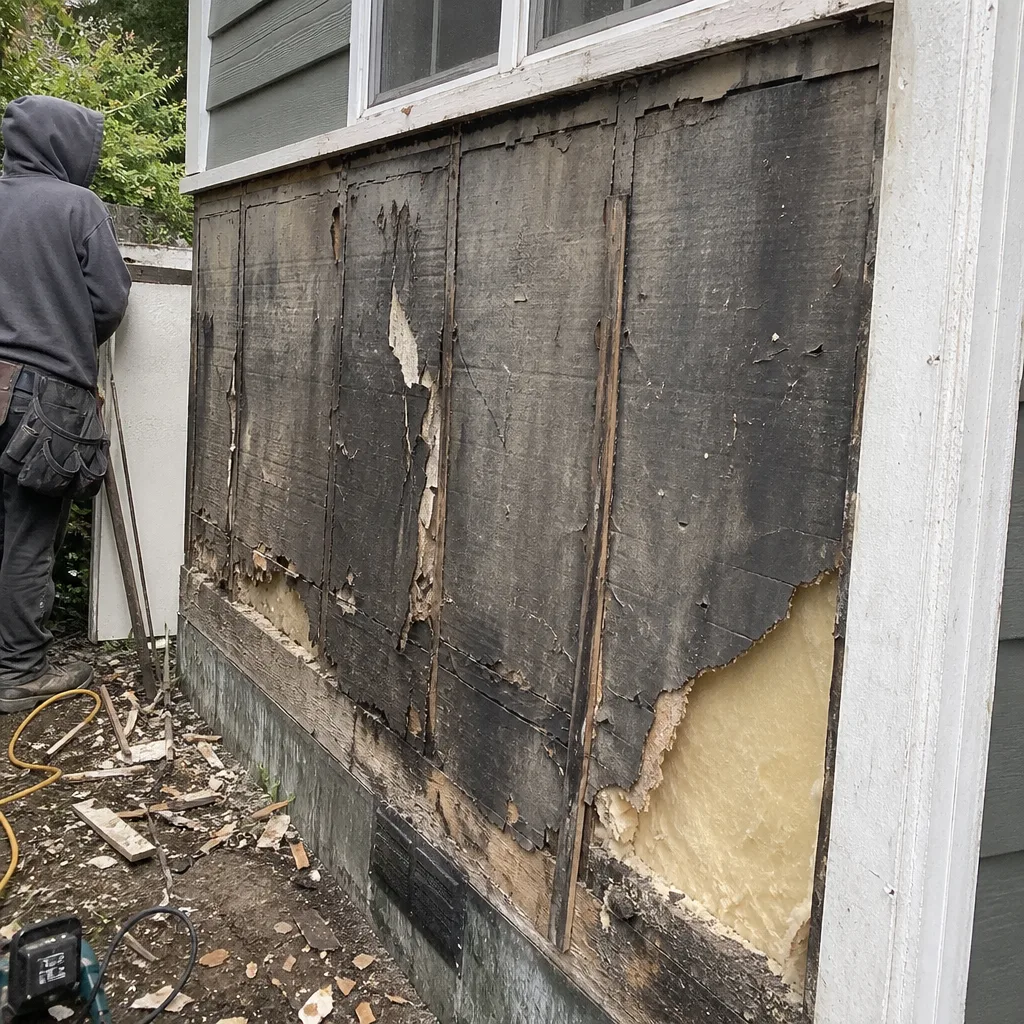 Before
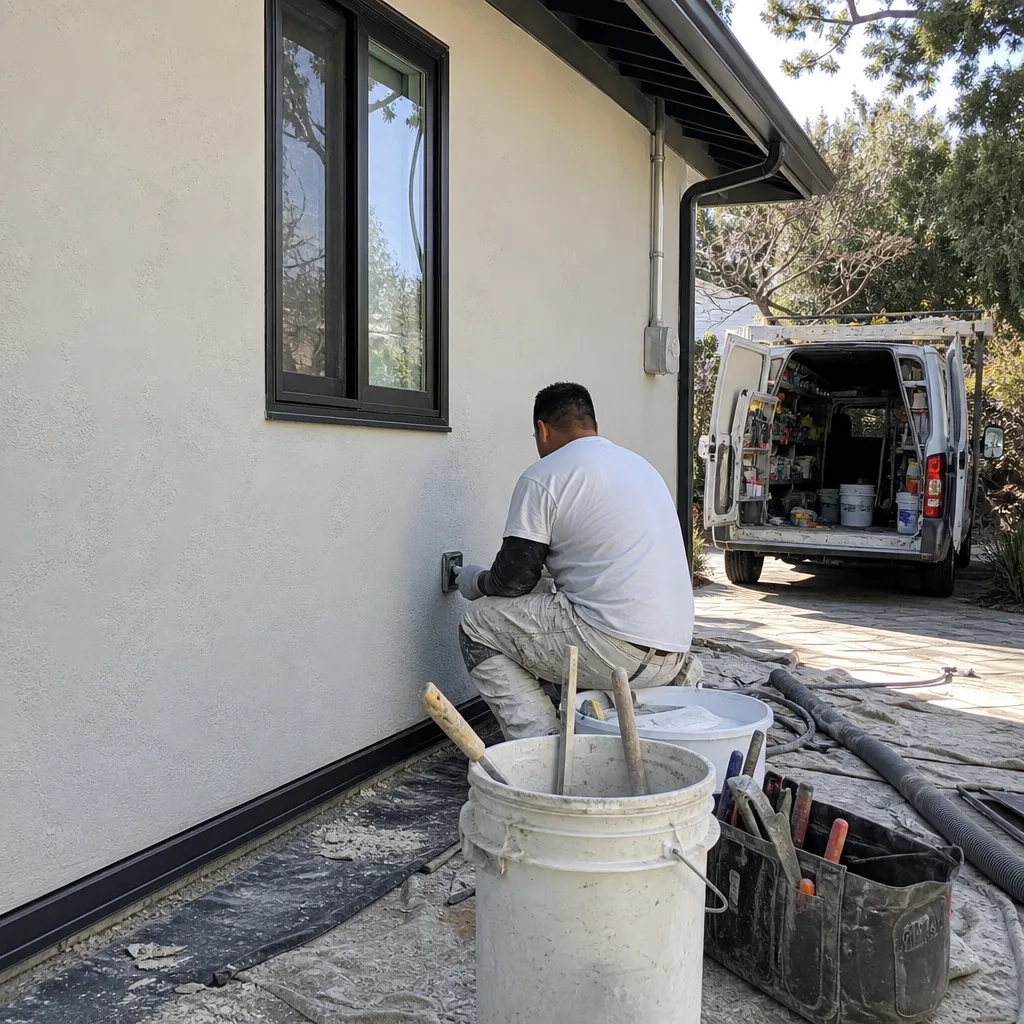 After
AfterThe Air Sealing Step That Most Quotes Leave Out
A blower-door test measures air infiltration in a single number: CFM50, or cubic feet per minute at 50 pascals of pressure. To put that in terms that translate to a utility bill, a Menlo Park home reading 3,800 CFM50 before sealing is exchanging roughly 40 to 60 percent of its conditioned air with the outdoors through gaps in the building envelope – most of them in the attic floor.
We run this test on applicable jobs before any work starts and again after air sealing is complete. A job we completed in the Suburban Park neighborhood in early 2025 read 3,600 CFM50 at the start. After sealing top plates, 14 can lights, and three plumbing chases, the post-seal reading was 1,950 CFM50. That number went into the homeowner’s documentation alongside the before-and-after photos. It was not a feeling about how the work went. It was a measurement.
We mention this here because it directly affects the cost question on this page. A quote that excludes air sealing will almost always look cheaper at the estimate stage. It will not be cheaper over the life of the home. We will not write a price that omits this step, because we are not willing to install new insulation over an unsealed attic floor and call it done.
For more detail on what the full service includes, see our Insulation Removal & Replacement in Menlo Park service page.
How to Save on Insulation Removal & Replacement in Menlo Park
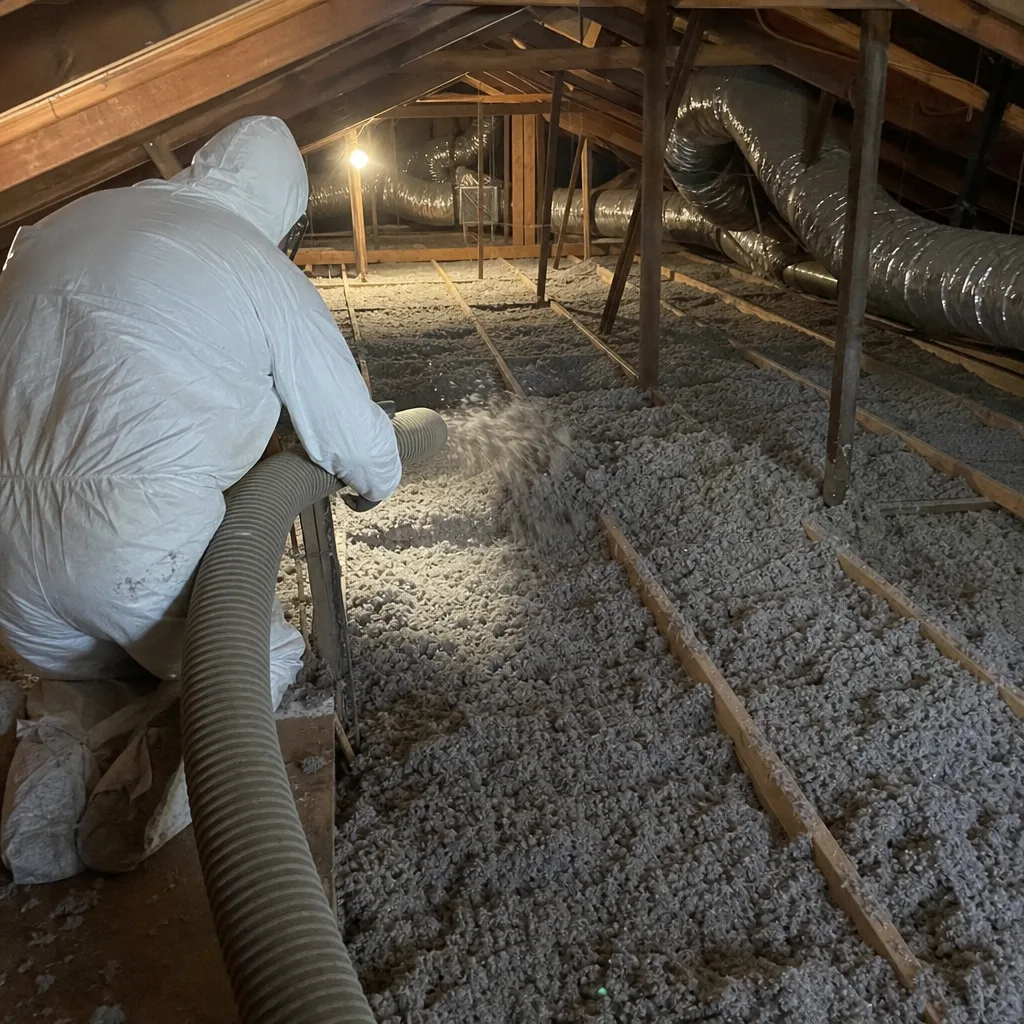
There are real ways to reduce the cost of this project without cutting the corners that actually matter. Here is what we tell homeowners who ask us this directly.
- Combine attic and crawl space work in one mobilization. If both spaces need attention – which is common in the older ranch homes in the Willows and Flood Triangle areas – scheduling them together saves two separate mobilization charges and often reduces total project cost by $400 to $900 compared to doing them separately.
- Apply for the PG&E or MCE rebate before the work starts. Menlo Park is served by both PG&E and Marin Clean Energy (MCE) depending on the block. Both utilities offer rebates for qualifying insulation upgrades, and MCE’s rebate program has in recent years covered $0.10 to $0.25 per square foot for blown-in attic insulation meeting certain R-value thresholds. The rebate paperwork must typically be submitted before or on the date of the installation, not after – confirm current rebate availability at the time you are scheduling. We help document the job in a format that supports the claim.
- Get a blower-door test included in the scope, not as an add-on. Some contractors charge $300 to $500 separately for a blower-door test. We include it as part of the documented record on applicable jobs. If you are comparing bids, ask whether the air-sealing result is verified by measurement or by assumption.
- Get a free second opinion on any written estimate you already have. Bring us any written quote from another contractor and we will read it with you – line by line – at no charge. This is a standing offer at Topside Attic Insulation Menlo Park, not a promotional window. What you often find is that two bids with different total prices are actually scoping different amounts of work, and the comparison only makes sense once you know what each contractor is and is not including.
- Do not delay if moisture or rodents are present. This is not urgency theatre. Wet insulation accelerates wood degradation in the sheathing and rafters. Rodent-contaminated insulation, if left in place through a wet winter, becomes harder and more expensive to remove. In Menlo Park’s Mediterranean climate, where October through March brings the bulk of annual rainfall, timing matters. A job that costs $4,200 in September may cost $5,400 in February if the moisture situation has progressed.
- Ask what the written scope covers, specifically. Under Haven Standard Clause 1, every price we write is a flat price with a written scope and a written warranty attached before anyone starts. If a competing quote does not specify the post-installation R-value, the disposal method, whether air sealing is included, and what the warranty covers, ask for that in writing before you sign. Vague scope is where most budget surprises come from.
To get a written price for your specific home, call (510) 876-4113. Estimates are free, and the price we give you on the call or on-site visit is the price that goes on the written scope. No adjustments after the fact.
What the Job Looks Like, Start to Finish
Because a lot of homeowners in Menlo Park have never had this work done before, it helps to know what to expect on the day – not as a sales pitch, but so the scope is clear before we show up.
We start with a written price. That happens before a crew is assigned. When a technician arrives, you will receive a text with their name and an estimated arrival window – this is Haven Standard: Arrive on schedule, you get a named technician and a text when they are on the way. The technician is uniformed and background-checked. There is no point during the job where a stranger is in your attic and you have no record of who they are.
The removal phase uses a high-powered insulation vacuum connected to a truck-mounted system. Bags are sealed and staged in the driveway, then loaded for haul-away. The attic floor is inspected and photographed after clearing. If rodent activity is found that was not visible during the initial assessment, that is documented and discussed with you before any additional scope is added – the written price for the original scope does not change unless you authorize an additional written scope for the additional work.
Air sealing follows. Top plates – the framing members where interior walls meet the attic floor – are sealed with fire-rated caulk or spray foam, depending on the gap size. Can lights are capped with fire-rated covers where code allows, or spray-foamed at the housing. Plumbing chases, electrical penetrations, and HVAC boots are addressed in the same pass. The blower-door test runs before and after this phase on applicable jobs. The before-and-after readings are included in the Documented Photo Record you receive at the end of the job.
Insulation installation is last. Material is blown to the depth required to hit R-38, which California Title 24 requires for attic insulation in Climate Zone 4 (Menlo Park’s classification). Depth rulers are photographed in place to document the installed R-value. The job does not close until those photos are in the record.
The 365-Day Done Right Promise applies from the day the crew leaves. If something is not right within that window, we make it right. That is in writing, not in marketing copy.
Menlo Park-Specific Considerations
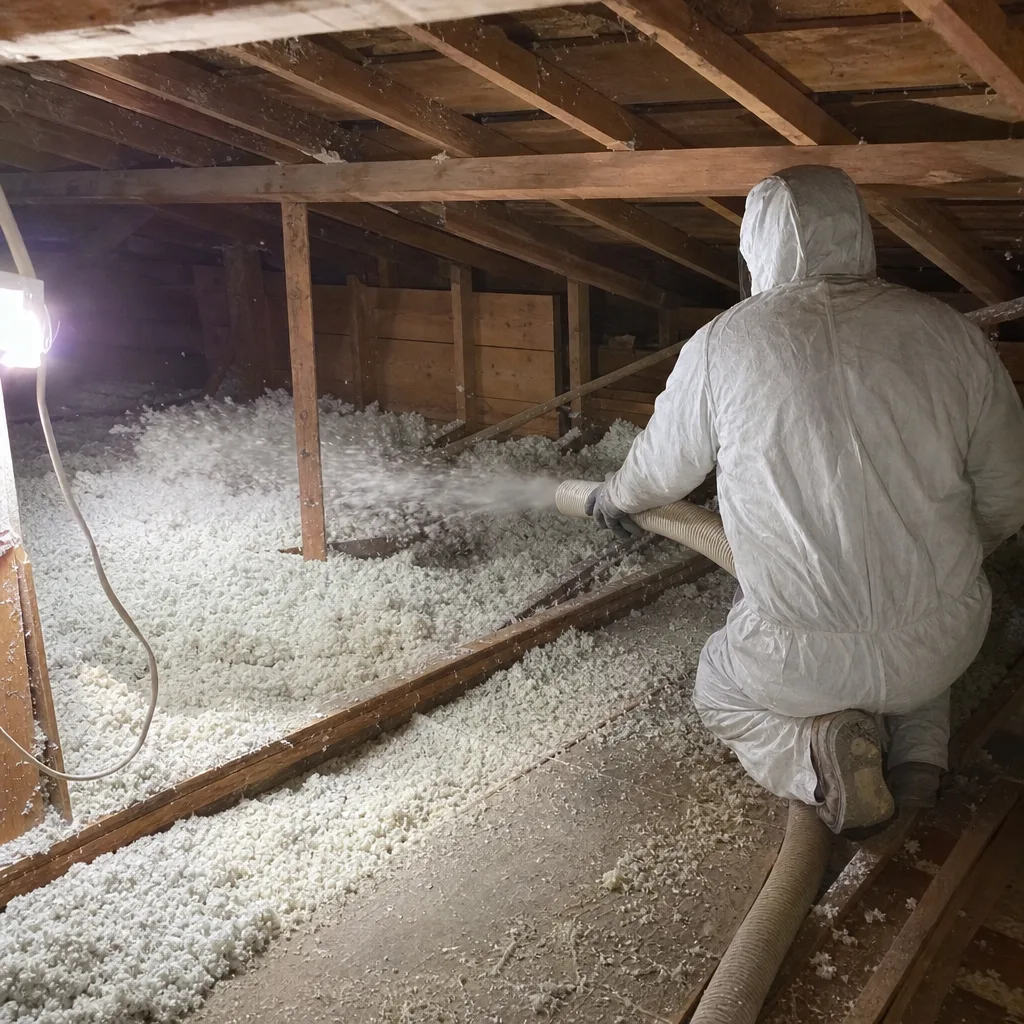
Menlo Park sits at the edge of the Bay, and the microclimates across its neighborhoods matter more than most homeowners realize when it comes to insulation performance.
Homes west of El Camino Real, particularly in the Allied Arts, Vintage Oaks, and Felton Gables neighborhoods, tend to sit on higher, drier ground. Attic moisture is less common here, but radiant heat gain through west-facing roof planes is significant in summer – which is why a significant number of the radiant barrier installations we complete in Menlo Park happen on homes in this part of the city. A foil radiant barrier installed at the rafter line reduces the radiant heat load on the attic floor insulation and can cut peak attic temperatures by 20 to 30 degrees Fahrenheit in July and August.
East of El Camino and south toward the Baylands – the Flood Triangle, Linfield Oaks, and areas adjacent to the Ravenswood Open Space Preserve – homes see more ground moisture, higher crawl space humidity, and more rodent pressure from the adjacent wetlands and creek corridors. In these neighborhoods, crawl space encapsulation paired with insulation replacement is almost always worth discussing in the same scope as the attic work. We see this combination regularly on homes in the 94025 zip code.
Homes in the Belle Haven neighborhood, east of Highway 101, often have a different construction vintage than the west-side ranch homes – more 1960s and 1970s construction, more original fiberglass batts that have settled significantly over the past 50 years, and in some cases original aluminum wiring that needs to be identified and photographed before any work in the attic proceeds. We document all of this in the photo record. We do not move or disturb aluminum wiring ourselves; we note it and recommend the homeowner have a licensed electrician review it before or alongside the insulation work.
Since 2016, Wes Okafor and the team at Envelope Insulation Co. have worked on more than 9,000 homes across the Bay Area, and a meaningful portion of those have been in San Mateo County. The patterns we see in Menlo Park attics are not theoretical – they are the result of repeated, documented work in this specific housing stock.
FAQs: Insulation Removal & Replacement Cost in Menlo Park
How much does insulation removal and replacement cost in Menlo Park?
Most full-scope insulation removal and replacement jobs in Menlo Park cost between $3,800 and $6,400 for a home with 1,200 to 1,800 square feet of attic space when the scope includes removal, air sealing, and reinstallation to R-38. Removal-only jobs without reinstallation run $900 to $2,200 depending on attic size. Call (510) 876-4113 for a written price on your specific home – the estimate is free and the written price is what you will pay.
Is it cheaper to repair existing insulation or replace it?
Topping off insulation that has settled costs $600 to $1,400 for a typical Menlo Park attic, compared to $3,800 to $6,400 for full removal and replacement. But topping off only makes sense when the existing material is dry, uncontaminated, and still structurally intact enough to provide a base layer. If the existing insulation has rodent damage, moisture absorption, or significant air gaps from settling, adding material on top of it does not solve the underlying problem – it buries it. We will tell you which situation applies to your attic and put both options in writing so you can compare them.
How long does insulation removal and replacement take in Menlo Park?
Most attic insulation removal and replacement jobs in Menlo Park are completed in one day. A larger home with both attic and crawl space work, or a heavily contaminated attic requiring extra sanitation steps, may run into a second day. We write the expected timeline into the scope so you know what to plan for before anyone shows up. You will not be left waiting to find out if the job is finishing on day one or day two.
Does insulation removal require a permit in Menlo Park?
Like-for-like insulation removal and replacement in Menlo Park generally does not require a building permit when the work involves only the insulation and associated air sealing. Permits are typically required when the scope ties into a Title 24 compliance project, involves structural work, or is connected to a solar installation or HVAC replacement. We confirm the permit requirement before writing the price. If a permit is required, it is included in the written scope and the cost is disclosed upfront – not added on after the fact.
What is a blower-door test and why does it matter for insulation replacement?
A blower-door test is a pressurization measurement – a calibrated fan mounted in an exterior door depressurizes the home, and the reading in CFM50 (cubic feet per minute at 50 pascals) shows how much air is moving through gaps in the building envelope. It matters for insulation replacement because new insulation installed over unsealed gaps does not perform at its rated R-value. Air moves freely through fiberglass and cellulose; only a continuous air barrier stops it. A home reading 4,000 CFM50 before sealing that drops to 2,000 CFM50 after sealing has measurably halved its conditioned-air loss – and that result is documented and included in every applicable job record we close.
Can I get a written price without committing to the work?
Yes. A written price before any work starts is Haven Standard Clause 1 – it is how every job at Topside Attic Insulation Menlo Park begins, and receiving that written price does not obligate you to book the work. We also offer a free second opinion on any written estimate you have already received from another contractor. Call (510) 876-4113 or visit our home page to schedule a no-obligation estimate for your Menlo Park home.
Key Takeaways
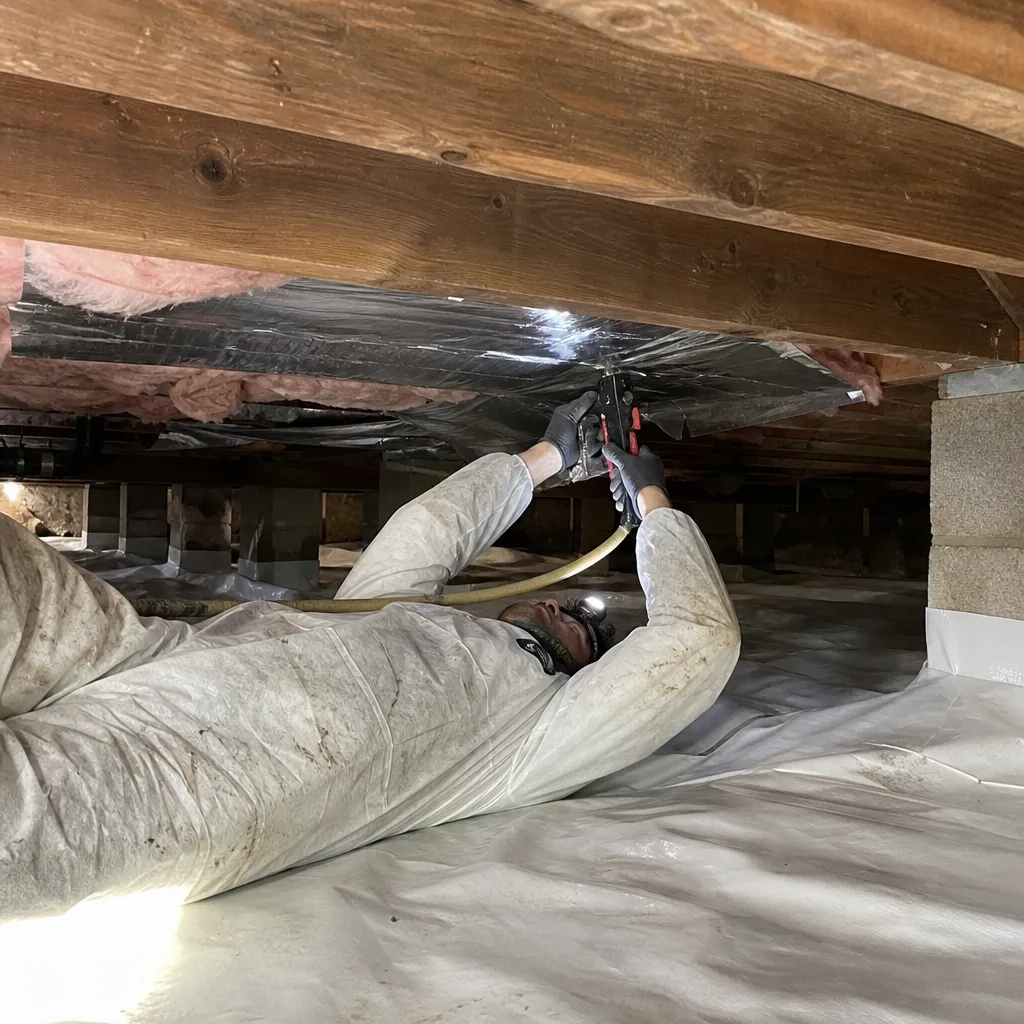
- Insulation removal and replacement in Menlo Park runs $3,800 to $6,400 for a typical 1,200 to 1,800 sq ft attic scope including air sealing and reinstallation to R-38.
- Removal-only jobs run $900 to $2,200 depending on attic size and contamination level.
- Air sealing is a prerequisite, not an add-on – new insulation installed over unsealed penetrations will not perform at its rated value, and the difference is measurable on a blower-door test.
- Rodent contamination, moisture damage, and low attic clearance are the factors most likely to push a job toward the higher end of the range in Menlo Park.
- PG&E and MCE rebates are available in Menlo Park for qualifying insulation upgrades – confirm current availability when you schedule.
- Every job receives a written price before work starts, a Documented Photo Record when the crew leaves, and a 365-Day Done Right Promise in writing.
- The free second opinion offer is standing – bring any written estimate and we will review it with you at no charge.
If you are ready for a written price on your Menlo Park home, call (510) 876-4113. The estimate is free, the price is flat, and the scope is in writing before anyone starts.
Written by Wes Okafor, Owner at Topside Attic Insulation Menlo Park (operating as Envelope Insulation Co.), serving Menlo Park since 2016. Pricing reflects the Menlo Park, CA market as of 2026. Topside Attic Insulation Menlo Park offers free estimates – call (510) 876-4113.
What Our Customers Say
"They photographed rodent damage in the old insulation that we had no idea about, and priced the exclusion work separately so we could decide."
- Harriet N."Two other companies quoted to blow more insulation on top of what was there. These were the only ones who said the existing material had to come out first, and explained why."
- Clifford E."Turned up on time, protected the hallway, and the written scope matched what was actually done."
- Bruno S.