
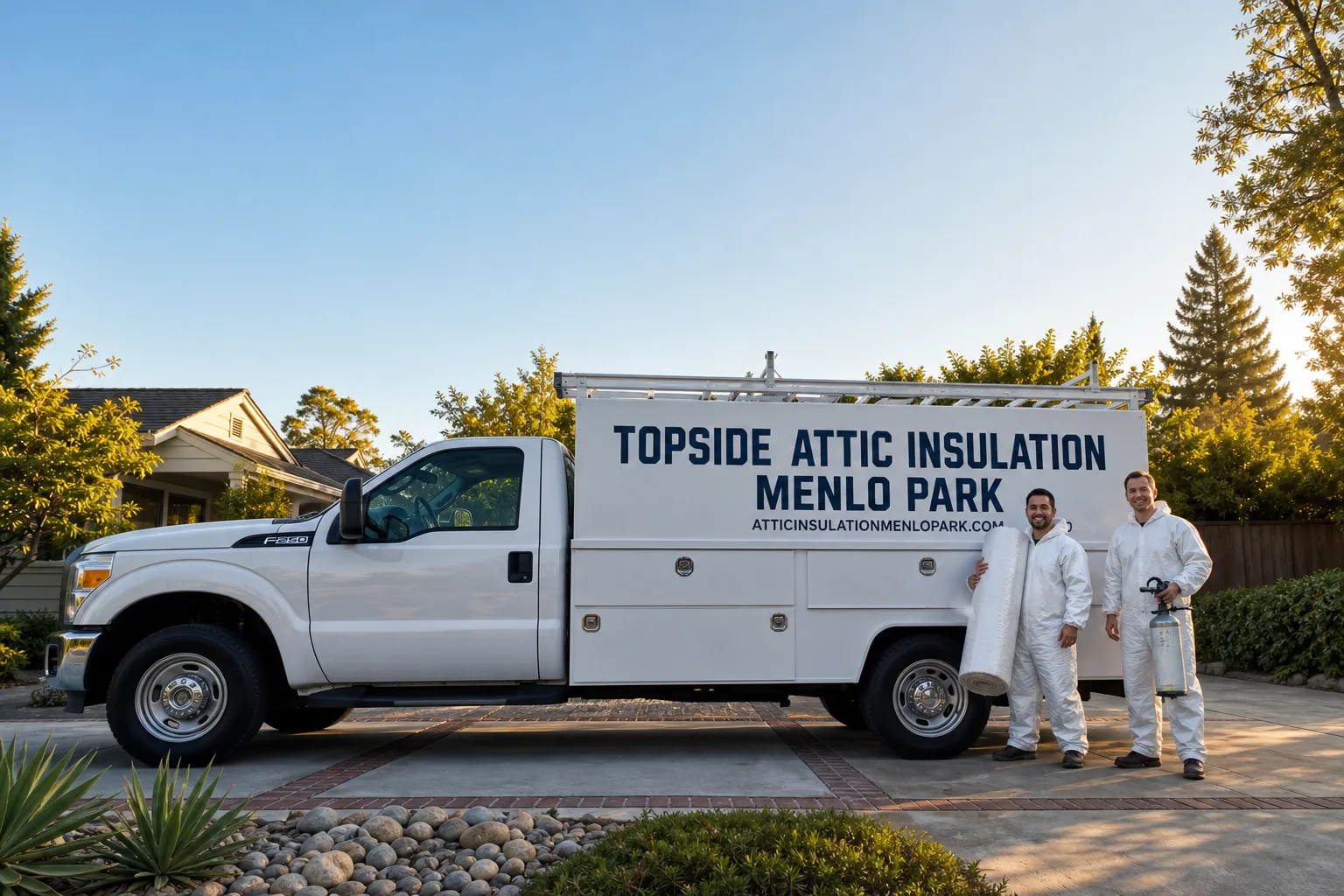
How Much Does Attic Air Sealing Cost in Menlo Park?
Attic air sealing in Menlo Park, CA typically costs between $850 and $2,800 for a single-family home, with most jobs landing around $1,200 to $1,800 depending on attic size, access difficulty, and how many penetrations need to be addressed. Homes in Menlo Park’s older neighborhoods – Sharon Heights, Allied Arts, Linfield Oaks – tend to run toward the higher end because of complex framing and a higher density of can lights and top-plate gaps from mid-century construction. A written price is handed to you before anyone touches the attic; that’s not a sales line, it’s how every job at Envelope Insulation Co. works under the Haven Standard.
Attic Air Sealing Cost Breakdown (2026)
Attic Air Sealing services are typically single-stage, but the labor and materials split across several task categories. Below are the line items we price out separately on every written scope, along with the ranges we see in the Menlo Park market in 2026.
| Line Item | Typical Range (Menlo Park, 2026) | Notes |
|---|---|---|
| Top-plate sealing (framing gaps at wall-ceiling junction) | $200 – $550 | Higher on homes with open-web trusses or irregular framing |
| Recessed can light air sealing (per fixture) | $18 – $35 per can | Most 1970s-2000s Menlo Park homes have 12-30 can lights in the attic floor |
| Electrical and plumbing penetrations | $75 – $250 | Junction boxes, wire chases, pipe boots; varies with number of penetrations |
| Attic hatch / access panel air sealing | $50 – $150 | Includes weatherstripping and rigid foam lid if not already present |
| HVAC platform / chase sealing | $120 – $400 | Common in Menlo Park homes where the air handler sits in the attic |
| Duct boot sealing at ceiling registers | $15 – $30 per boot | Often overlooked; a significant air-loss point when ducts are attic-mounted |
| Blower-door test (pre- and post-seal) – optional add-on or included | $150 – $300 standalone | Envelope Insulation Co. publishes before-and-after CFM50 readings on applicable jobs |
| Typical total: 1,200-1,600 sq ft attic | $1,100 – $1,900 | Includes all penetrations, top plates, cans, and hatch |
| Typical total: 1,600-2,400 sq ft attic | $1,600 – $2,800 | Larger Menlo Park homes on Encinal Ave, middle-Park neighborhoods |
| Small attic / condo / townhome | $850 – $1,200 | Less common in Menlo Park but applies to Allied Arts units and some Willows-area townhomes |
A few things move these numbers more than attic size alone. The primary driver in Menlo Park specifically is can-light count. A 1,500 sq ft attic with 24 recessed fixtures adds $432 to $840 just for those penetrations. Homes built between 1955 and 1985 – a large share of Menlo Park’s housing stock in the Suburban Park and Lorelei Manor areas – almost always have open top plates where the drywall was installed before framing cavities were addressed, which means longer sealing time per linear foot. Post-2000 construction in East Menlo Park tends to be faster to seal because builders used more blocking at the framing stage, but duct systems in those homes often have more boot penetrations through the ceiling plane.
Labor typically represents 55-65% of the total cost on a straight air-sealing job (no insulation installed on the same visit). Materials – primarily two-part spray polyurethane foam, fire-rated caulk, rigid foam board cut-and-cobble sections, and intumescent sealant around penetrations – make up the balance. Menlo Park’s Bay Area labor market means technician rates run higher than Sacramento or Fresno comps; a job priced at $1,400 here might be $1,050 in the Central Valley for the same scope.
What Affects Attic Air Sealing Pricing in Menlo Park
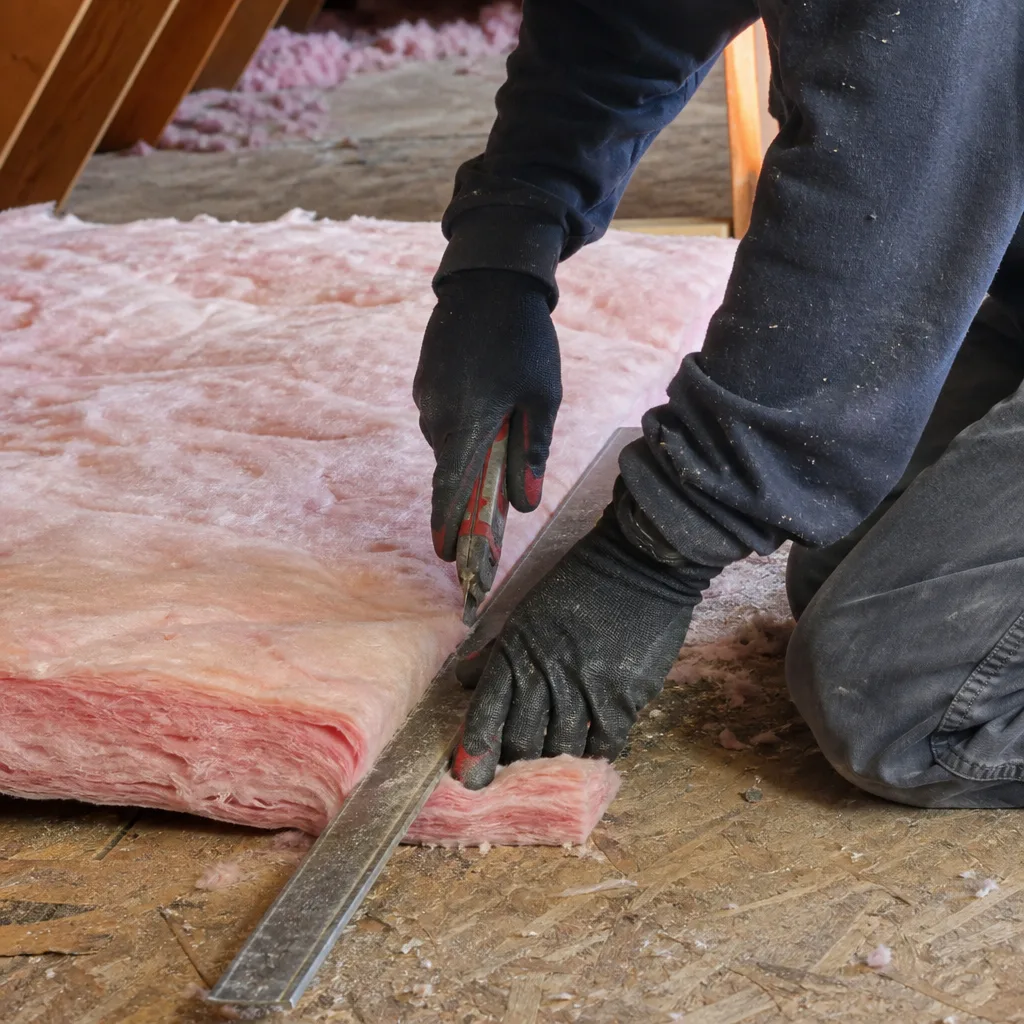
- Attic height and access: Menlo Park has a meaningful share of low-slope rooflines, particularly in the Willows and parts of University Heights, where attic clearance drops below 24 inches in sections. Tight-clearance work slows technicians and raises labor time; expect the per-square-foot rate to increase by 20-35% when crawl height drops under 18 inches.
- Number of recessed can lights: Each uninsulated, non-IC-rated can light is a direct air column between conditioned space and the attic. Homes in Menlo Park’s remodeled Craftsman and ranch-style properties frequently have 20-40 cans installed during kitchen and living room updates. At $18-$35 per fixture for a proper sealed box, can lights alone can add $500 or more to the project total.
- Existing insulation on the attic floor: If insulation is already in place, it has to be pulled back from top plates and penetrations to seal underneath, then replaced or upgraded. This adds labor time and, in cases where the existing insulation is contaminated or compacted, may trigger a separate Attic Air Sealing in Menlo Park scope that includes removal. Envelope Insulation Co. will never blow new insulation over an unsealed attic floor – air sealing happens first, always.
- HVAC equipment location: A significant portion of older Menlo Park homes have gas furnaces or air handlers platform-mounted in the attic. The curb, platform, and any associated chase walls are major bypass pathways. Sealing around an attic-mounted air handler adds $120-$400 depending on configuration and adds roughly 1.5-3 hours of labor.
- Building age and framing style: Pre-1970 homes in Menlo Park’s original subdivisions often have mid-wall blocking missing entirely, meaning the top-plate gap runs continuous across the full building perimeter. Newer stick-frame construction has shorter gap runs. This single factor can be the difference between a $900 job and a $1,600 job on homes of similar footprint.
- Permit requirements: Santa Clara County and San Mateo County (Menlo Park straddles both) do not typically require a standalone permit for attic air sealing that does not involve structural modification or new mechanical equipment installation. If the project is tied to a new HVAC installation or insulation upgrade that triggers a Title 24 compliance check, a permit and energy code compliance documentation may be required. We flag this in the written scope before any work starts.
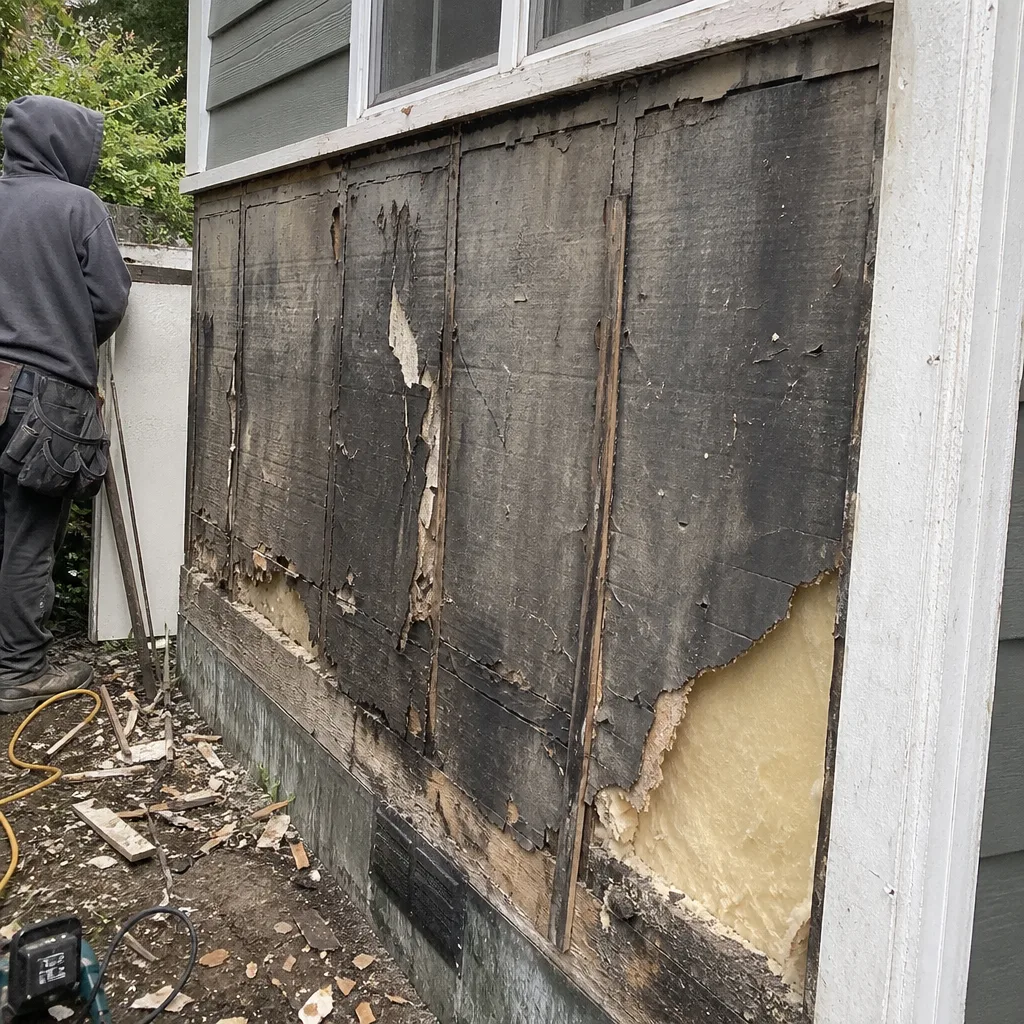 Before
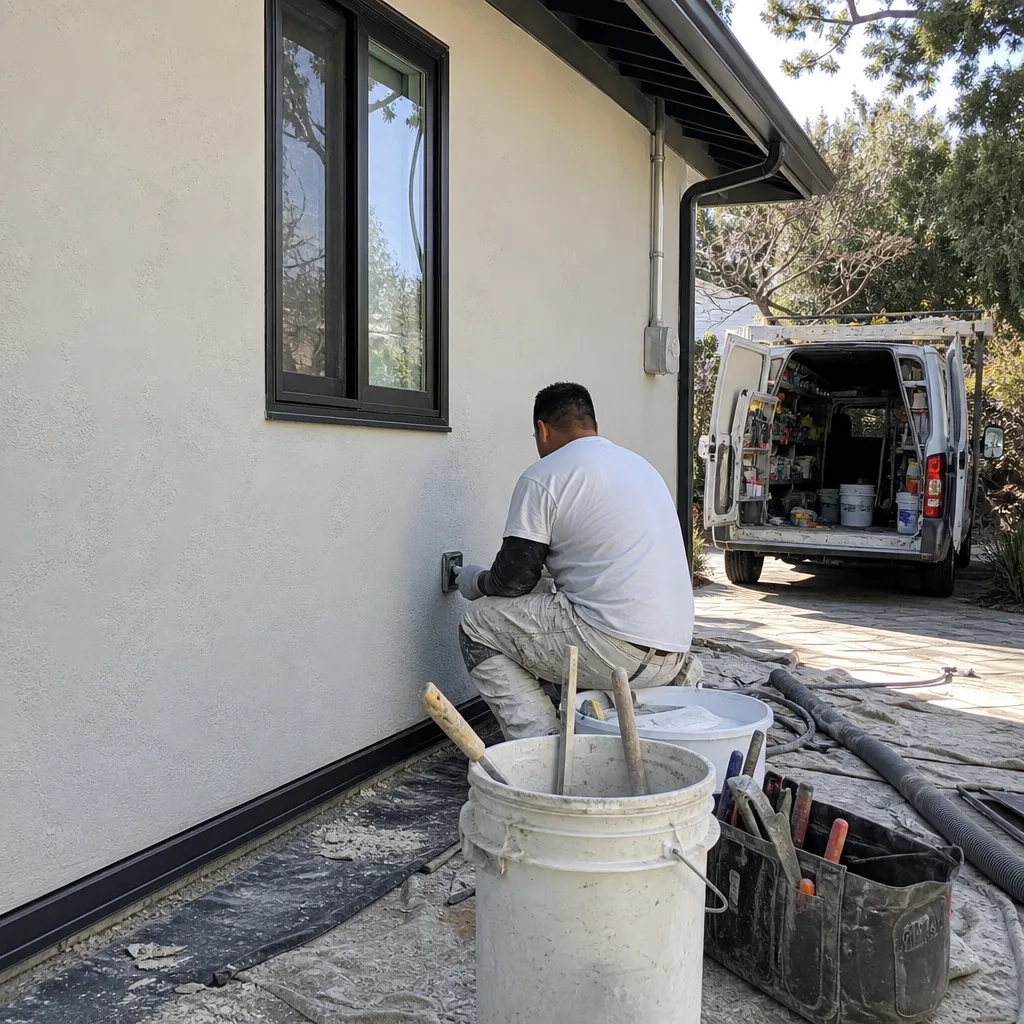 After
AfterHow to Save on Attic Air Sealing in Menlo Park
Combine Air Sealing with Insulation in One Visit
The largest cost lever available to Menlo Park homeowners is scheduling attic air sealing at the same time as insulation installation. Mobilization cost – truck, equipment, crew – is the same whether the team is there for two hours or six. When air sealing is done first and insulation is blown in on the same visit, the combined project often costs 15-25% less than two separate service calls. This is the only correct sequencing anyway: seal first, then insulate. A blower-door test – a pressurization reading that shows, in one number, how much air your building envelope is losing – taken before and after the combined job gives you the performance evidence that the work did what it was supposed to do.
Take Advantage of PG&E and Bay Area Energy Rebates
PG&E’s residential energy efficiency rebate programs active in 2026 cover air sealing and insulation work for qualifying Menlo Park homes. The rebate structure changes periodically, but as of early 2026, whole-home air sealing improvements that reduce tested infiltration by a documented threshold (typically measured by CFM50 reduction on a blower-door test) can qualify for rebates ranging from $100 to $400 depending on the program tier. The documentation requirement is exactly why published before-and-after blower-door numbers matter – without that data, you cannot file a rebate claim. The Bay Area Regional Energy Network (BayREN) also runs Home+, a program aimed at homeowners in San Mateo County which covers portions of Menlo Park; income-qualified households can access deeper subsidies. Ask to see the written scope with blower-door methodology before signing with any contractor, because rebate applications require that documentation.
Get a Second Opinion on Any Written Estimate
If you have a quote from another contractor, bring it to us. Under Haven Standard policy, we offer a free second opinion on any written estimate – we read it with you, line by line. In the Menlo Park market, we regularly see proposals that omit can-light sealing from the scope, which means homeowners are paying for a partial job. A low headline price that excludes 20 can lights at $18-$35 each is not actually cheaper.
Address Attic Bypasses Before Replacing Windows
This is the single most common sequencing mistake we see in Menlo Park energy upgrades. Window replacement in a home with an unsealed attic delivers a fraction of its theoretical savings because the attic floor bypasses – top plates, cans, chases – are moving multiples more air per hour than single-pane windows are. Sealing the attic first, then evaluating windows, is the correct order. It’s not unusual to find that window replacement becomes far less urgent after the attic is properly sealed.
Use the Free Estimate to Understand the Actual Scope
Request an on-site assessment so the technician can count penetrations, measure attic clearance, and identify the HVAC configuration. A phone estimate for attic air sealing in Menlo Park is useful as a rough bracket ($850-$2,800) but the actual price depends on conditions the technician has to see in person. Calling (510) 876-4113 gets you a live person – no voicemail – and a scheduled visit where the written price is handed to you before any work begins.
Attic Air Sealing and Menlo Park’s Climate: Why This Matters Here
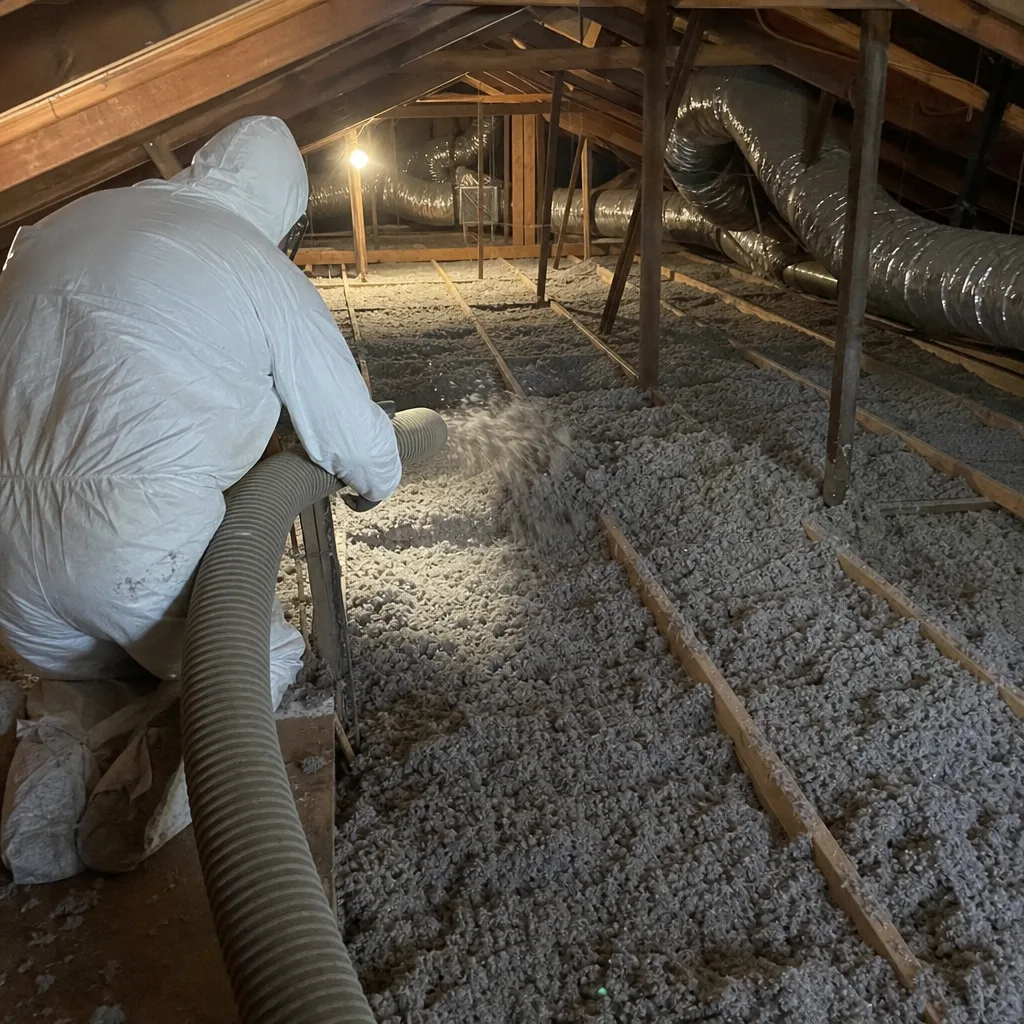
Menlo Park sits in a microclimate zone that makes attic air sealing more economically productive than in many other Bay Area cities. The city is far enough from the coast to see summer afternoon temperatures that regularly hit 88-95°F, while Pacifica and Daly City stay in the 60s on the same days. That temperature differential between the attic (which can reach 140-150°F in a poorly ventilated attic during a July afternoon in Menlo Park) and the conditioned living space below creates a significant stack effect – warm air rising through ceiling penetrations and pulling in cooler, conditioned air to replace it.
The stack effect reverses in winter. December and January nights in Menlo Park drop to 38-44°F regularly, and the same unsealed top plates that leak heat upward in summer allow cold air infiltration downward during heating season. Homes in the Flood Park Triangle and the older sections of Menlo Oaks are particularly susceptible because they were built before California’s residential energy code (Title 24) was enacted in 1978. Their attic floor bypasses have been moving air – and money – in and out of the conditioned envelope for decades.
A blower-door test on an unsealed 1,800 sq ft Menlo Park home from the 1960s will typically read somewhere between 3,500 and 5,500 CFM50 (cubic feet per minute at 50 Pascals of pressure difference). After thorough air sealing of top plates, can lights, and penetrations, that number usually drops to 2,000-3,200 CFM50. That reduction translates to measurable savings on both PG&E gas bills in winter and electricity bills running central air in summer. We publish those before-and-after numbers on every applicable job so the homeowner can verify the result independently.
What the Work Actually Involves: A Menlo Park Job Walk-Through
This is what a typical attic air sealing visit looks like at a 1,650 sq ft Menlo Park home built in 1972 in the Suburban Park neighborhood.
The technician starts with a blower-door test – a calibrated fan is mounted in the front door frame, the house is depressurized to 50 Pascals, and the machine records how many cubic feet of air per minute are flowing through the envelope. That number is written down. It’s the baseline.
Then the technician goes into the attic. With a headlamp and a floor plan, they walk the perimeter of the top plates – the framing member where the interior wall meets the ceiling drywall – looking for open cavities. In a 1972 Menlo Park home, those gaps are often 1-2 inches wide and run continuously along the full perimeter of the building. Two-part expanding spray foam is applied in controlled lifts, filling each cavity flush with the framing. Fire-rated foam is used at any location adjacent to mechanical equipment.
Each recessed can light is addressed individually. A pre-cut rigid foam box is sealed around the fixture using foam and intumescent caulk to create an airtight cover that won’t trap heat. This is not optional – an unboxed can light is essentially a hole in the ceiling with a light bulb in it.
Plumbing vents, electrical wire chases, and any HVAC platform or chase walls are addressed next. On this hypothetical Suburban Park home, the furnace platform adds about 90 minutes of work. Duct boots at every ceiling register get a bead of mastic or UL-181-rated tape around the perimeter where the sheet metal meets the drywall.
The attic hatch – often the single largest single air-leakage point in the building – gets weatherstripping on all four sides and a rigid foam lid cut to fit and held in place with toggle clips.
Then the blower-door test runs again. The before number and the after number are both written down and handed to the homeowner along with the photo record. That documentation is standard, not optional, under the 365-Day Done Right Promise.
Air Sealing vs. Insulation: Which Comes First and Why
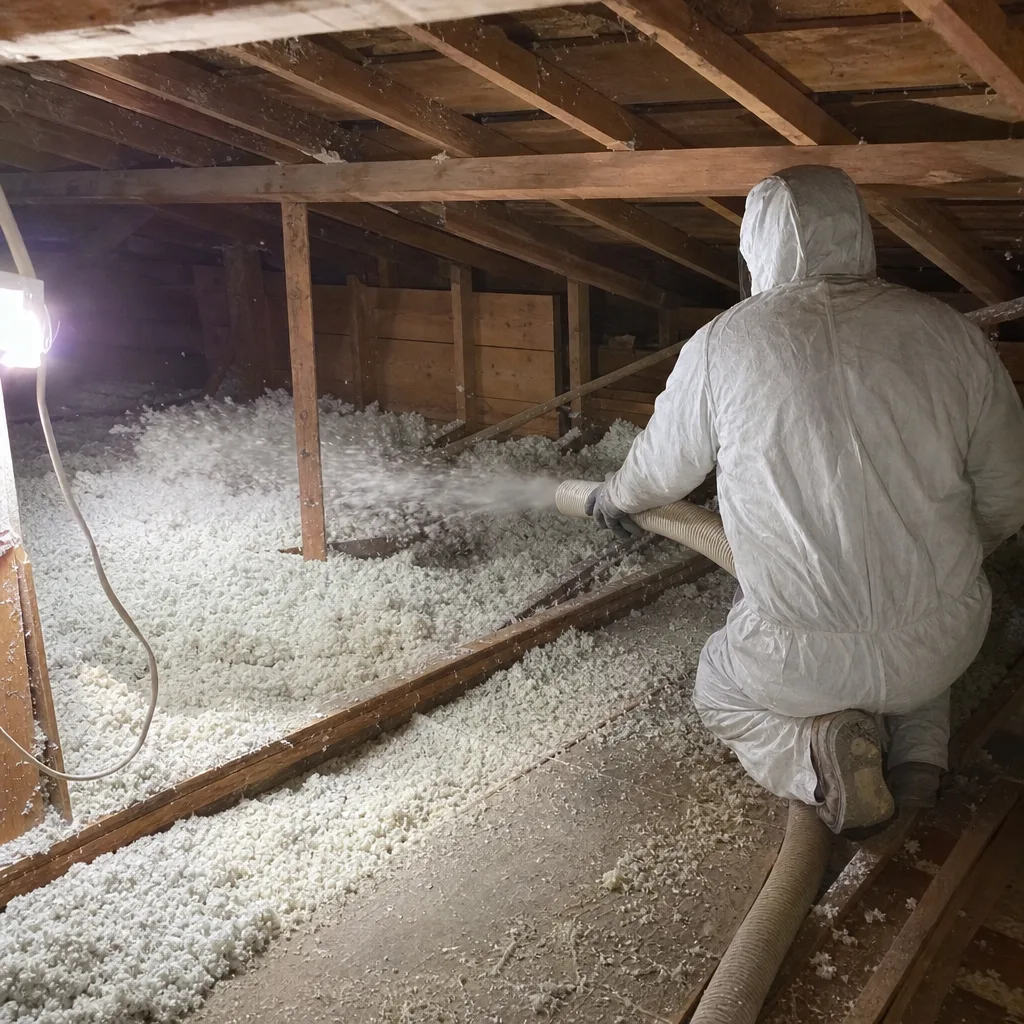
This question comes up consistently in Menlo Park consultations, so it deserves a direct answer. Air sealing always comes first. Insulation slows the rate at which heat moves through a material by conduction. It does almost nothing to stop air movement through gaps and penetrations. Blowing additional R-38 fiberglass over an unsealed attic floor is roughly analogous to adding a second blanket while leaving the window open – the blanket adds some comfort, but the open window is still the primary problem.
The correct job sequence: seal all penetrations, top plates, can lights, and bypasses first. Let the sealant cure. Run a post-seal blower-door test. Then install or upgrade the insulation layer. That order is how Envelope Insulation Co. has operated since 2016, and it’s why a written scope for a combined job will always show air sealing labor billed before insulation labor.
If a contractor offers to blow insulation into your Menlo Park attic without mentioning air sealing, that is not a cost saving – it is an incomplete job. The home performance benefit of insulation alone, without air sealing, is roughly 30-40% of what the combined treatment produces. That’s not an argument for spending more; it’s an argument for spending in the right sequence.
FAQs – Attic Air Sealing Cost in Menlo Park
How much does attic air sealing cost in Menlo Park, CA?
Attic air sealing in Menlo Park costs between $850 and $2,800 for most single-family homes in 2026, with the majority of jobs falling between $1,100 and $1,900. The price depends primarily on attic square footage, the number of recessed can lights, and whether HVAC equipment is platform-mounted in the attic. A written price is provided before any work starts – call (510) 876-4113 to schedule an on-site assessment and get your number in writing.
Is attic air sealing worth it in Menlo Park?
Yes, and the blower-door numbers make the case better than any estimate of future savings can. A typical 1960s-1980s Menlo Park home reads 3,500-5,500 CFM50 before sealing and drops to 2,000-3,200 CFM50 after – that reduction represents a meaningful cut in heating and cooling load year-round. Menlo Park’s summer heat peaks (88-95°F afternoons in July and August) and cool winter nights (lows in the high 30s) both push stack-effect air movement through unsealed attic floors, so the climate here makes the payback faster than in more moderate coastal cities nearby. PG&E and BayREN rebates can offset $100-$400 of the project cost if the job includes documented blower-door results.
How long does attic air sealing take?
Most Menlo Park homes take 4-8 hours for a thorough attic air sealing, including blower-door testing before and after. A smaller home with a simple attic and few can lights can be done in a half-day. A larger home with 24 or more recessed fixtures, an attic-mounted air handler, and a complex framing layout may take a full day. When air sealing and insulation are scheduled together, the combined job usually runs 6-10 hours for a typical Menlo Park single-family home. The written scope you receive before work starts will include a time estimate for your specific job.
Can I get a rebate for attic air sealing in Menlo Park?
Yes. PG&E’s residential rebate programs and the BayREN Home+ program both offer rebates for air sealing improvements in Menlo Park homes that achieve a documented reduction in tested infiltration. Rebates as of early 2026 range from approximately $100 to $400 depending on program tier and income qualification. The rebate application requires documented before-and-after blower-door readings, which is exactly the documentation Envelope Insulation Co. provides as standard on every applicable job. Income-qualified households in the San Mateo County portion of Menlo Park may qualify for deeper subsidies through BayREN’s enhanced programs. Call (510) 876-4113 to discuss which programs apply to your specific address.
Does attic air sealing require a permit in Menlo Park?
In most cases, no. Standalone attic air sealing that does not involve structural changes or new mechanical equipment installation does not require a permit under Menlo Park’s current building code (the city adopts California Building Code with local amendments). If the air sealing project is bundled with new HVAC installation or a significant insulation upgrade that triggers California Title 24 compliance verification, a permit and energy consultant sign-off may be required. We identify whether a permit applies during the initial assessment and document it in the written scope. You will know before work starts, not after.
What is a blower-door test and do I need one?
A blower-door test is a pressurization reading – a calibrated fan is mounted in your doorframe, the house is brought to a standardized pressure difference of 50 Pascals, and the equipment measures how many cubic feet of air per minute are moving through gaps in the building envelope. That figure, expressed as CFM50, tells you precisely how leaky your home is. On any attic air sealing job, the before number tells you where you started; the after number tells you what you paid for. Envelope Insulation Co. publishes both on every applicable job so the homeowner can verify the result. A standalone blower-door test without air sealing runs $150-$300 in the Menlo Park market; when included as part of a full air-sealing job, the test cost is built into the project price.
Key Takeaways
- Attic air sealing in Menlo Park costs $850-$2,800 in 2026; most jobs land between $1,100 and $1,900.
- Can-light count is often the biggest variable – 20+ recessed fixtures can add $360-$700 to the project total.
- Menlo Park’s mid-century housing stock (1955-1985) typically has continuous open top plates that cost more to seal than newer framing.
- Air sealing always comes before insulation – adding insulation over an unsealed attic floor delivers a fraction of the combined job’s performance benefit.
- PG&E and BayREN rebates of $100-$400 are available for documented air sealing improvements.
- A written price before any work starts, documented before-and-after blower-door readings, and a photo record on every visit are standard – not add-ons.
- Combining air sealing and insulation in one visit typically costs 15-25% less than two separate service calls.
Get a Written Price for Your Menlo Park Home
Wes Okafor and the team at Envelope Insulation Co. have been providing written prices before any work starts since 2016 – it’s Haven Standard Clause 1, and it’s not negotiable. Every attic air sealing job in Menlo Park begins with an on-site assessment where the technician counts penetrations, measures attic clearance, identifies the HVAC configuration, and hands you a written scope with a flat price. No ranges, no “it depends” on the invoice.
If you have a written estimate from another contractor, bring it. The free second opinion offer is real – Wes will read it with you, line by line, and tell you what’s in it and what’s missing. In the Menlo Park market, the most common omission is can-light sealing, which makes a low headline number look better than the completed job will actually perform.
Calls are answered by a live person, 24 hours a day. Schedule your on-site estimate, get your written price, and know what leaving looks like before anyone arrives. Call (510) 876-4113 to get started.
Written by Wes Okafor, Owner at Envelope Insulation Co. (operating as Topside Attic Insulation Menlo Park), serving Menlo Park, CA since 2016. Pricing reflects the Menlo Park market as of 2026. Topside Attic Insulation Menlo Park offers free estimates – call (510) 876-4113.
What Our Customers Say
"Crawl space encapsulation done properly. Photographs of the vapour barrier at every seam, and the damp smell in the hallway is gone."
- Ainsley P."They photographed rodent damage in the old insulation that we had no idea about, and priced the exclusion work separately so we could decide."
- Harriet N."Two other companies quoted to blow more insulation on top of what was there. These were the only ones who said the existing material had to come out first, and explained why."
- Clifford E.