
Knauf Vapor Barrier Installation: The Menlo Park Owner’s Guide
We stock and install Knauf-compatible vapor barrier systems in Menlo Park, with most crawl space and attic jobs running between $1,800 and $3,400 installed depending on square footage and existing damage. Same-day installation is available when we have your dimensions and access type before 10 a.m. Most homeowners discover their vapor barrier has failed when they notice a sharp musty smell returning after winter rains, or when their energy auditor flags elevated moisture readings in the crawl space during a routine inspection.
Which Knauf Models This Applies To
Knauf manufactures vapor barrier materials across several product lines, and matching the right specification to your existing installation matters more than brand loyalty. The Knauf Insulation Vapor Barrier Film, commonly found in 6-mil and 10-mil polyethylene grades, is the reference standard for residential crawl spaces in the Peninsula climate zone. We also see the Knauf Ecose Technology-treated kraft facing on batt insulation in older Menlo Park ranch homes near the Allied Arts Guild neighborhood, where the original 1950s construction used minimal ground coverage and the soil moisture profile is higher than the sandy loam found closer to the Bay.
To identify what you have, check the stamped product code on any exposed barrier edge. Knauf film barriers carry a lot number and mil rating; kraft-facing will show “Ecose” branding and an ASTM C665 compliance mark. The critical compatibility gotcha in Menlo Park: Knauf’s 6-mil film is rated for residential use, but the 2019 California Title 24 update pushed many retrofits to 10-mil or reinforced scrim for ground-contact applications in flood-prone zones. We stock both on the truck, plus a reinforced cross-laminated equivalent that outperforms standard polyethylene in the root-heave conditions common under Menlo Park’s mature oak canopy.
We are an independent service provider with no affiliation to Knauf. We source Knauf materials through standard distribution channels alongside Owens Corning, Johns Manville, and Reflectix, so our recommendation is based on what your specific assembly requires, not a manufacturer quota.
Signs Your Knauf Vapor Barrier Installation Is Failing
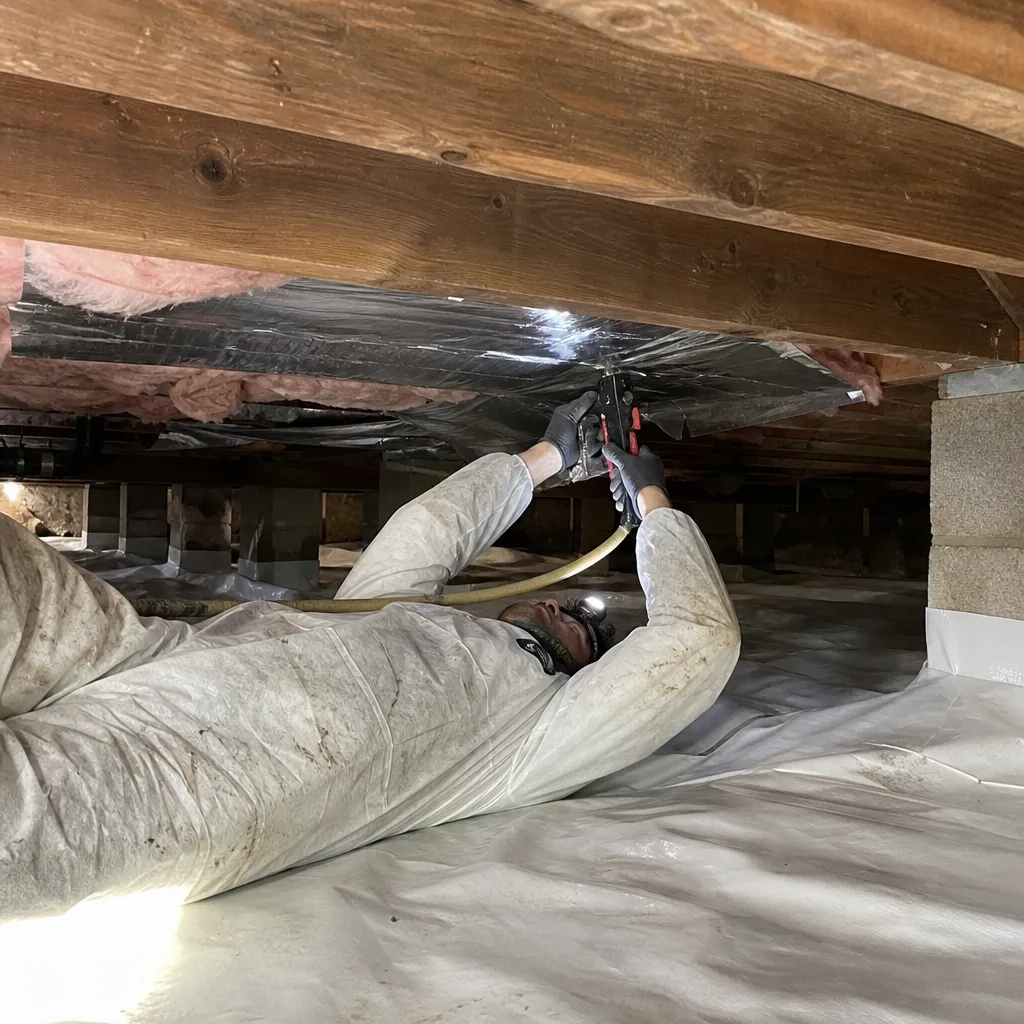
- Condensation pooling on the barrier surface. This means the seal at perimeter walls or piers has separated, letting warm moist air contact the cool polyethylene. In Menlo Park’s marine-influenced climate, this happens faster on north-facing foundations where the ground never fully dries between December and April.
- Tears or punctures wider than two inches, especially near access points. These create direct vapor transmission paths. The sandy soil under many Menlo Park crawl spaces contains abrasive aggregate that wears through 6-mil film within five to seven years if the original installer did not use a protective sand base.
- Mold or mildew on floor joist undersides. This indicates the barrier’s permeance rating has been exceeded, or that it was never sealed to the foundation walls in the first place. We see this pattern repeatedly in homes near San Francisquito Creek where the water table shifts seasonally.
- Musty odor returning after rain events. A properly sealed vapor barrier blocks soil gas and moisture; when the seal fails, the crawl space reverts to ambient humidity. The smell is your first warning before structural damage begins.
- Increased energy bills with no HVAC change. Wet insulation above a failed barrier loses R-value through conduction. We’ve measured attic floor insulation at 40% degraded effectiveness in Menlo Park homes where the crawl space below was saturated.
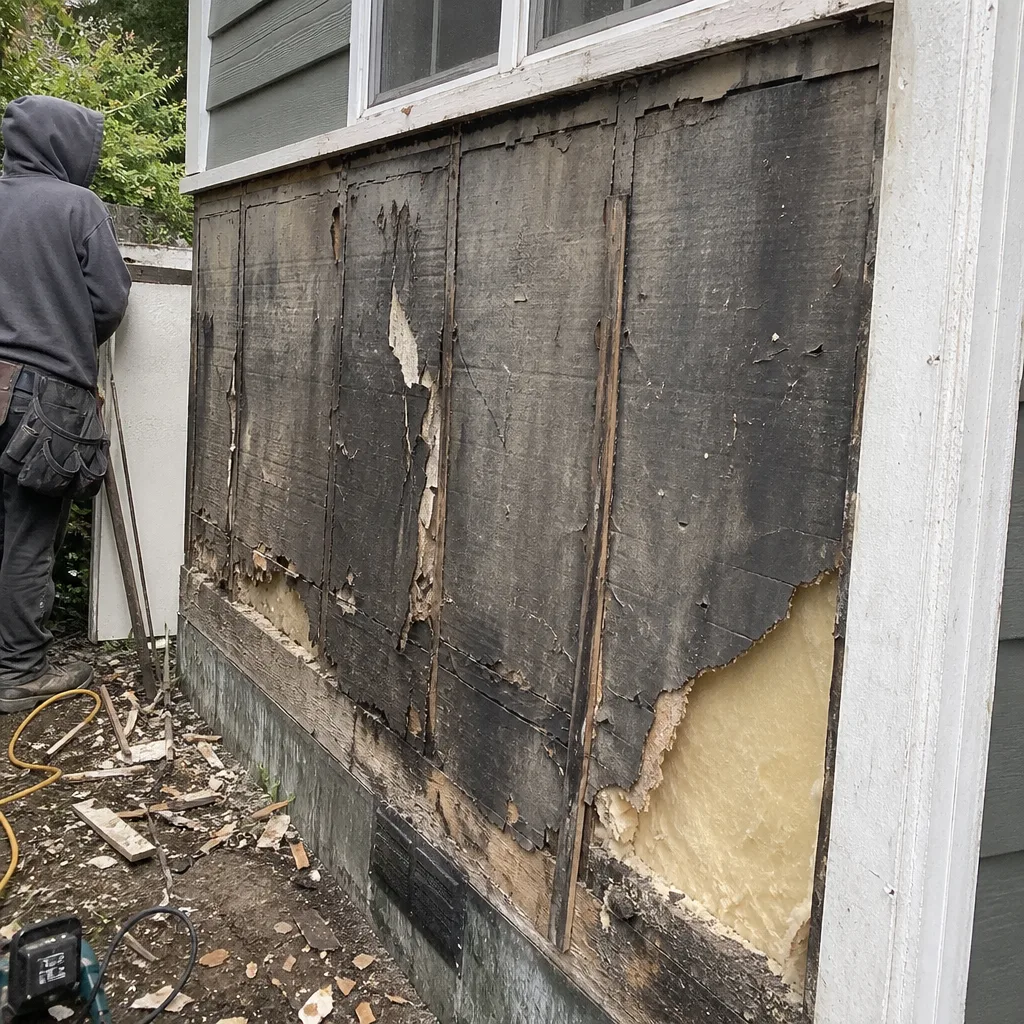 Before
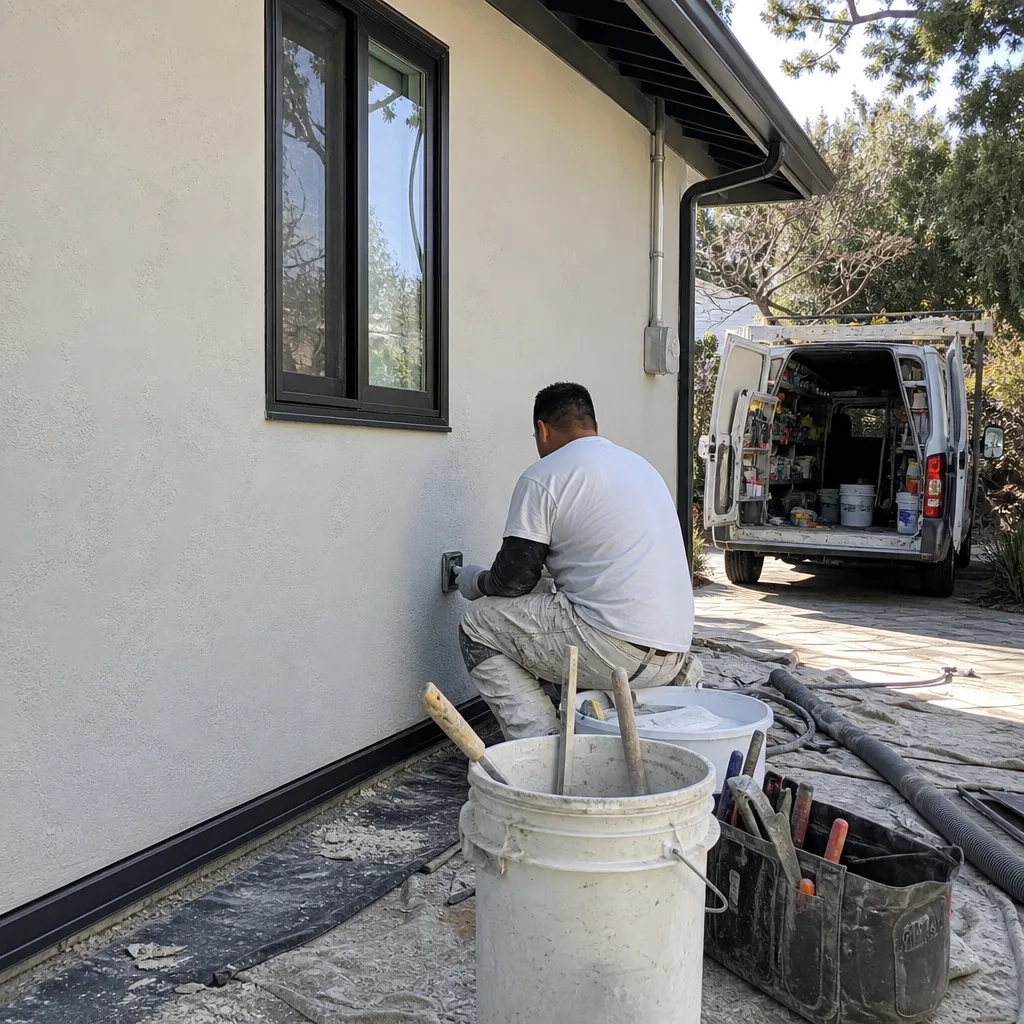 After
AfterReplacement Cost & What’s Included
For a typical Menlo Park crawl space between 1,200 and 2,000 square feet, Knauf vapor barrier replacement runs $1,800 to $3,400 installed. The low end assumes accessible conditions, intact existing insulation above, and 6-mil film replacement. The high end covers 10-mil reinforced scrim, extensive seam taping at piers and footings, and remediation of minor mold on joists before the new barrier goes down.
What drives the range: square footage, pier count (each pier needs a cut-and-seal detail), existing damage to insulation or framing, and whether the original barrier was glued to the foundation walls or simply laid loose. We quote flat. Under Haven Standard Clause 1, you get a written price before any work starts, a written scope, and a written warranty. Every job closes with a Documented Photo Record showing the sealed perimeter and overlapped seams. The 365-Day Done Right Promise applies to all vapor barrier work.
DIY or Call Us?
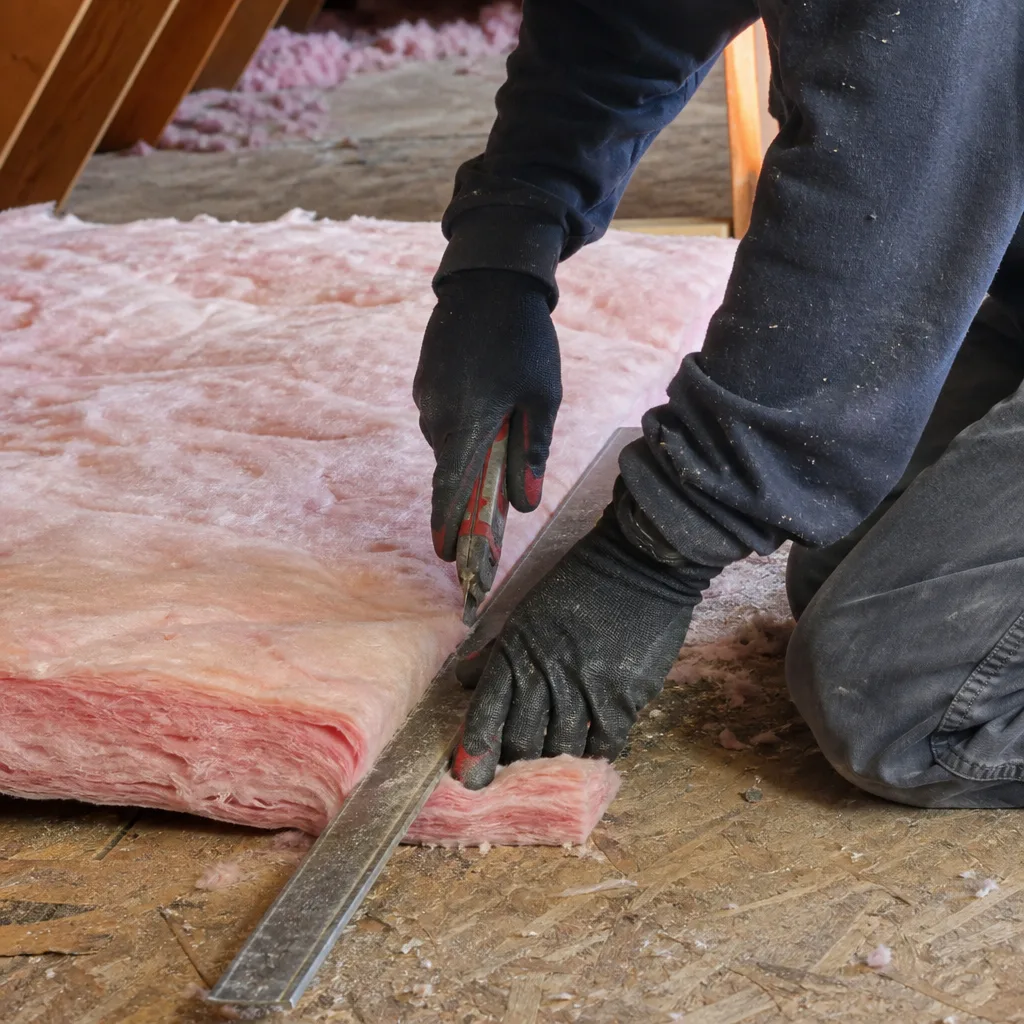
What you can safely check: measure your crawl space, photograph the existing barrier and any product stamps, and verify whether your foundation vents are open or sealed (this affects whether a vapor barrier alone is sufficient, or if you need a full encapsulation with conditioned air supply).
Where DIY goes wrong: cutting film around piers without overlapping and taping creates leak points that defeat the entire system. The 6-inch minimum overlap at seams, sealed with pressure-sensitive tape rated for damp substrates, is what separates a functional barrier from a plastic sheet on the ground. In Menlo Park’s clay-heavy soils near the foothills, inadequate perimeter sealing lets groundwater wick back under the edges within one rainy season. We carry a mechanical fastening system for foundation wall attachment that outlasts adhesive in high-moisture conditions. Call (510) 876-4113 if you want the job done once.
FAQs
A properly installed 10-mil Knauf vapor barrier lasts 15 to 20 years in Menlo Park’s climate, though the 6-mil grade often needs attention at 8 to 12 years, especially in shaded lots with poor drainage. The mature oak canopy in neighborhoods like Allied Arts and Felton Gables drops debris that abrades exposed film and holds moisture against the surface. Call (510) 876-4113 for an exact assessment of your current barrier’s condition - estimates are free.
Small punctures under two inches can be patched with compatible polyethylene tape if the surrounding film is still supple and the perimeter seal is intact. Multiple tears, brittle film, or separated wall seams mean replacement is more cost-effective than chasing individual failures. We evaluate this during our free estimate and show you the photo evidence so you can decide. Call (510) 876-4113 to schedule.
Most residential crawl spaces in Menlo Park are completed in one day, assuming clear access and no structural remediation. Larger homes or those with extensive pier-and-beam foundations may extend to a second day. We do not start work without a written price and a confirmed scope, so you’ll know the timeline before anyone enters the crawl space. Call (510) 876-4113 to book.
Yes, we carry 6-mil and 10-mil Knauf-compatible polyethylene film, reinforced scrim, and the full seam-taping and mechanical-fastening systems needed for same-day installation in most Menlo Park homes. For non-standard assemblies, we pull materials from our San Jose warehouse for next-morning delivery. Call (510) 876-4113 with your crawl space dimensions and we’ll confirm stock and schedule.
Seal the leaks first. The insulation has nowhere useful to go until you do. That’s how Wes Okafor runs every crew, and it’s why we start with a blower-door test - a pressurization measurement that shows, in one number, how much conditioned air your home is losing - before we recommend any vapor barrier or insulation work.
Written by Wes Okafor, Owner, Topside Attic Insulation Menlo Park at Topside Attic Insulation Menlo Park, serving Menlo Park and nearby areas.