
GreenFiber Attic Insulation: The Menlo Park Owner’s Guide
GreenFiber attic insulation installation in Menlo Park typically runs $2.80 to $4.20 per square foot for blown-in cellulose, with most single-story ranch homes in the 1,200 to 2,400 square foot range landing between $3,400 and $8,900 for a complete attic fill with air sealing included. We stock GreenFiber cellulose on every truck and can usually inspect and quote same-day. Most homeowners realize their insulation is failing when upstairs rooms won’t hold temperature, energy bills spike during Peninsula shoulder seasons, or a pest inspector notes compressed or displaced batts near the attic hatch.
Which GreenFiber Models This Applies To
GreenFiber manufactures loose-fill cellulose and stabilized cellulose products, not model-numbered mechanical assemblies, so “matching the part” means matching the product line to your attic’s existing insulation type and depth. The two lines we encounter in Menlo Park are GreenFiber All Borate (unfaced loose fill, 2.3 lbs/ft³ settled density, R-3.7 per inch) and GreenFiber Sanctuary (stabilized with acrylic binder, 3.0 lbs/ft³, better for sloped or open blow applications). Check your attic for bag remnants, which usually show a green-and-white label with the product name and ASTM C739 compliance marking.
If your home was insulated between 2010 and 2019, you likely have All Borate. Sanctuary became more common after 2020, especially in new construction near the Willows and Belle Haven areas where builders specified it for its reduced dust during installation. We do not need to match the exact vintage product for a top-off or replacement, but we do need to match the density and borate treatment to avoid settling mismatches that create thermal bridges. We source GreenFiber through standard distribution, same as any independent contractor, and we are not affiliated with the manufacturer.
Signs Your GreenFiber Attic Insulation Is Failing
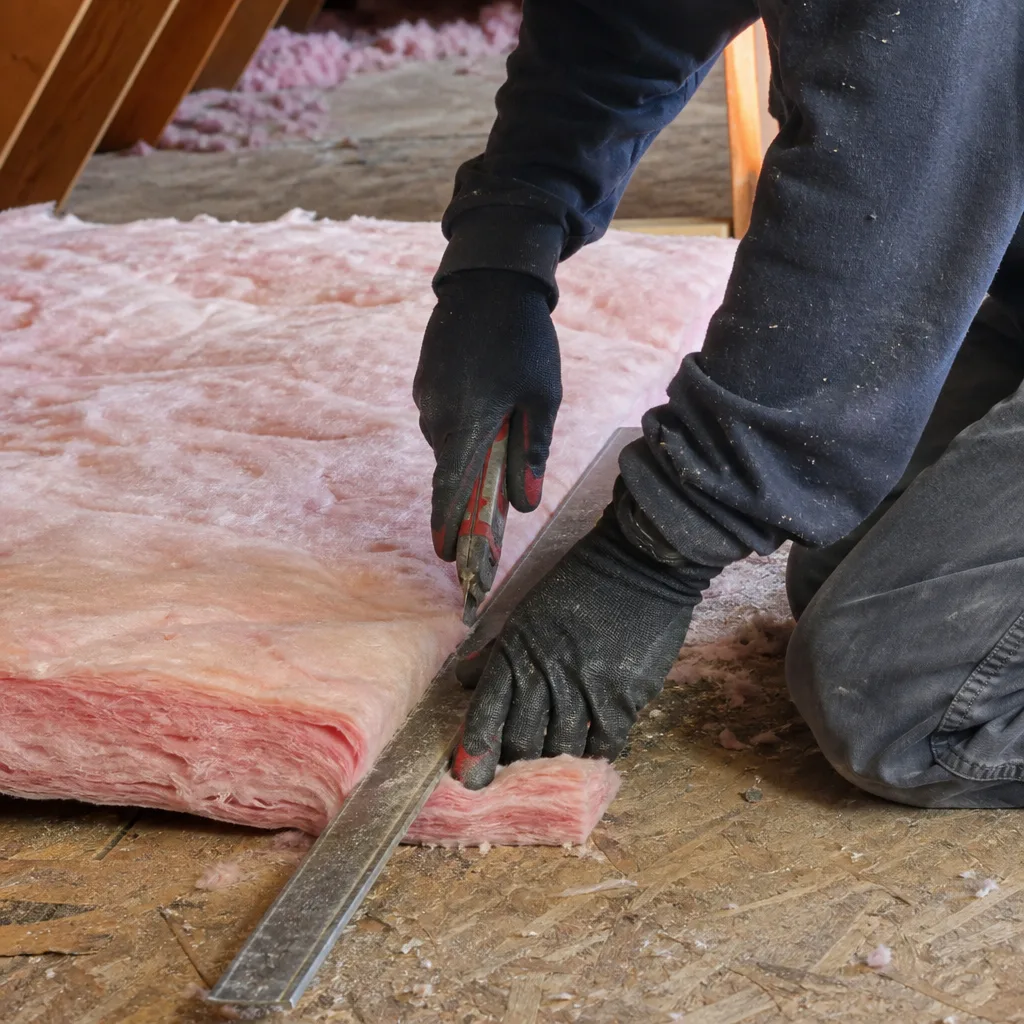
- Uneven temperature between rooms. Cellulose settles over time, and GreenFiber’s All Borate line can lose 10-15% of its installed depth in the first five years if the attic was over-ventilated or the material was blown at too low a density. The result is bare spots over hallways or interior walls where the blower tube couldn’t reach consistently.
- Energy bills climbing without rate increases. When cellulose compresses or gets displaced by rodent activity, its R-value drops in direct proportion to depth. A Menlo Park home that started with R-38 can fall to R-25 in eight to ten years, which shows up on the PG&E bill during October and April when heating and cooling loads overlap.
- Visible moisture staining on ceiling drywall below. GreenFiber’s borate treatment resists mold, but it cannot overcome bulk water intrusion from a failed roof vent or condensation on unsealed ductwork in the attic. Stained insulation is compromised insulation, and it usually indicates an air-sealing failure that preceded the moisture problem.
- Pest evidence or odor from the attic. Cellulose is ground paper, and rodents will tunnel through it for nesting material. In Menlo Park’s older neighborhoods near downtown, we’ve found complete displacement of insulation into corner piles where roof rats have established runs.
- Dust or particulate settling into living spaces through can lights or fixtures. This means your attic is pressurized relative to the house, typically because the insulation barrier is incomplete and the stack effect is pulling attic air through every penetration. The insulation isn’t the root cause, but it’s often the symptom that gets noticed first.
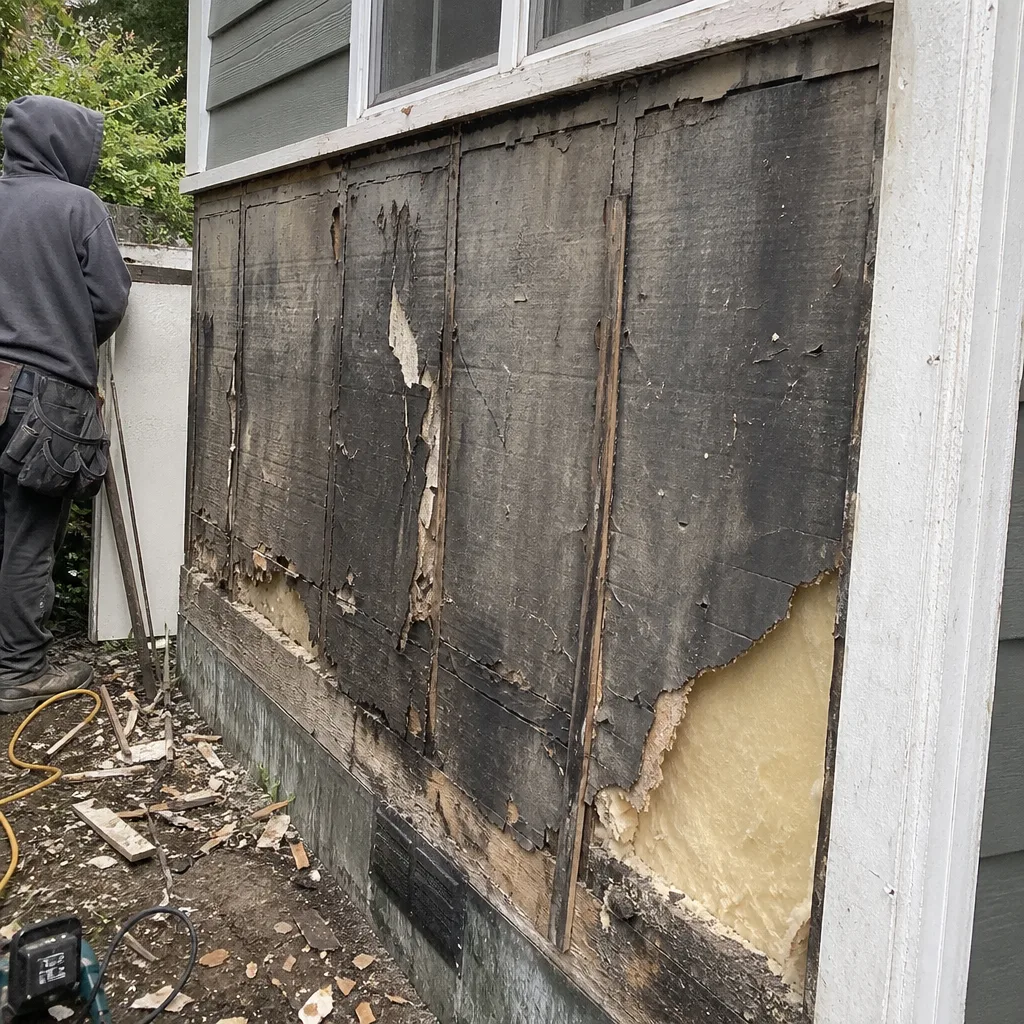 Before
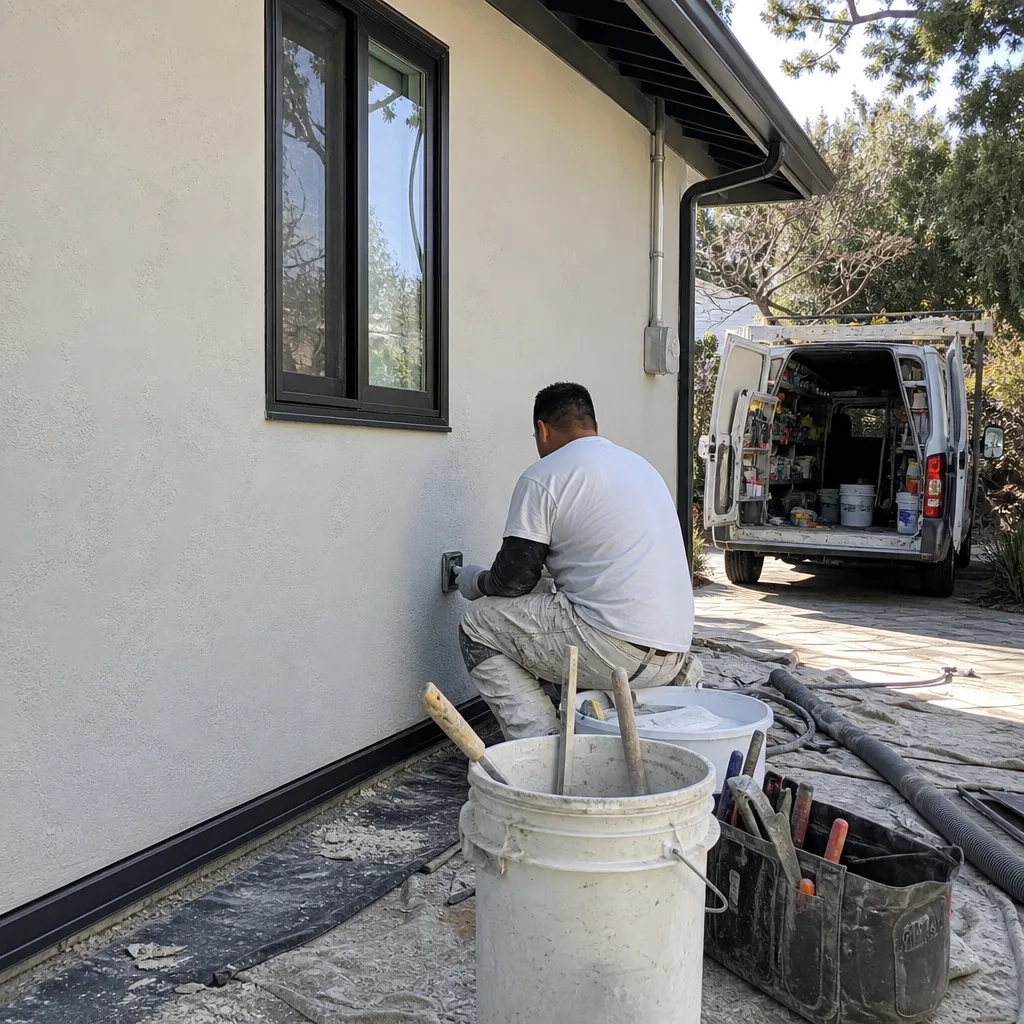 After
AfterReplacement Cost & What’s Included
Most complete GreenFiber attic insulation replacements in Menlo Park run $4,200 to $9,800, depending on attic square footage, existing removal requirements, and whether knob-and-tube wiring is present. Top-offs over intact existing insulation start lower, around $2,800 to $5,400 for R-38 equivalent coverage. The price includes removal and disposal of old material, air sealing of top plates and penetrations, and installation of new GreenFiber cellulose to specified depth with a settled-density verification.
We do not quote by the bag. We quote by the square foot and the target R-value, with a written scope that specifies the blower-door test result we expect to achieve. Every job includes our Documented Photo Record and, where applicable, before-and-after CFM50 readings. Work is covered by our 365-Day Done Right Promise. We also offer a Free Second Opinion on any written estimate you’ve already received.
DIY or Call Us?
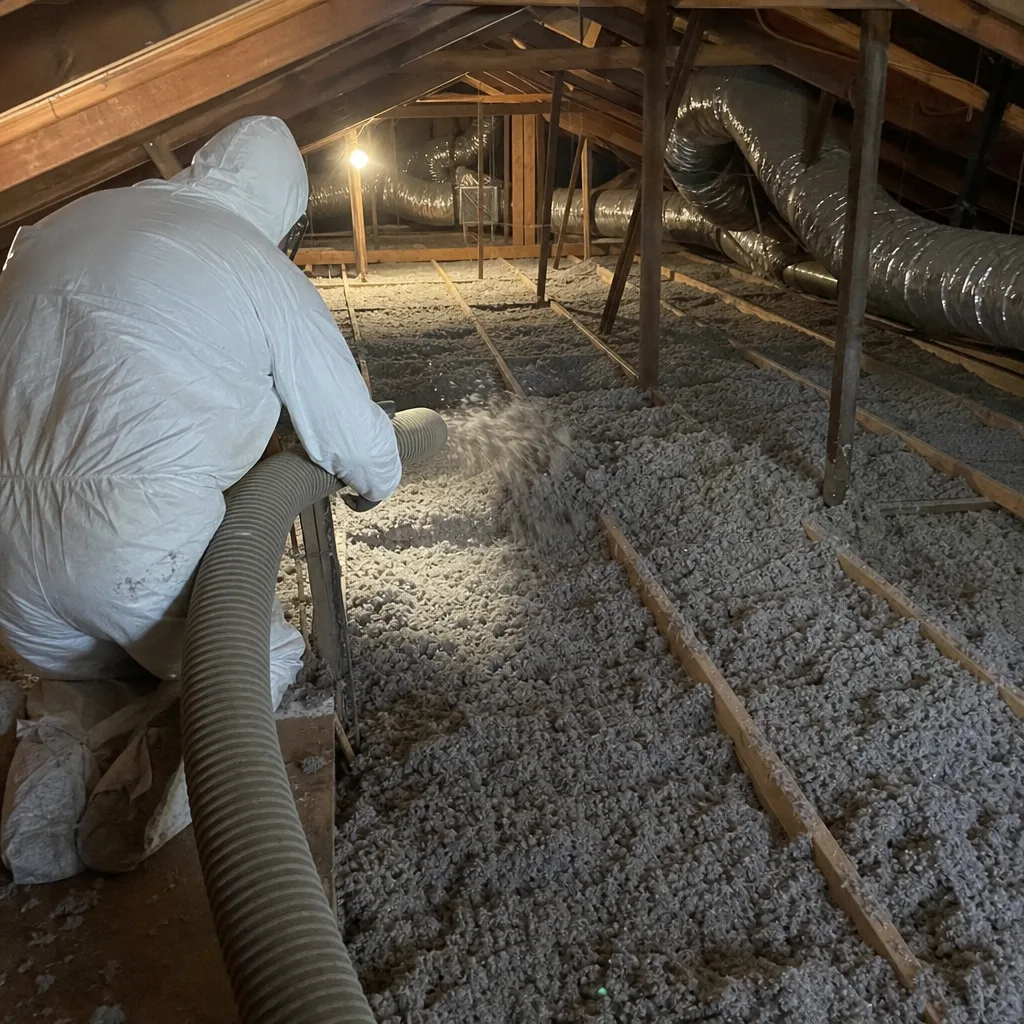
You can safely check your attic insulation depth with a ruler and a flashlight. Measure at multiple points, especially near the eaves and over interior walls. If you find bare drywall, compressed material below storage boards, or obvious pest damage, you’ve confirmed the problem. What you cannot safely assess is whether your attic floor is properly air-sealed, whether your can lights are IC-rated, or whether that knob-and-tube wiring active in older Menlo Park homes can be buried under new insulation per California Title 24.
Blown cellulose requires a commercial blower and calibrated hose pressure to achieve the specified settled density. Under-blown material settles further and loses R-value faster. Over-blown material can overload drywall ceilings. And in attics with active wiring, the fire-blocking and clearance rules are specific. Seal the leaks first. The insulation has nowhere useful to go until you do. Call (510) 876-4113 and we’ll inspect, test, and give you a written price before any work starts.
FAQs
Properly installed GreenFiber cellulose lasts 20 to 30 years in Menlo Park’s climate, though the Peninsula’s marine layer moisture and temperature swings can accelerate settling if the attic wasn’t air-sealed first. We typically see measurable compression after 8 to 12 years in homes where the original installer skipped sealing. Call (510) 876-4113 for an attic inspection and we’ll measure your actual remaining depth against the original specification.
Yes, if the existing material is dry, uncontaminated, and uncompressed. Wet, moldy, or rodent-soiled insulation must be removed per California code. We inspect and photograph the existing layer before recommending top-off versus removal. Our Free Second Opinion applies to any written estimate you’ve received for this decision.
Most Menlo Park homes are completed in one to two days: half a day for removal and air sealing, half a day for blowing and density verification. Larger homes or those with complex attic geometries near the Sharon Heights area may extend to a third day. We schedule blower-door testing at the end to confirm the sealing result.
We stock GreenFiber All Borate and Sanctuary on every installation vehicle, along with Owens Corning, Johns Manville, and Rockwool alternatives if your project specifications or preferences differ. We are not locked to any single manufacturer. Call (510) 876-4113 to confirm material availability for your target date.
Written by Wes Okafor, Owner, Topside Attic Insulation Menlo Park at Topside Attic Insulation Menlo Park, serving Menlo Park and nearby areas.