
Icynene Attic Insulation: The Menlo Park Owner’s Guide
Icynene open-cell spray foam attic insulation in Menlo Park typically runs $4.50-$7.20 per board foot installed, with most complete attic jobs falling between $3,800 and $6,400 depending on accessible square footage and existing removal needs. We stock Icynene-compatible foam systems on our trucks and can usually diagnose and quote same-day. Most Menlo Park homeowners discover their Icynene insulation is compromised when upstairs rooms won’t hold temperature in July despite the AC running continuously, or when they spot yellowing, crumbling, or moisture-darkened patches during a storage trip through the attic hatch.
Which Icynene Models This Applies To
Icynene produces several open-cell formulations, and the product label matters for matching what’s already in your rafters or attic floor. Look for the Icynene nameplate on any exposed foam surface, or check your original build documentation for these common designations:
- Icynene Classic Max - the workhorse open-cell product in most Peninsula homes built 2012-2019; nominal density 0.5 lb/ft³, R-3.7 per inch. If your attic has 5.5 inches in the rafter bays, you’re likely looking at this formulation.
- Icynene Classic Plus - slightly higher density at 0.6 lb/ft³, more common in commercial or high-humidity retrofits around Menlo Park’s older commercial corridors near El Camino Real.
- Icynene MD-R-200 - a medium-density closed-cell hybrid; if your foam feels rigid and you’ve got R-7+ per inch, this is probably what you’re dealing with, and repair protocols differ significantly.
The critical compatibility gotcha: Icynene open-cell and closed-cell products cannot be patched into each other. We’ve seen Menlo Park homeowners try to fill a Classic Max void with a closed-cell cartridge from the hardware store, and the resulting delamination six months later required full removal. If you’re uncertain which formulation is in your attic, we carry a small borescope and can read the cell structure in about ninety seconds. Topside Attic Insulation Menlo Park is an independent service provider, not affiliated with Icynene, so we have no incentive to push one formulation over another - we match what’s there, or we remove and replace with a material that actually suits the assembly.
OEM Icynene foam is available through certified distributors, but for repairs under roughly fifteen square feet, we often use equivalent-density open-cell foam from Demilec or Johns Manville that meets the same ASTM E84 and ICC-ESR listings. The decision point is usually whether the repair area ties into an existing conditioned attic envelope; if it does, thermal imaging during application is non-negotiable to verify continuity.
Signs Your Icynene Attic Insulation Is Failing
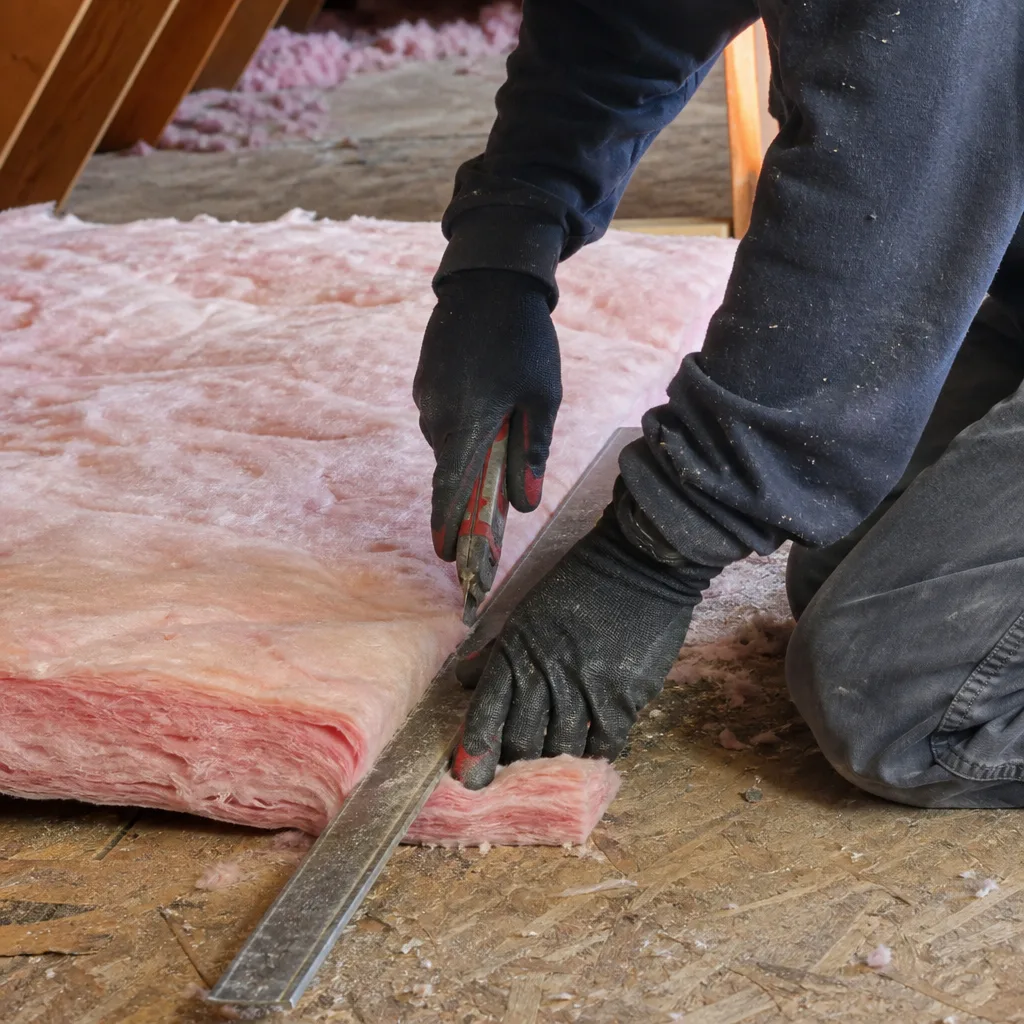
- Yellowing or browning of foam surfaces. UV degradation hits Icynene open-cell foam hard if the ignition barrier paint or thermal barrier drywall was never installed, or if it was compromised during a prior service call. In Menlo Park, where attic temperatures routinely hit 140°F in August, that UV exposure accelerates oxidation and the foam begins to crumble at the surface.
- Soft, spongy areas that hold moisture. Open-cell foam is vapor-permeable by design, but if your roof assembly lacks proper venting - common in 1950s ranch-style homes near the Allied Arts Guild neighborhood where original gable vents were sealed during prior remodels - the foam can become a moisture sink. We find this most often where bathroom exhaust fans were never properly vented to the exterior.
- Visible gaps between foam and framing members. Shrinkage during cure is normal, but excessive shrinkage or later detachment means the substrate wasn’t clean or the application temperature was wrong. Gaps create thermal bypasses that show up clearly on infrared, and they’re where condensation starts in Menlo Park’s winter marine layer cycles.
- Unexplained musty odors after rain. Icynene itself doesn’t support mold growth, but organic dust settling on degraded foam surfaces can. If you’re smelling something after the first winter rains, there’s likely a section where the foam has broken down enough to create a capture surface.
- Ice damming or excessive snow melt on your roof in winter. This one’s counterintuitive for Peninsula homeowners, but Menlo Park does see occasional freeze-thaw cycles in January. If heat is escaping through compromised attic insulation, you’ll get melt at the ridge while the eaves stay frozen - a pattern that shows up on thermal imaging from the street.
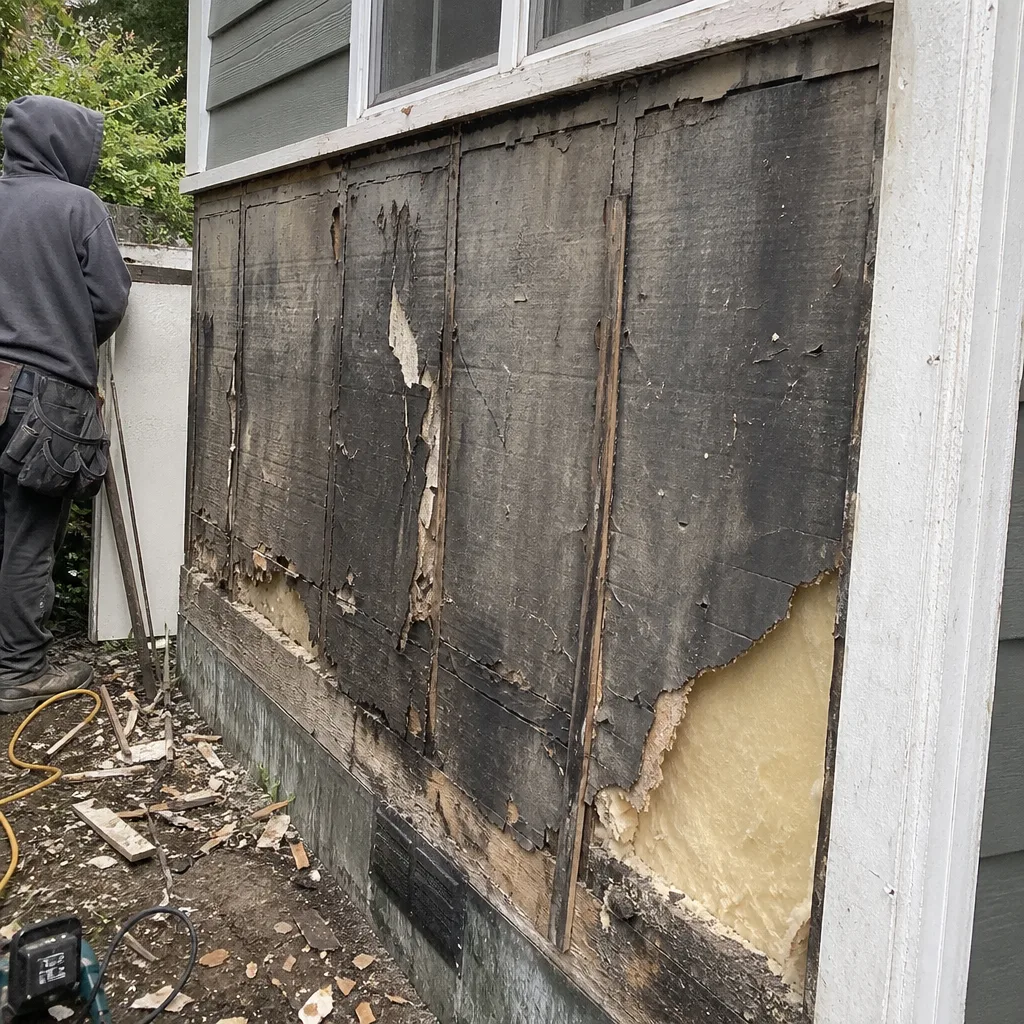 Before
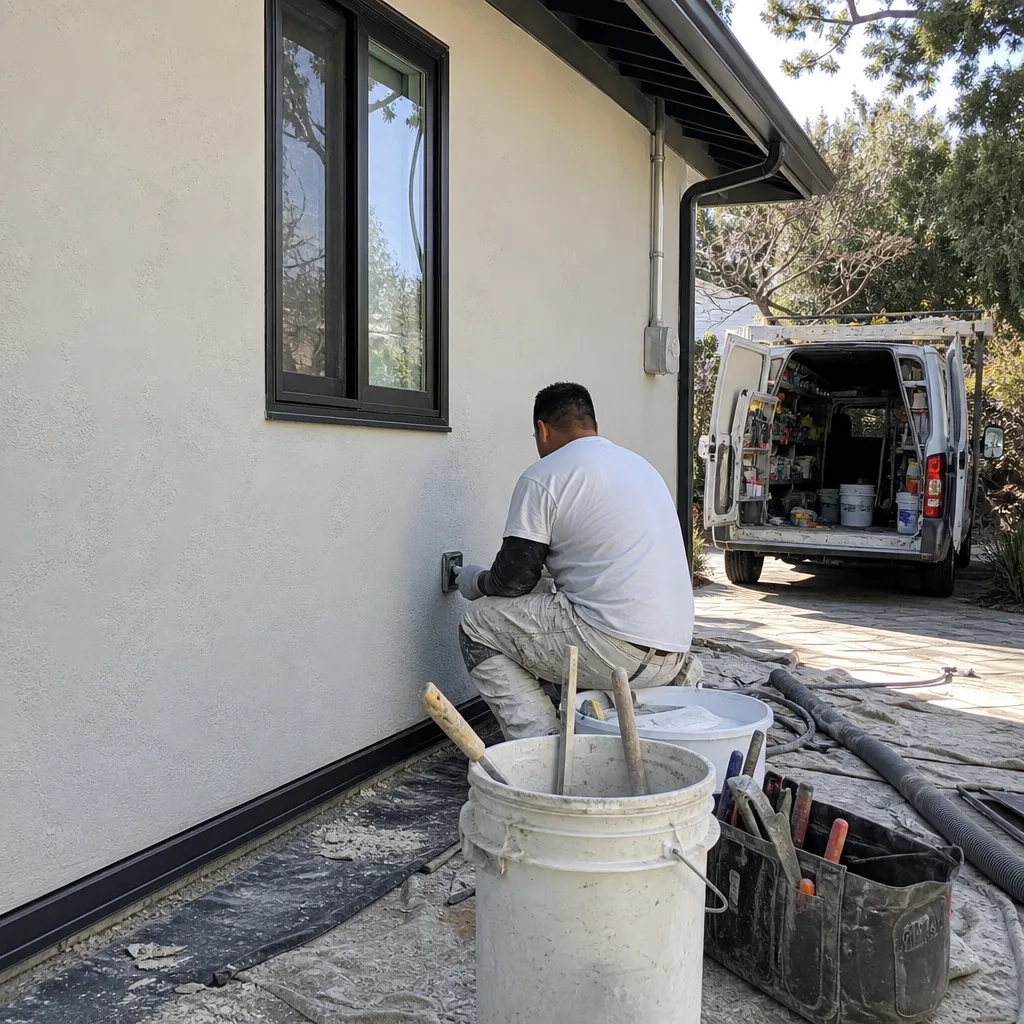 After
AfterReplacement Cost & What’s Included
Most Icynene attic insulation work in Menlo Park falls into one of three scopes, and we publish these ranges before anyone climbs a ladder:
| Scope | Typical Range | What’s Included |
|---|---|---|
| Spot repair (under 25 sq ft) | $680-$1,200 | Removal of degraded foam, substrate prep, compatible foam application, ignition barrier touch-up, thermal imaging verification |
| Partial re-insulation (attic floor or rafter bays, one zone) | $2,400-$4,200 | Full removal of existing Icynene, air sealing of top plates and penetrations, new open-cell foam to specified depth, blower-door test before and after |
| Complete attic replacement | $3,800-$6,400 | Full removal, comprehensive air sealing, new Icynene or equivalent open-cell foam, continuous ignition barrier, documented photo record, printed blower-door report with ACH50 numbers |
What drives the range: accessible square footage is the baseline, but the real variables are existing foam condition (intact removal vs. crumbly mess), whether knob-and-tube or active Romex runs through the space, and whether the original ignition barrier needs full replacement. We don’t know which of these applies until we look, which is why every job starts with a written price - Haven Standard Clause 1 - not an estimate that balloons later. The 365-Day Done Right Promise covers all completed work, and we provide the documented photo record and blower-door numbers whether you ask or not.
DIY or Call Us?
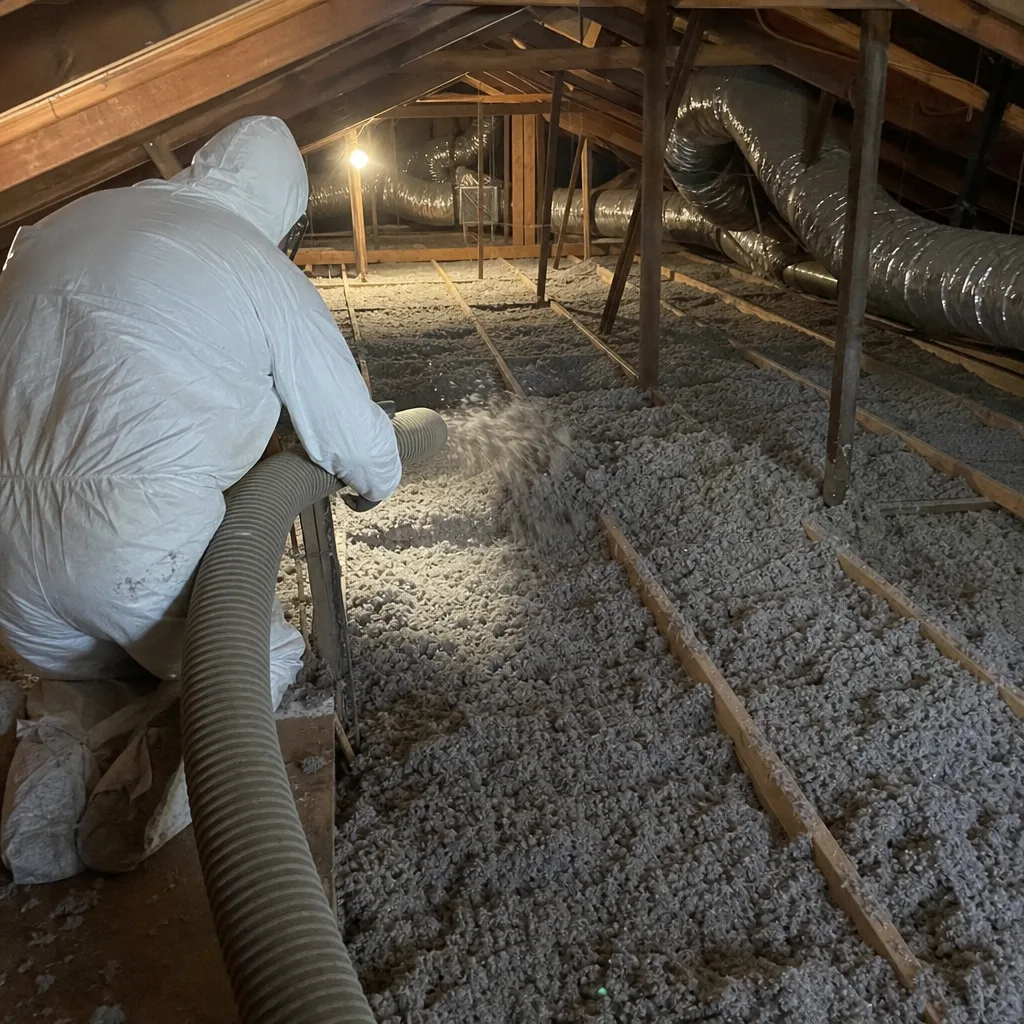
There’s a safe middle ground here, and then there’s where DIY goes wrong fast.
What you can safely check: Look at your attic access hatch for the Icynene product label, or photograph any visible nameplates. Note areas of discoloration or crumbling and their approximate dimensions. Check that your bathroom exhaust fans actually vent to the exterior, not into the attic - a flashlight and a helper at the fan switch is all you need. These observations help us quote accurately before we arrive.
Where DIY goes wrong: Spray foam application requires respiratory protection beyond standard dust masks, controlled substrate temperature, and precise mixing ratios that shift with ambient humidity. More critically, Icynene and equivalent foams require a thermal barrier or ignition barrier per California Building Code Section R316 - skip this and you’ve created a fire hazard that can void your homeowner’s insurance. We’ve been called to Menlo Park homes where a well-meaning owner sprayed foam from a kit, then learned at resale that the work failed inspection and had to be fully removed. The rework always costs more than doing it correctly the first time.
Seal the leaks first. The insulation has nowhere useful to go until you do. Wes Okafor has seen what rushed attic work looks like from inside the hatch twelve months later, and it’s not pretty. Call (510) 876-4113 and we’ll walk through what you’re seeing before anyone picks up a tool.
FAQs
Properly installed Icynene open-cell foam should perform for the life of the building envelope - 25+ years - but California’s combination of high summer attic temperatures and winter marine-layer humidity cycles means the ignition barrier and roof ventilation matter as much as the foam itself. We’ve replaced Icynene in Menlo Park homes as young as eight years old where the thermal barrier was never installed and UV degradation accelerated surface breakdown. Call (510) 876-4113 for a free assessment of your specific installation.
Small, isolated failures - typically under ten square feet where the substrate is still sound - can be patched with compatible open-cell foam if the surrounding material is intact and the failure cause (moisture, UV, etc.) has been eliminated. Widespread degradation, delamination from framing, or moisture contamination throughout the layer requires full removal; patching over compromised substrate guarantees the problem returns. We provide a written scope distinguishing repair from replacement before any work starts.
Spot repairs are usually completed in four to six hours. A partial re-insulation of one attic zone takes one to two days, and a complete attic replacement in a typical 1,800-square-foot Menlo Park home runs two to three days including removal, air sealing, foam application, cure time, and barrier installation. We schedule the blower-door test for the final morning so you have the numbers before we leave.
We stock Icynene-compatible open-cell foam systems and application equipment on every truck, along with thermal imaging gear and blower-door testing equipment. For jobs requiring exact OEM Icynene product match - sometimes necessary for warranty continuity on newer installations - we can source within 48 hours through Peninsula distributors. Most Menlo Park repairs don’t require this level of specificity, but we’ll confirm during your free estimate.
Ready to get your attic performance back? Call (510) 876-4113 for a free estimate. We’ll provide a written price before any work starts, documented photo records throughout, and before-and-after blower-door numbers so you can see exactly what changed. That’s the Haven Standard, and it’s how we’ve handled every one of the 9,000+ homes we’ve worked on since 2016.
Written by Wes Okafor, Owner, Topside Attic Insulation Menlo Park at Topside Attic Insulation Menlo Park, serving Menlo Park and nearby areas.