
Owens Corning Crawl Space Encapsulation: The Menlo Park Owner’s Guide
Owens Corning crawl space encapsulation systems in Menlo Park typically run $3,800-$7,200 installed, depending on square footage and whether the foundation needs active dehumidification. Most Menlo Park jobs we complete are same-day or next-day once materials are confirmed. You’ll know the system is failing when you smell mustiness that your HVAC distributes through the first floor, or when the polyethylene barrier pulls away from the sill plate in the damp season.
We stock Owens Corning-compatible vapor barriers, seam tapes, and closed-cell spray foam for rim-joist sealing on our trucks. We also carry Reflectix products for radiant barrier applications where the crawl space has ductwork running through it.
Which Owens Corning Models This Applies To
Owens Corning does not sell crawl space encapsulation as a single branded “system” with a model number. Instead, the company manufactures the components that contractors assemble: FOAMULAR NGX rigid foam boards for foundation walls (typically 1.5-inch or 2-inch, R-7.5 to R-10), ProPink unfaced batts for band-joist cavities where moisture management allows, and specified polyethylene sheeting (10-mil or 12-mil) sourced through their distribution network. The “Owens Corning system” in your crawl space is a contractor-built assembly using these materials.
To identify what you have, check the rigid foam for the pink color and “FOAMULAR” stamp, and look for the Owens Corning logo on any batt insulation. The polyethylene barrier itself is usually unbranded. If your encapsulation was done between 2015 and 2020, there’s a good chance the contractor used 6-mil poly that has since degraded, especially if the crawl space has clay soil that holds moisture, which is common in the Menlo Park flats near Middlefield Road. We see this regularly in older ranch-style homes near the Allied Arts Guild neighborhood.
OEM-equivalent replacement means matching the foam thickness and R-value, not chasing a part number. Aftermarket rigid foam from Johns Manville or Knauf performs identically if the compressive strength and R-value match. We source materials from Owens Corning, Johns Manville, Knauf, Rockwool, CertainTeed, Icynene, Demilec, and GreenFiber, so we don’t push proprietary lock-in.
Signs Your Owens Corning Crawl Space Encapsulation Is Failing
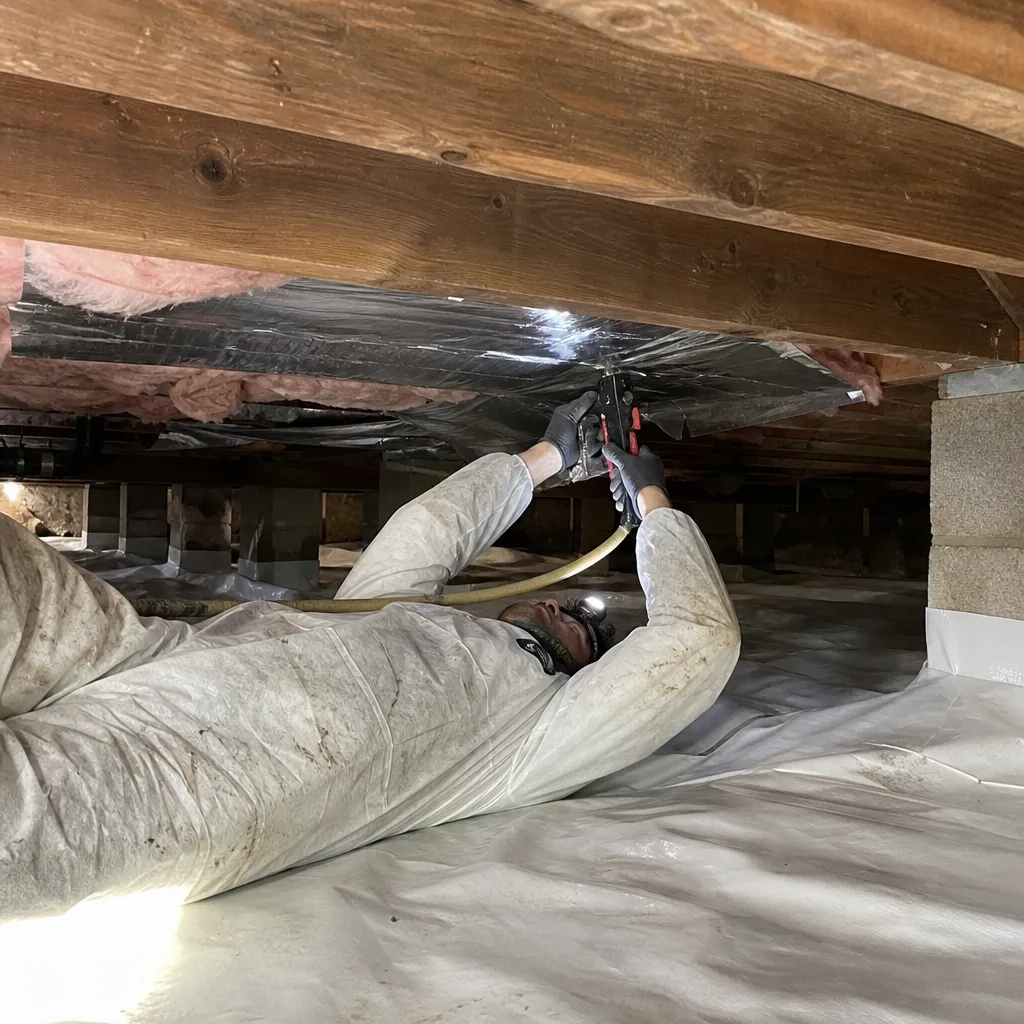
- Musty odor that intensifies after rain. The polyethylene vapor barrier has torn at seams or pulled from the sill plate, letting soil moisture evaporate into the crawl space. In Menlo Park, where winter rains saturate the clay-heavy soil for weeks, this happens faster than in drier inland climates.
- FOAMULAR boards sagging or detached from foundation walls. The adhesive failed, usually because the wall surface wasn’t properly cleaned or because moisture wicked behind the foam. Once air circulates behind the board, condensation forms and the board’s weight pulls it free.
- Condensation on ductwork or plumbing lines. The relative humidity in the crawl space has climbed above 70 percent, meaning the encapsulation is no longer maintaining a sealed, conditioned environment. This is common when the dehumidifier failed but the homeowner didn’t notice because the crawl space is out of sight.
- Insect or rodent activity increasing. Gaps in the barrier or around penetrations create entry points. We find this most often where the poly meets the pier posts in older Menlo Park homes with unlevel floors, because the original installer couldn’t get a clean seal.
- Hardwood floors cupping or buckling above the crawl space. Moisture is migrating upward through gaps in the subfloor because the encapsulation no longer blocks soil vapor. This is the expensive symptom, the one that costs $8,000-$15,000 in flooring repairs if the crawl space isn’t fixed fast.
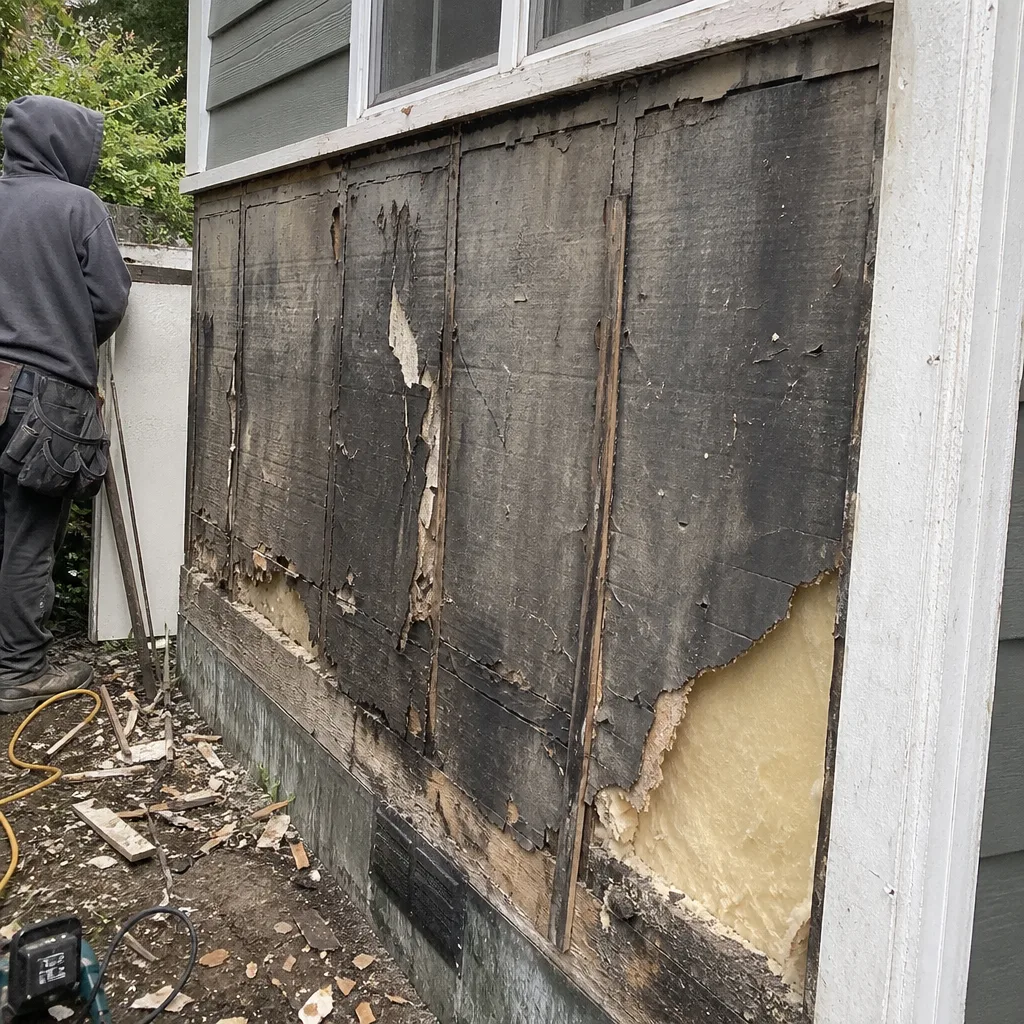 Before
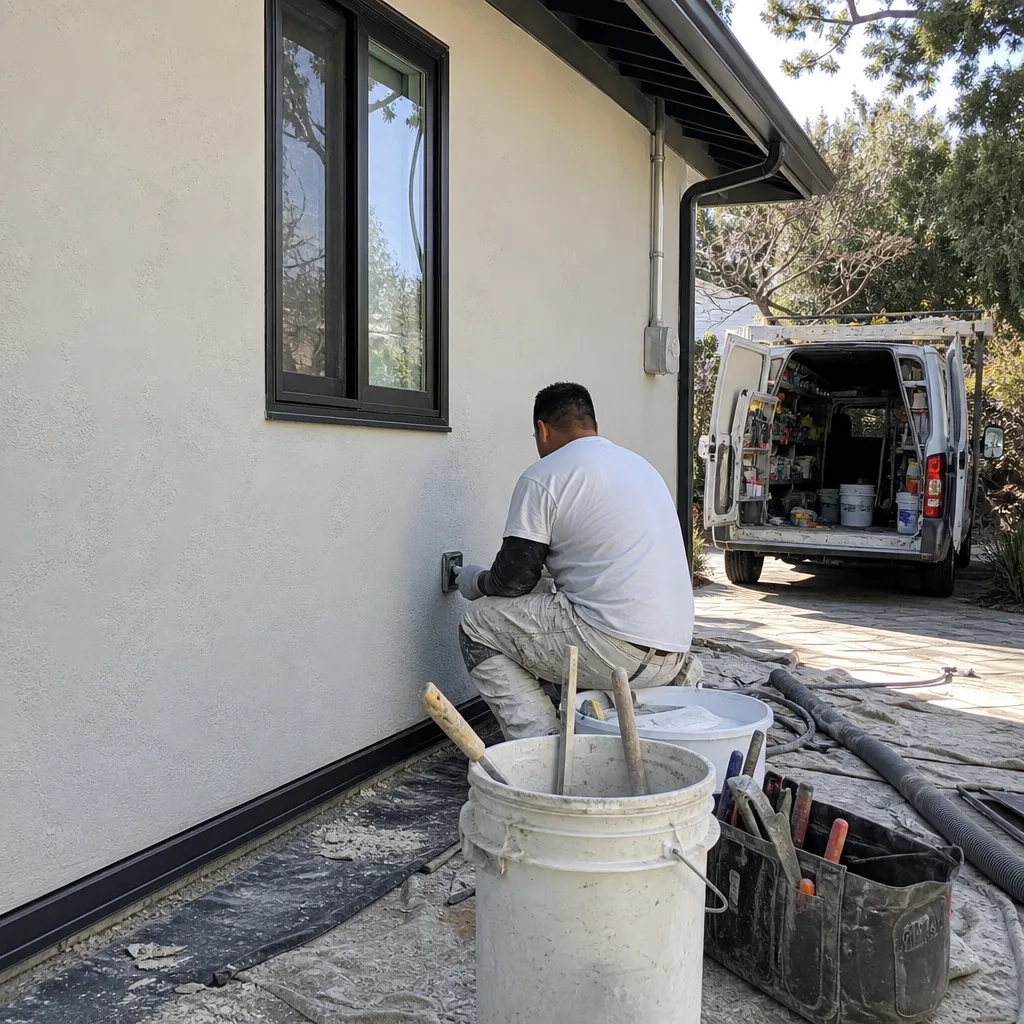 After
AfterReplacement Cost & What’s Included
| Component | Menlo Park Price Range |
|---|---|
| Vapor barrier replacement (10-mil or 12-mil poly, seams taped, sealed to walls) | $1,800-$3,400 |
| FOAMULAR NGX rigid foam, foundation walls (per 1,000 sq ft crawl space) | $1,200-$2,100 |
| Rim-joist spray foam (closed-cell, 2-inch minimum) | $900-$1,600 |
| Dehumidifier installation (70-pint, condensate pump to exterior) | $1,400-$2,400 |
| Full encapsulation (all components, typical 1,200 sq ft Menlo Park crawl space) | $3,800-$7,200 |
What drives the range: crawl space height (anything under 18 inches requires smaller crews and more time), number of pier posts that need custom sealing, whether the existing poly can be salvaged or must be fully removed, and if the home needs a new dehumidifier or just reconnection of the existing unit. Every job begins with a written price before any work starts. No exceptions. We also provide a Free Second Opinion on any written estimate you bring us.
The work is covered by our 365-Day Done Right Promise. You’ll receive a Documented Photo Record showing the completed encapsulation, and on jobs where air sealing is part of the scope, we provide before-and-after blower-door numbers so you can verify the actual performance change.
DIY or Call Us?
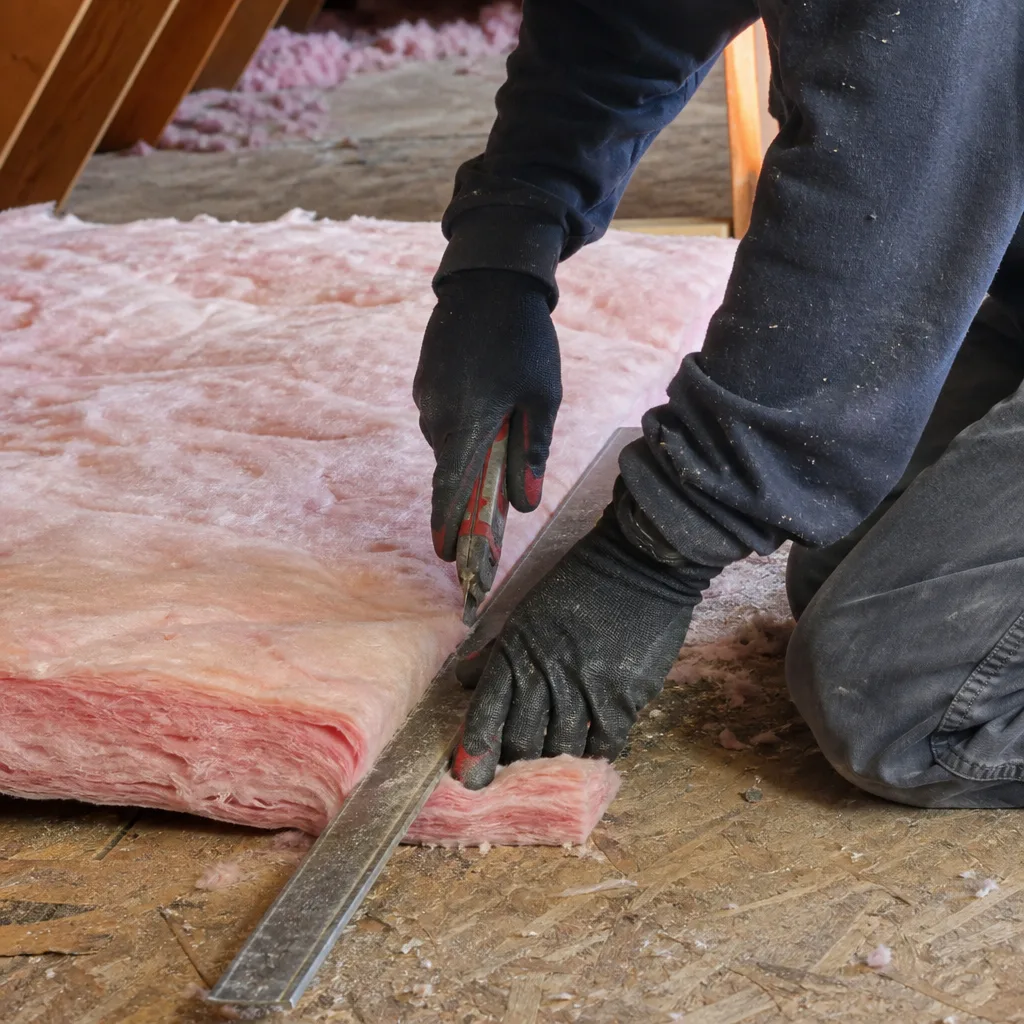
Here’s what you can safely check yourself: look for tears in the poly, detached foam boards, or standing water. Note whether your dehumidifier’s collection bucket is filling, or if the unit runs continuously without cycling off. These observations help us diagnose faster when you call.
Here’s where DIY goes wrong. Crawl spaces are confined spaces with limited ventilation. Disturbing old poly can release concentrated mold spores. Cutting rigid foam to fit around plumbing and electrical penetrations without hitting a line requires knowing what’s behind the wall. And sealing a vapor barrier to a sill plate while lying on your back in 48 inches of clearance is physically demanding work that gets done poorly when fatigue sets in. We’ve been called in to fix homeowner encapsulations where the poly was taped with duct tape that failed in three months, or where the dehumidifier was vented into the crawl space instead of to the exterior, adding moisture.
Seal the leaks first. The insulation has nowhere useful to go until you do.
Call (510) 876-4113 to schedule a free estimate. A live person answers, 24/7.
FAQs
Properly installed 10-mil or 12-mil poly with sealed seams lasts 15-20 years in Menlo Park’s climate, though the clay-heavy soils in the flats near Middlefield Road can shorten that if drainage is poor. The dehumidifier typically needs replacement at 7-10 years. Call (510) 876-4113 for an exact quote on your crawl space, estimates are free.
Small tears, under six inches, can be patched with compatible seam tape if the surrounding poly is still flexible. If the poly is brittle, discolored, or pulling away at multiple seams, patching is false economy. The labor to patch often approaches replacement cost, and the warranty covers only the new material. Call (510) 876-4113 for an exact quote, estimates are free.
Most Menlo Park crawl spaces, 1,000-1,500 square feet, take one to two days. Tight crawl spaces under 18 inches, or those with extensive rot repair needed at the sill plate, can stretch to three days. We stock Owens Corning-compatible materials on our trucks for same-day or next-day start once the written price is approved. Call (510) 876-4113 to check current availability.
We stock FOAMULAR NGX rigid foam, compatible poly sheeting, seam tapes, and closed-cell spray foam on our trucks. We do not stock every thickness of every product, so confirmation of your specific needs happens during the estimate. For Menlo Park jobs, we typically have materials within 24 hours. Call (510) 876-4113 to confirm availability for your specific repair.
Written by Wes Okafor, Owner, Topside Attic Insulation Menlo Park at Topside Attic Insulation Menlo Park, serving Menlo Park and nearby areas.