
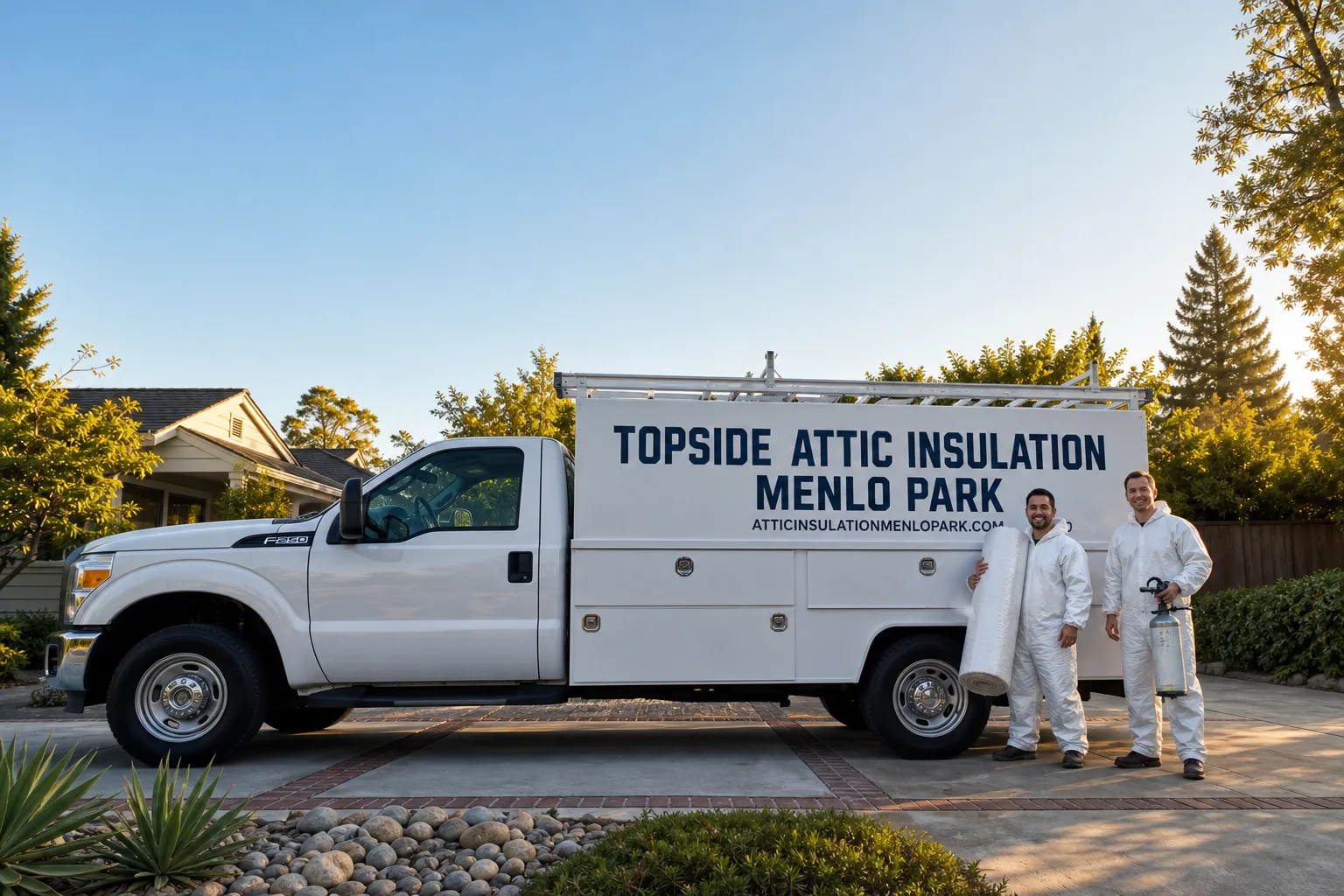
Fast, Reliable Spray Foam Insulation Across Stanford
Spray foam insulation in Stanford, CA typically runs $2.80-$5.40 per board foot installed, with most residential jobs falling between $1,800 and $4,500 depending on cavity depth and whether the scope requires closed-cell or open-cell material. Our crews serve Stanford from our San Francisco Bay Area dispatch office, and because Stanford is not a conventional municipality, every job here routes through Stanford Facilities Management rather than a city building department. That difference matters. Call (510) 876-4113 for a written price before any work starts.
We’ve sealed and insulated more than 9,000 homes since 2016, and the Stanford jobs stand apart. The university’s own carbon-neutrality commitments, including the Stanford Energy System Innovations initiative, frequently drive insulation standards past California’s Title 24 baseline. Our Spray Foam Insulation team knows both code sets, and we publish before-and-after blower-door numbers on every applicable job so you can verify the performance change in one figure.
Why Topside Attic Insulation Menlo Park Is Stanford’s Preferred Spray Foam Insulation Company
Stanford tenants and facilities coordinators call us because we understand the institutional path. Unlike private-property jobs in Palo Alto or Menlo Park, where a homeowner signs a contract and we pull a city permit, Stanford work requires Facilities Management sign-off before we touch Frenchman’s Hill faculty housing or Escondido Village graduate units. We’ve built that workflow into our process. Written scope, written price, university submission, then the crew arrives. No exceptions.
Our response time to Stanford is typically same-day or next-day for assessment, with scheduling coordinated through our Bay Area office. We answer calls 24/7 with a live person, no voicemail loops.
Reviews from Stanford customers consistently note the documentation. The photo record, the blower-door readings, the written warranty delivered before anyone lifts a tool. Under Haven Standard, you know what leaving looks like before we arrive.
Wes Okafor has directed every aspect of this since 2016. Independently owned and operated, no franchise structure, no proprietary product lock-in.
Our Spray Foam Insulation Services in Stanford
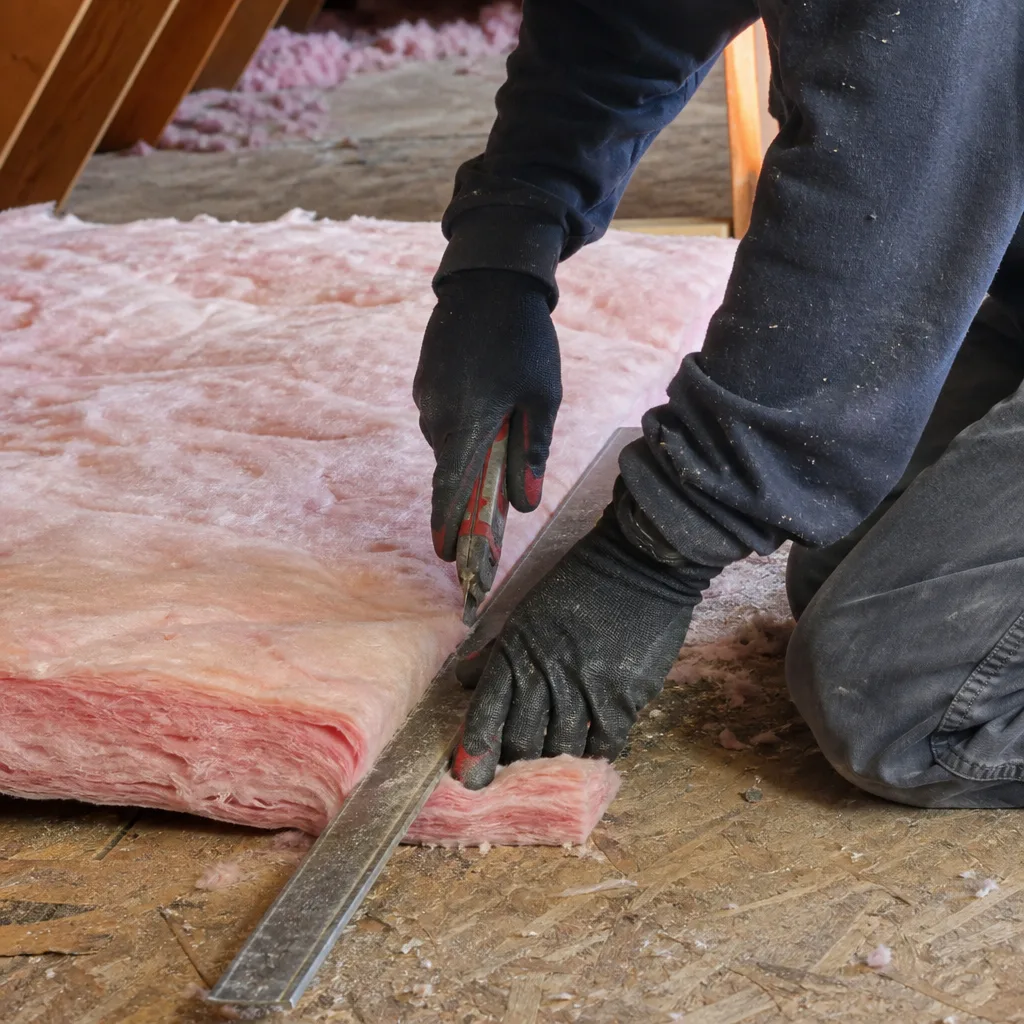
Closed-Cell Spray Foam
Closed-cell spray foam in Stanford runs $4.20-$5.40 per board foot and delivers R-6.5 per inch with a built-in vapor barrier. In the mid-century faculty homes around Frenchman’s Hill, we use it for roof deck caps where the original tongue-and-groove sheathing has no continuous air barrier. The material also meets Stanford Energy System Innovations thermal-performance thresholds that exceed Title 24 for envelope retrofits. Our crew was called to a mid-century faculty home in the Frenchman’s Hill leased neighborhood where a closed-cell spray foam cap we’d installed on the roof deck was performing well, but the attic still bled heat because the original 1950s tongue-and-groove roof sheathing had no continuous air barrier at the eaves. We submitted the scope through Stanford Facilities Management, added open-cell spray foam at the rim joists and sealed the eave line before re-inspecting, which stabilized the attic temperature swing between the low-90s afternoons and the 30s foothill nights near the Stanford Dish.
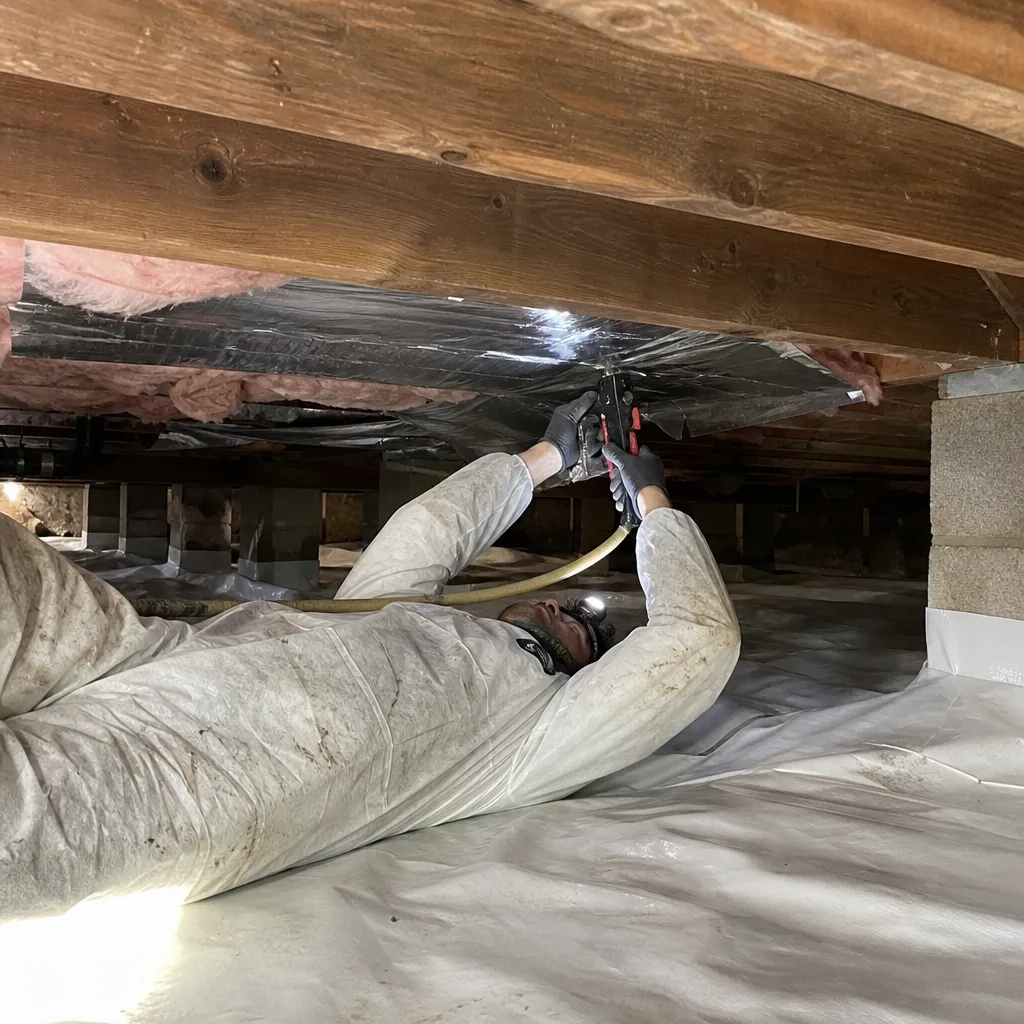
Open-Cell Spray Foam
Open-cell spray foam in Stanford costs $2.80-$3.80 per board foot and provides R-3.6 per inch with vapor permeability. We specify it for rim joist sealing in post-1960s graduate housing complexes where the building already has a separate vapor retarder. The material fills irregular cavities completely, which matters in Stanford’s older construction where framing isn’t always square. Under Haven Standard, the written scope specifies exact cavity depths and pass counts before we start.
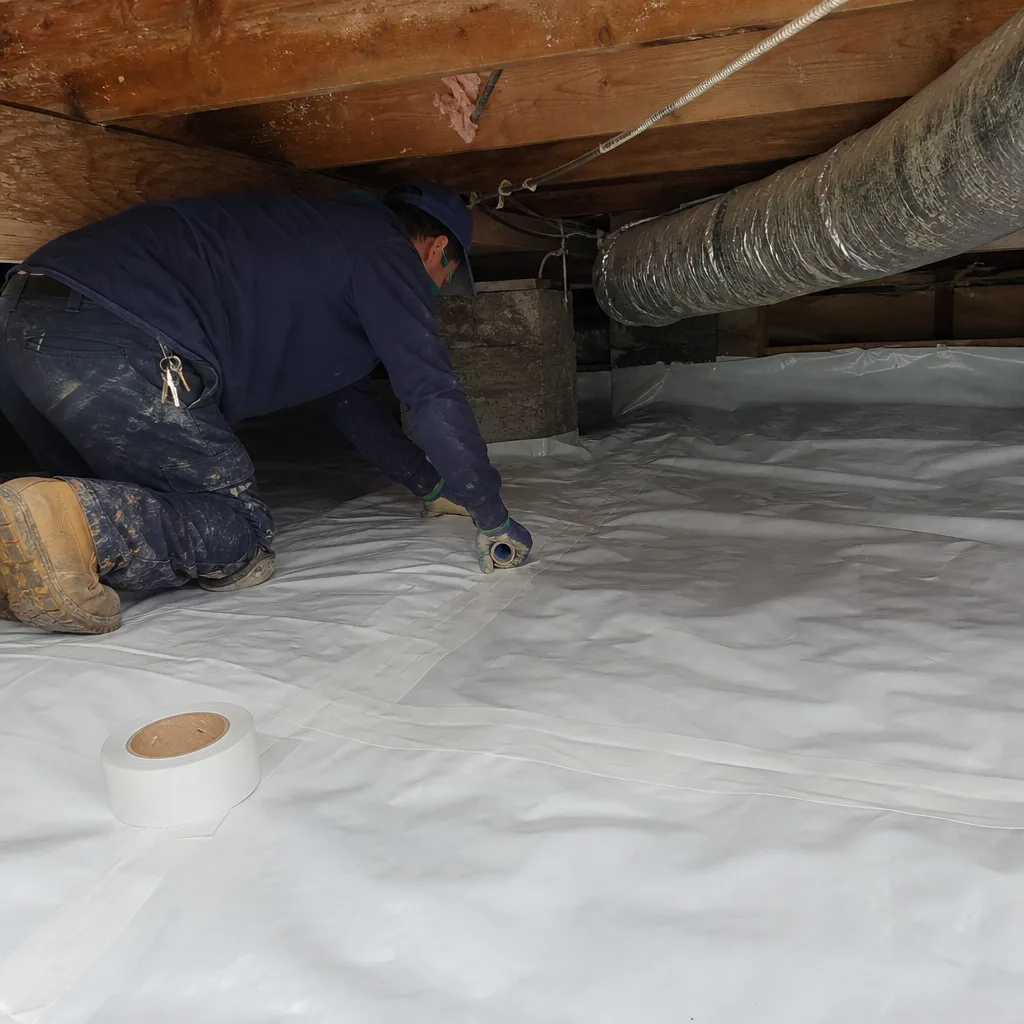
Rim Joist Spray Foam
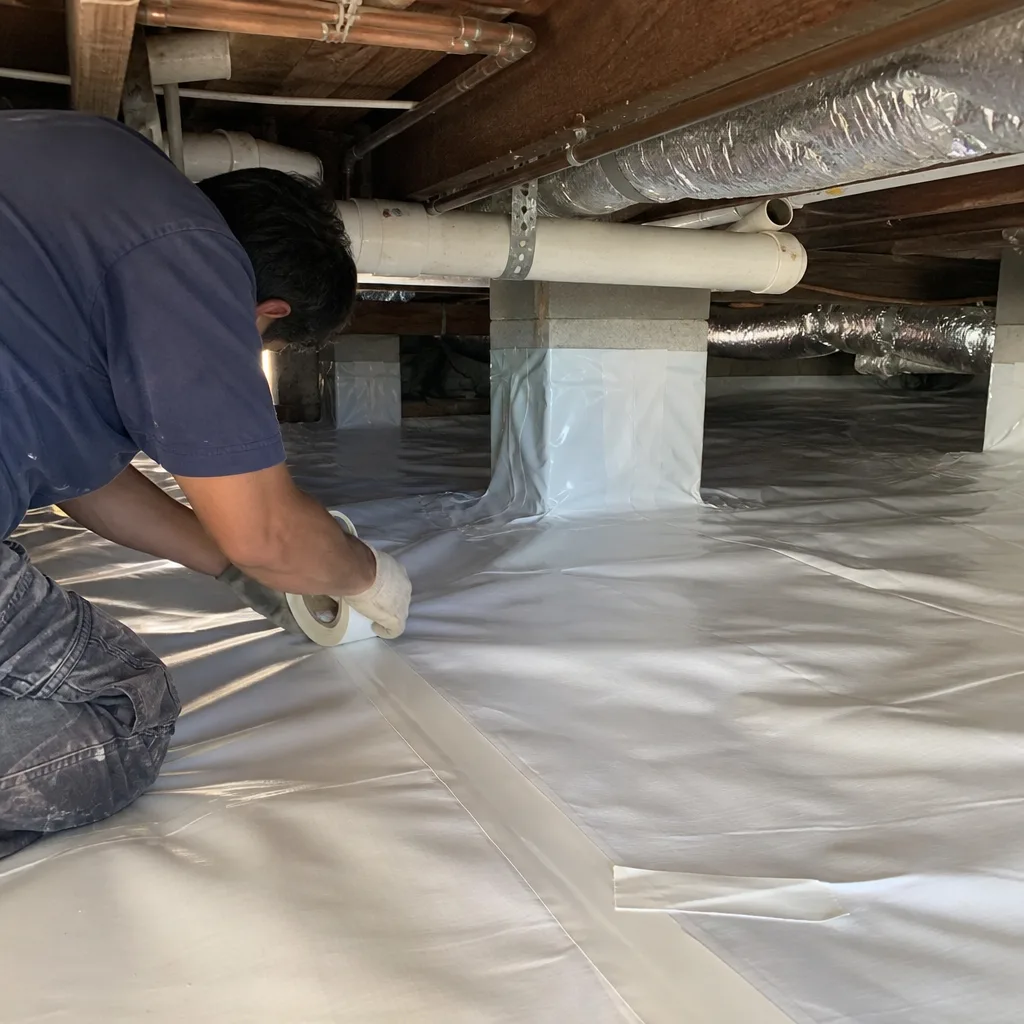
Rim joist spray foam in Stanford typically falls between $800 and $1,800 for a full basement or crawl-space perimeter. The rim joist is where the foundation wall meets the floor system, and it’s often the leakiest part of a building envelope. In Stanford’s foothill microclimate, where winter nights drop into the 30s near the Stanford Dish, unsealed rim joists pull cold air straight into conditioned space. We seal first, then insulate. Air sealing of top plates, can lights, and penetrations is completed before any insulation is added. Blower-door numbers prove the result.
Garage Ceiling Spray Foam
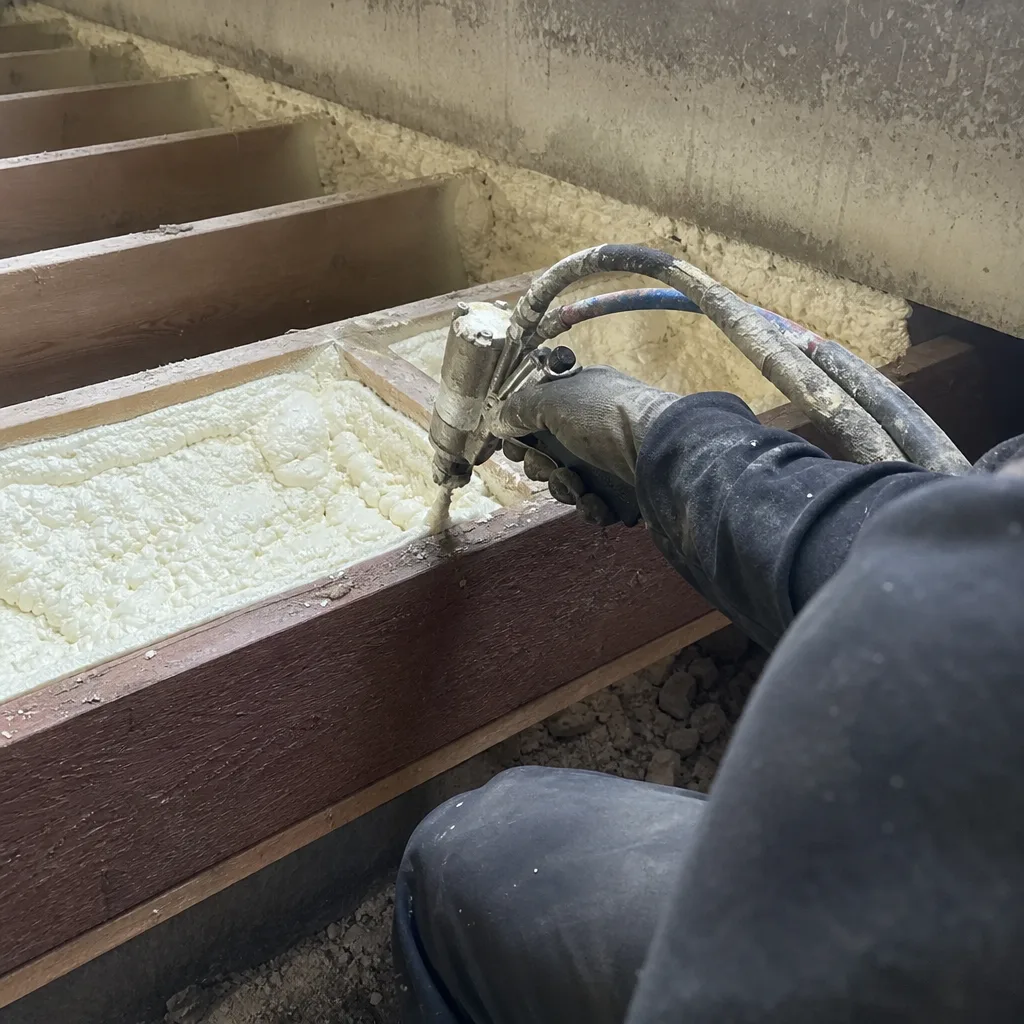
Garage ceiling spray foam in Stanford runs $1,200-$2,800 depending on whether the garage is detached or attached and whether the ceiling plane includes ductwork or electrical penetrations. In Escondido Village and other graduate housing areas, garage ceiling insulation often buffers conditioned units above. We photograph every penetration before and after sealing, and the photo record goes to Facilities Management as part of the closeout package.
Spray Foam Roof Deck
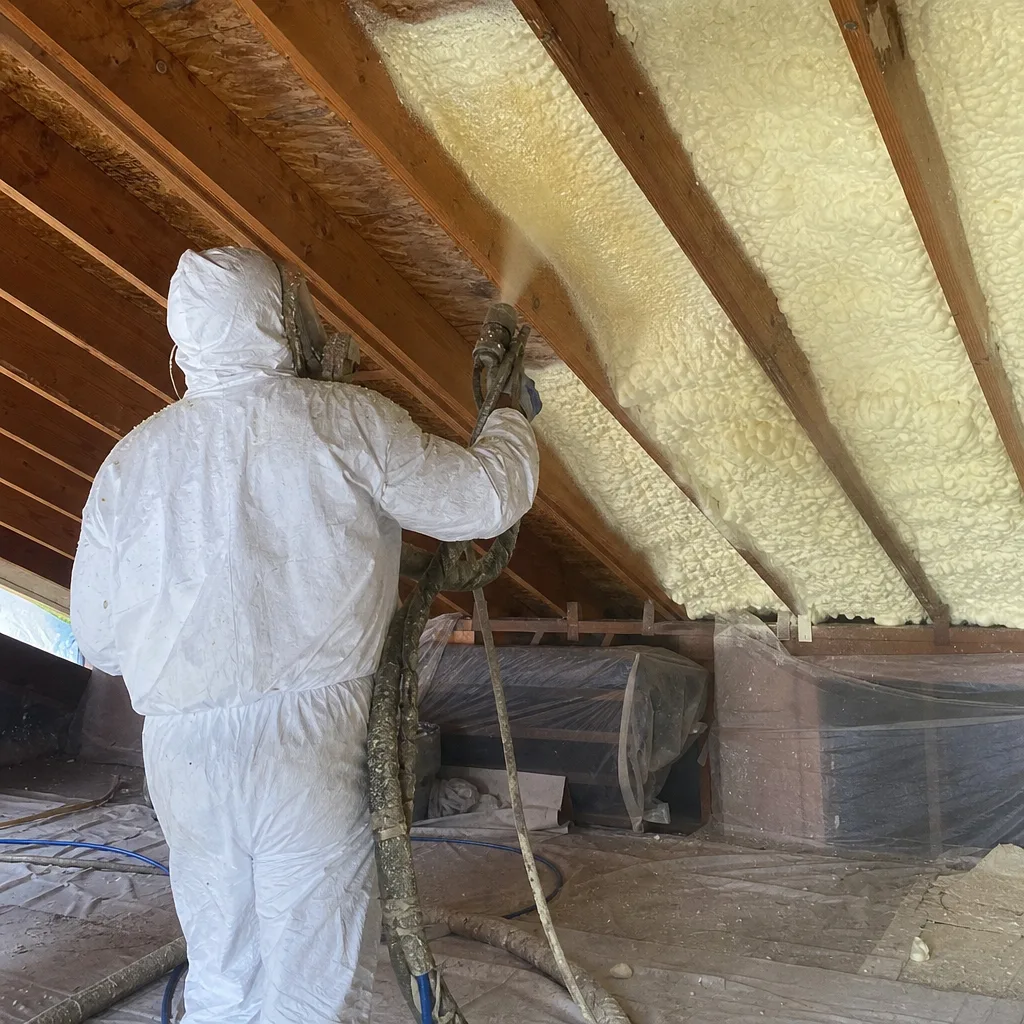
Spray foam roof deck application in Stanford is our most common scope for mid-century and post-1960s buildings, typically $2,200-$4,500. The diurnal swing here, low-90s afternoons to 30s nights, makes an uninsulated roof deck a massive thermal liability. We apply closed-cell foam directly to the roof sheathing underside, creating a conditioned attic that eliminates the temperature differential. Before-and-after blower-door readings show the air-sealing result in CFM50.
What happens when you call
- 1
A real person answersNo phone trees - you reach a local pro.
- 2
You get an upfront price rangeHonest numbers before anyone is dispatched.
- 3
A background-checked tech heads outLicensed & insured, dispatched right away.
- 4
You approve before work beginsNothing starts until you say go.
 Before
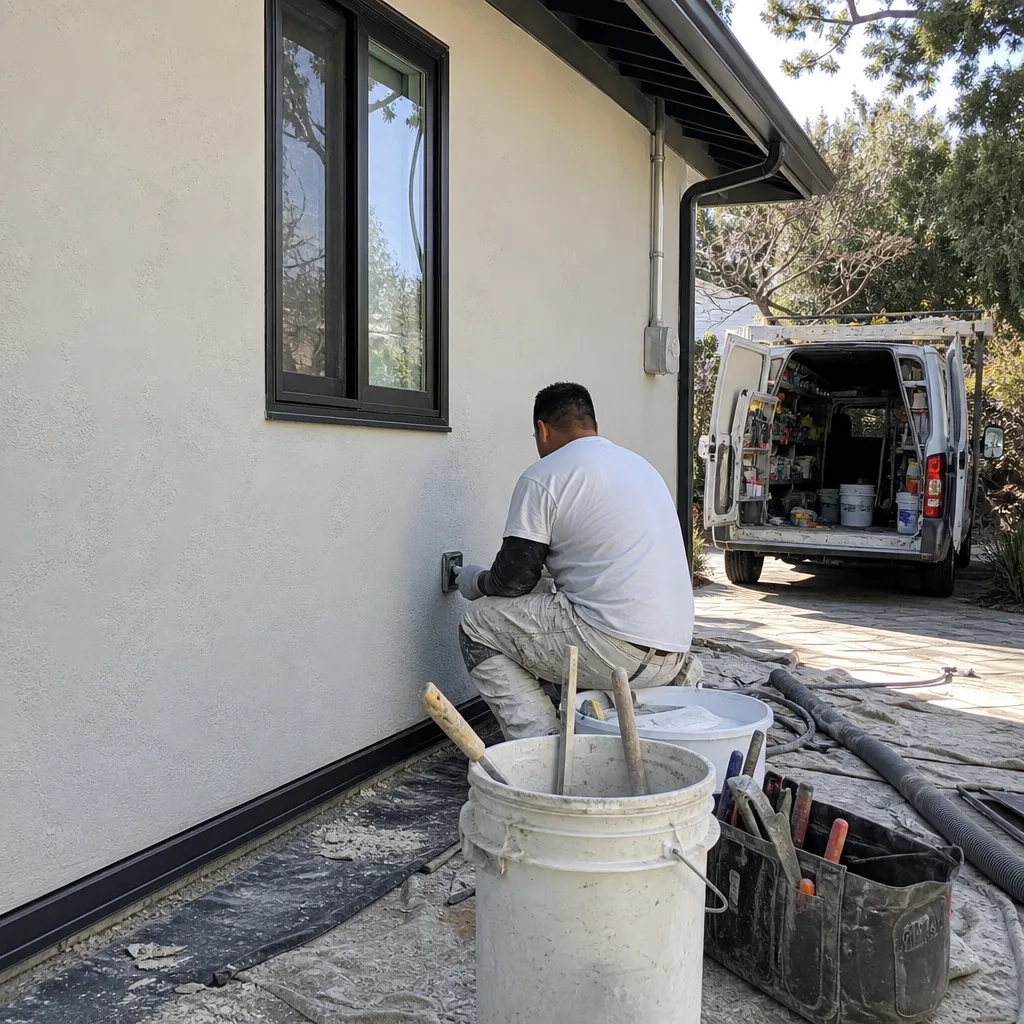 After
AfterTrusted Brands We Service in Stanford
We source spray foam materials from Icynene, Demilec, and CertainTeed, with no proprietary lock-in that limits what we can specify for your building. For Stanford jobs, this matters because Facilities Management may require specific thermal-performance values or low-global-warming-potential blowing agents that align with Stanford’s carbon-neutrality framework. We stock local inventory for fast turnaround, and we match the material to the scope rather than forcing the scope to fit a single product line. Every specification is documented in the written price you receive before any work starts.
Common Spray Foam Insulation Problems We See in Stanford Homes
- Proceeding without Stanford Facilities Management sign-off. Tenants in Frenchman’s Hill or Escondido Village cannot authorize retrofits on university-owned property. We see scopes initiated by well-meaning residents that stall when Facilities Management reviews the work after the fact. Our process submits the scope first, gets written approval, then schedules.
- Standard foam applied to historic Inner Quad sandstone without thermal-mass analysis. The Richardsonian Romanesque structures from 1887-1906 require insulation approaches vetted through Stanford Historic Preservation guidelines. Contractors who ignore masonry thermal mass and vapor dynamics risk moisture accumulation in century-old unreinforced walls. We don’t touch these buildings without Preservation review.
- Scopes that meet Title 24 but fail Stanford Energy System Innovations standards. California code is the floor here, not the ceiling. We’ve revised competitor scopes that would have passed Palo Alto permitting but fell short of Stanford’s internal carbon-neutrality-driven insulation specs.
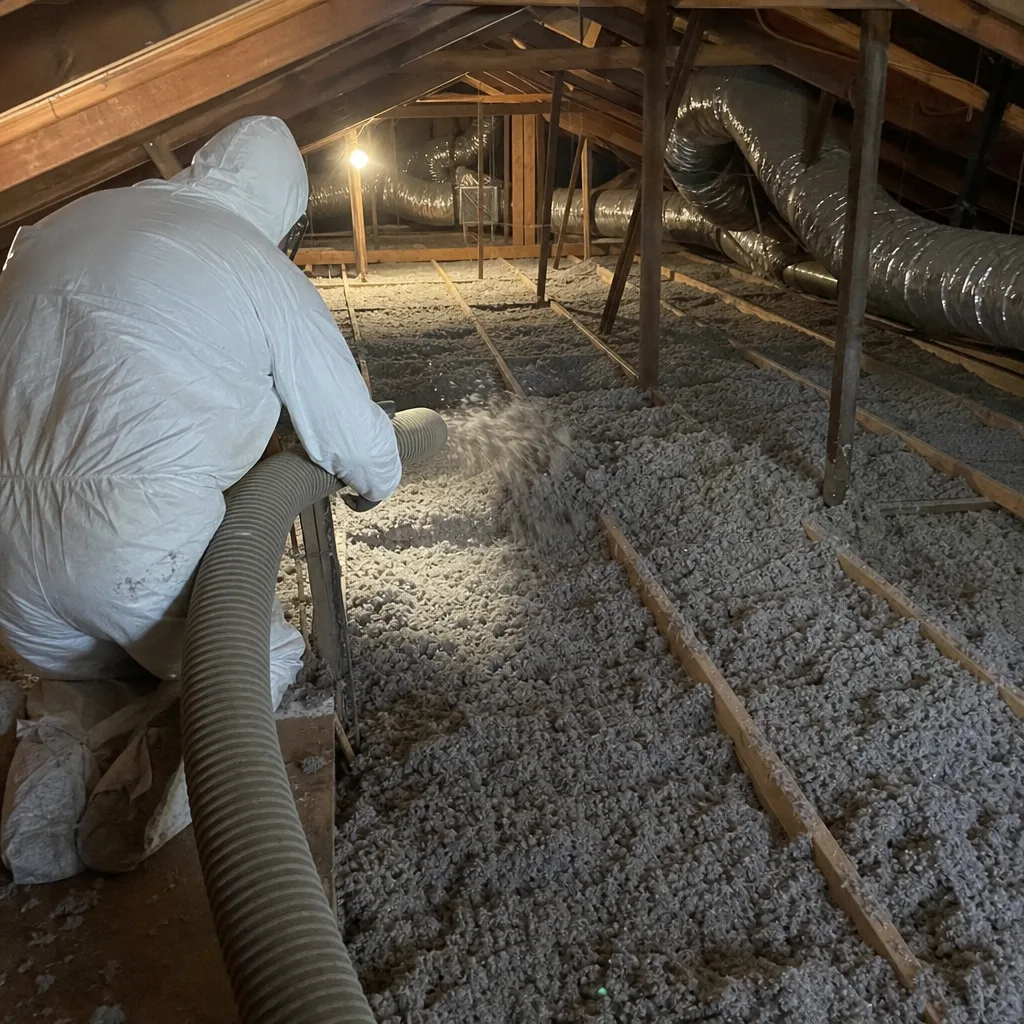
- Under-sealed roof decks and rim joists in foothill-exposed buildings. The Santa Cruz Mountain microclimate amplifies every gap. A roof deck with incomplete air sealing at the eaves, or a rim joist with missed cavities, turns the diurnal swing into a comfort and moisture problem. Our blower-door test catches it before we close.
Pricing for Spray Foam Insulation in Stanford, CA
| Service | Typical Range in Stanford |
|---|---|
| Open-cell spray foam | $2.80-$3.80 / board foot |
| Closed-cell spray foam | $4.20-$5.40 / board foot |
| Rim joist spray foam (full perimeter) | $800-$1,800 |
| Garage ceiling spray foam | $1,200-$2,800 |
| Spray foam roof deck | $2,200-$4,500 |
What moves the number: cavity depth and accessibility, whether existing insulation must be removed first, the air-sealing prep required before foam can go in, and whether Stanford Facilities Management requires additional documentation or third-party testing. We don’t guess. Every job begins with a written price, flat scope, and written warranty before anyone lifts a tool. Free Second Opinion on any written estimate from another contractor. Call (510) 876-4113 to schedule.
We Also Serve Cities Near Stanford
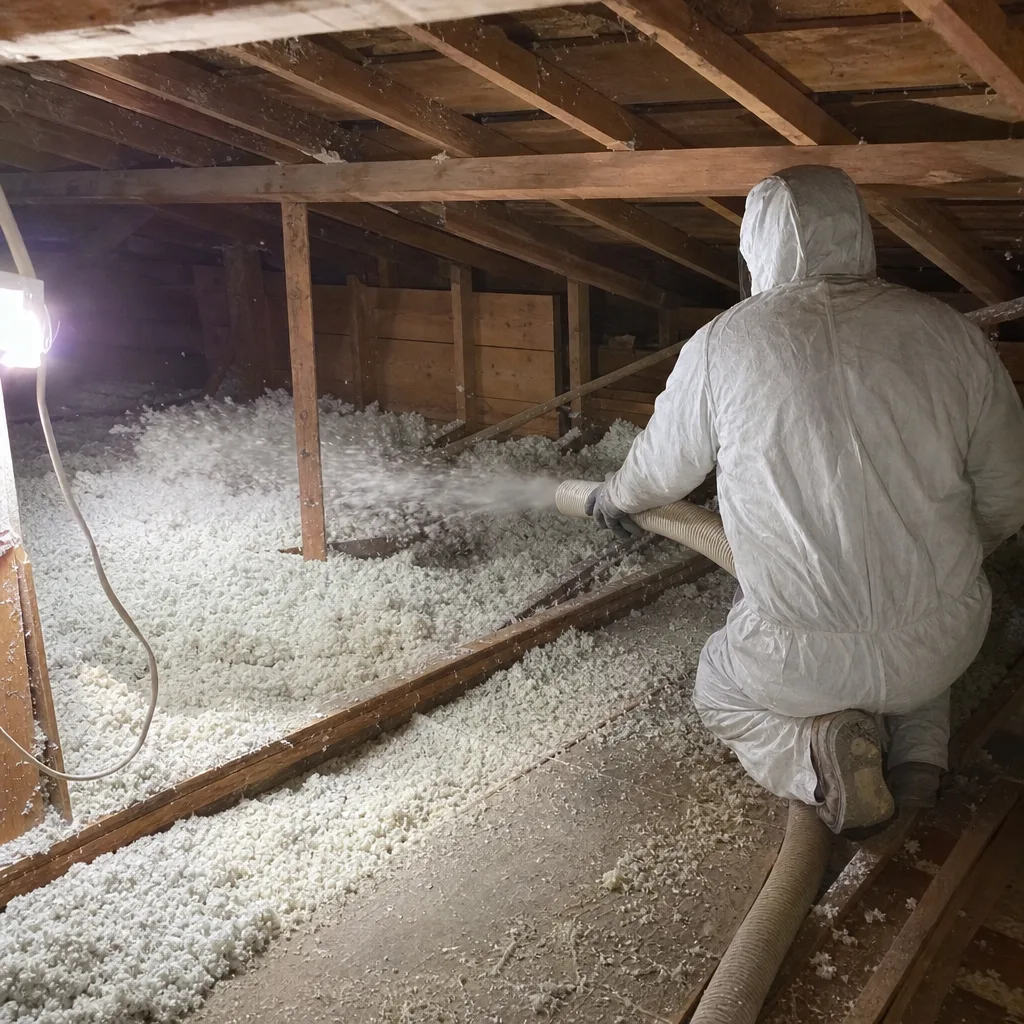
Our crews work throughout the Peninsula. If you’re in Stanford or nearby, we cover Palo Alto, Menlo Park, Atherton, and Los Altos with the same documented process: written price first, photo record at closeout, blower-door numbers when applicable. Dispatch and scheduling are coordinated from our San Francisco Bay Area office.
Serving Stanford, CA - Our Local Coverage Area
We’re based in the Stanford area and know this community well. Use the map below to see our service coverage - if you’re nearby, we can almost certainly help.
FAQs - Spray Foam Insulation in Stanford
No. Because virtually all of Stanford is university-owned, spray foam work here must be cleared through Stanford Facilities Management and often tested against Stanford’s own carbon-neutrality and Stanford Energy System Innovations standards, which can exceed California Title 24 - the private-property permitting path used in Palo Alto and Menlo Park doesn’t apply. Tenants can initiate the conversation, but Facilities Management must approve the scope, budget, and contractor. We handle that submission as part of our standard process. Call (510) 876-4113 and we’ll walk you through what Facilities Management needs to see.
Yes. The historic Inner Quad sandstone buildings, original Richardsonian Romanesque construction from 1887-1906, require insulation approaches vetted through Stanford’s Historic Preservation guidelines, meaning contractors cannot simply retrofit standard batt or spray foam without addressing the masonry thermal mass and vapor dynamics of century-old unreinforced walls. We don’t bid these scopes without Preservation review built into the timeline. The written price includes that coordination. For other Stanford buildings, the path is more direct.
Stanford sits at the base of the Santa Cruz Mountain foothills where afternoon heat from the inland valley pushes summer highs into the low-to-mid 90s while coastal marine air keeps nights cool, a pronounced diurnal swing that makes attic air-sealing and insulation especially impactful on comfort and cooling loads. Winter nights dip into the 30s near the Stanford Dish, so the same gaps that bleed cooled air in July pull heated air out in January. Sealing first, then insulating, cuts both loads. Our before-and-after blower-door numbers quantify that reduction in a single figure.
Rim joist spray foam and spray foam roof deck are the most common scopes for post-1960s graduate housing complexes, with garage ceiling spray foam where units sit above parking. These buildings typically have simpler framing than the mid-century faculty homes but share the same institutional approval path through Facilities Management. We specify open-cell or closed-cell based on existing vapor control and the thermal-performance targets Stanford Energy System Innovations sets for the building. The written scope names the exact material, pass count, and R-value target before work starts.
We work with Icynene, Demilec, and CertainTeed for spray foam at Stanford, with no proprietary lock-in that limits specification flexibility. Stanford’s carbon-neutrality framework sometimes requires low-GWP blowing agents or specific thermal values that favor one formulation over another. We match the material to the scope and document the specification in the written price. Call (510) 876-4113 for an exact quote - estimates are free.
Written by Wes Okafor, Owner at Topside Attic Insulation Menlo Park, serving Stanford since 2016.