
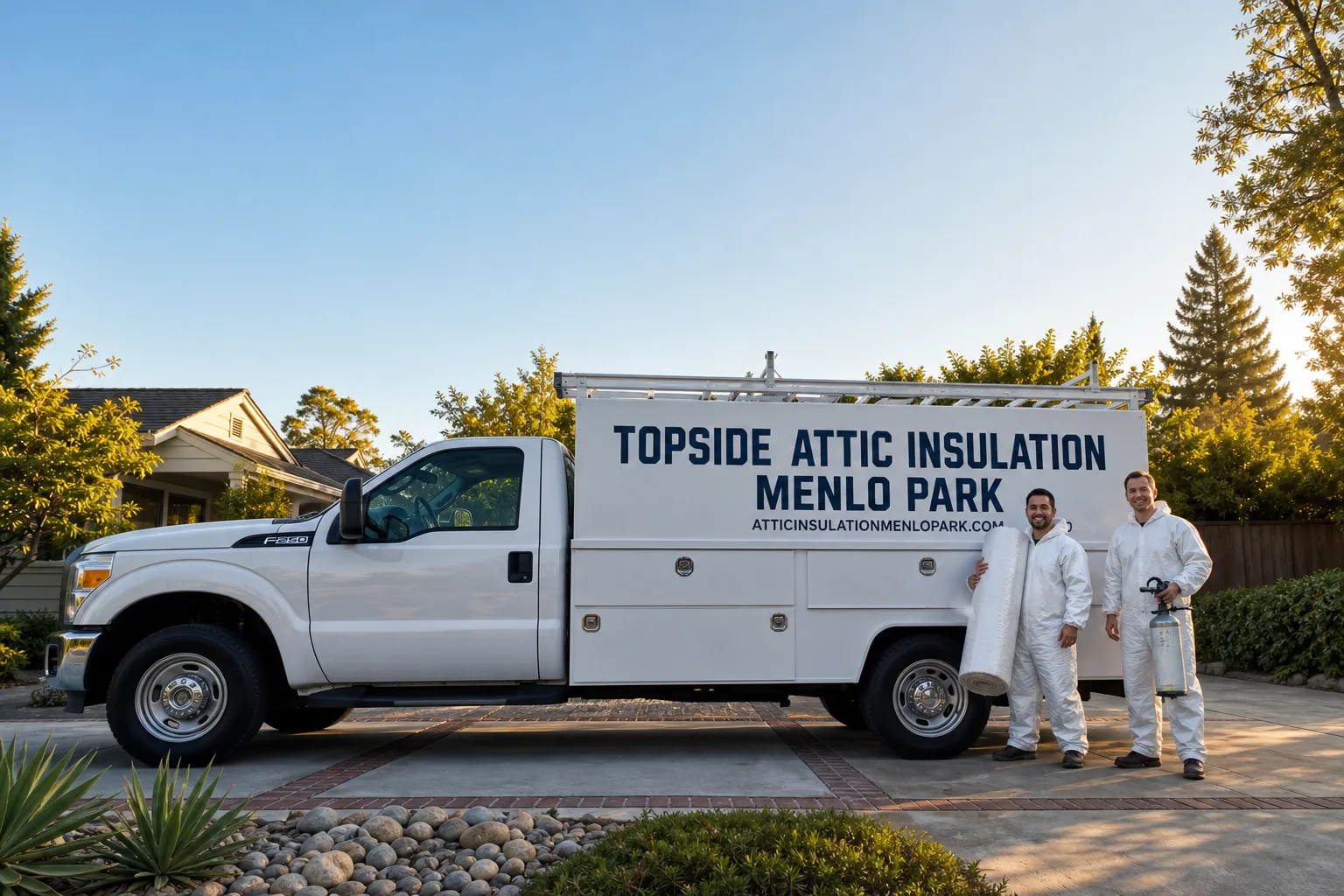
Fast, Reliable Blown-In Insulation Across Los Altos Hills
Blown-in insulation in Los Altos Hills typically runs $2.80-$4.50 per square foot for attic work and $3.50-$6.00 for dense-pack wall cavities, with most complete retrofits on custom hillside homes falling between $4,200 and $9,800. We’re usually on-site within 24-48 hours of your call, and crews dispatch from our San Francisco Bay Area office to serve Los Altos Hills directly. Call (510) 876-4113 for a written price before any work starts.
Los Altos Hills isn’t like the cities below it. The 1-acre minimum lot ordinance has kept out every tract development, so every home here is custom-built, many from the 1950s-70s, with original fiberglass batts that have settled or been compromised by decades of rodent activity and fog-belt moisture. Our Blown-In Insulation team has worked these hillside lots enough to know that a standard attic top-up without vapor remediation is a waste of your money.
Why Topside Attic Insulation Menlo Park Is Los Altos Hills’s Preferred Blown-In Insulation Company
We’ve sealed and insulated over 9,000 homes since 2016, and a measurable share of them sit on these Los Altos Hills slopes. The reviews that matter to us are the specific ones: homeowners who mention that their floors stopped feeling cold after the first fog season, or that we found moisture damage they didn’t know existed. We don’t ask for ratings; we document blower-door numbers and photo records, and the feedback follows.
Response time to Los Altos Hills is typically same-day or next-day for assessments, with most blown-in jobs scheduled within a week of written approval. Dispatch coordinates from our Bay Area office, but the crew that arrives knows the difference between a flat-lot retrofit and a cantilevered hillside foundation with an exposed crawl space facing uphill moisture flow.
Local knowledge here means recognizing that a home off Elena Road or along Purissima Creek has different moisture patterns than one on the valley side of the foothills. It means knowing that the marine layer hangs longer above 600 feet, and that an attic venting strategy that works in Sunnyvale will fail here. We don’t guess. We test, seal, document, then insulate.
Our Blown-In Insulation Services in Los Altos Hills
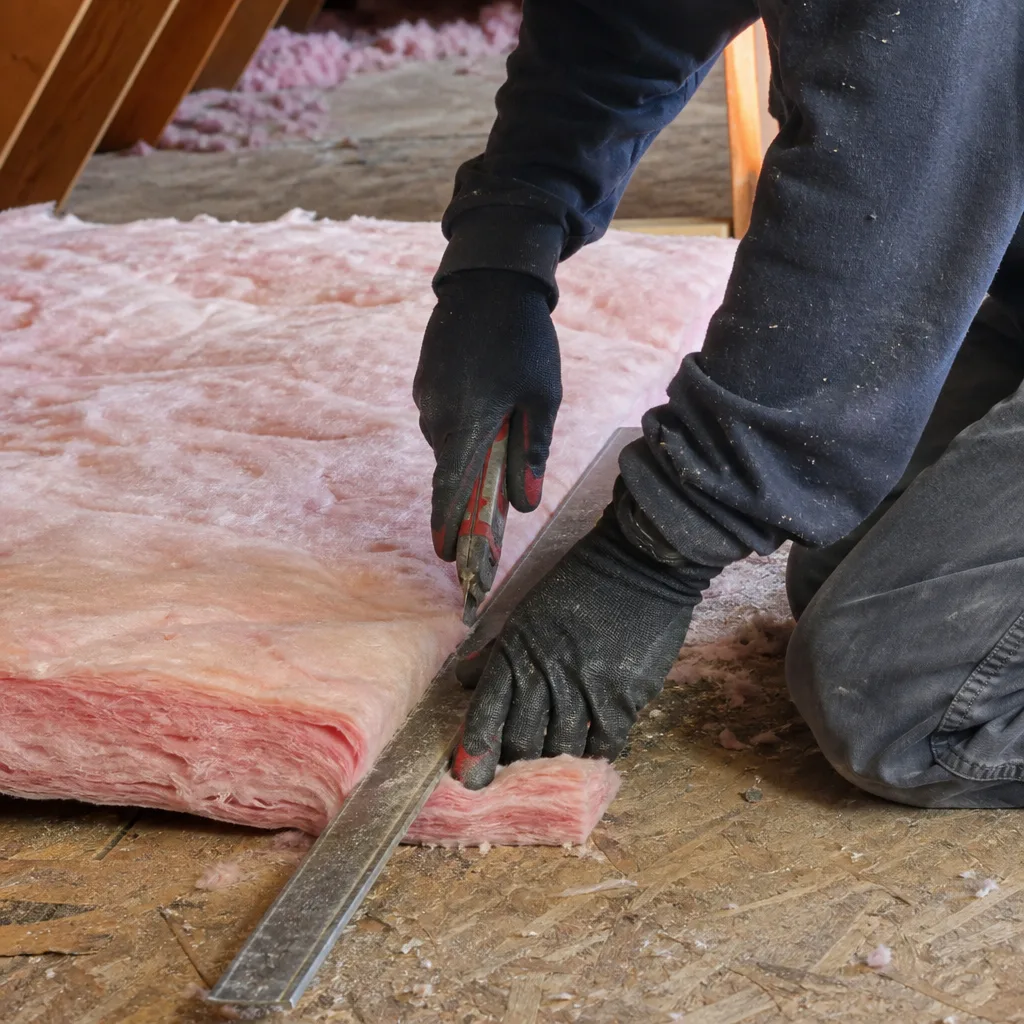
Blown-In Cellulose
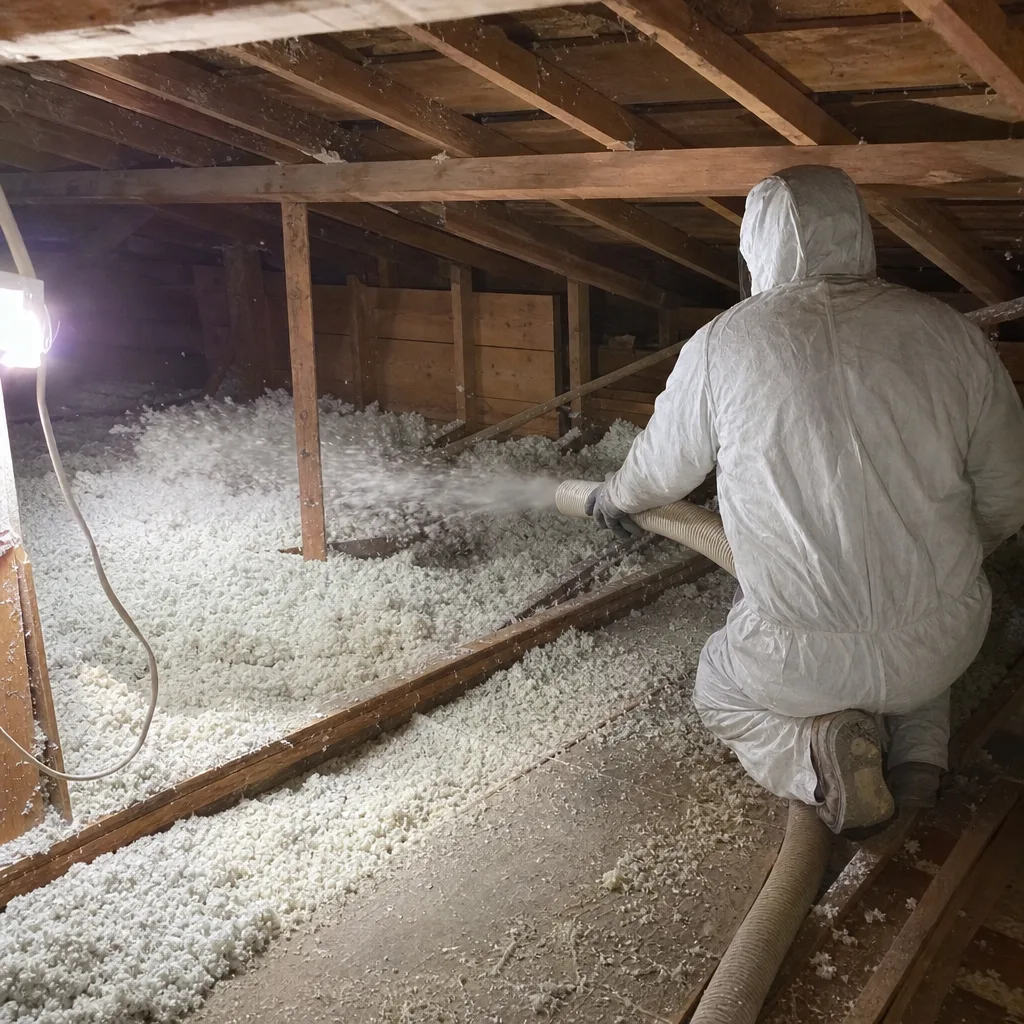
We specify GreenFiber cellulose for most Los Altos Hills attic restorations, treated with borate for fire and pest resistance. But we won’t blow it over an unsealed attic floor. The fog-belt moisture here means cellulose can clump and lose R-value if air sealing and venting aren’t corrected first. On a split-level home off Elena Road, our crew pulled saturated 1960s kraft-faced batts from an exposed downslope crawl space and found them compressed flat against the floor joists. We removed the rot, installed a vapor barrier on the uphill-facing wall, then blew in GreenFiber cellulose to bring the flat attic section to spec while leaving the vaulted bays for dense-pack. The homeowner noticed the floors above stopped feeling cold within the first week of fog season.
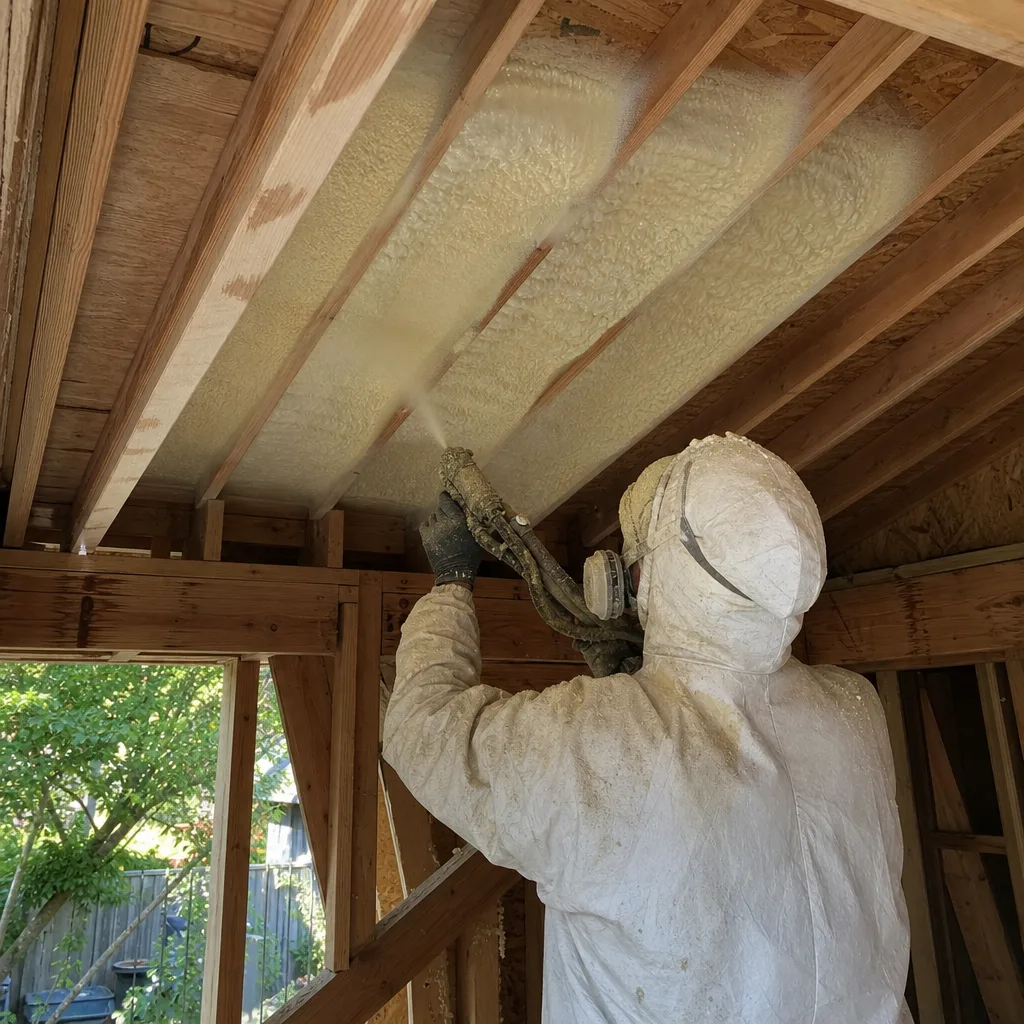
Blown-In Fiberglass
For homeowners concerned about moisture sensitivity, we install blown-in fiberglass from Owens Corning or Johns Manville. It doesn’t hold water the way cellulose can, which matters in Los Altos Hills attics that stay damp through July. We still seal first. The material choice is secondary to the envelope performance.
Dense-Pack Wall Insulation
Custom Los Altos Hills homes from the 1960s and 70s often have empty stud cavities or thin, settled batts behind drywall. Dense-pack cellulose, blown at 3.5-4.0 pounds per cubic foot, fills these cavities completely and reduces air movement through the wall. This matters especially on the uphill walls of hillside homes, where wind-driven moisture pushes through gaps that batts never sealed. We verify density with wall-cavity sampling on every job.
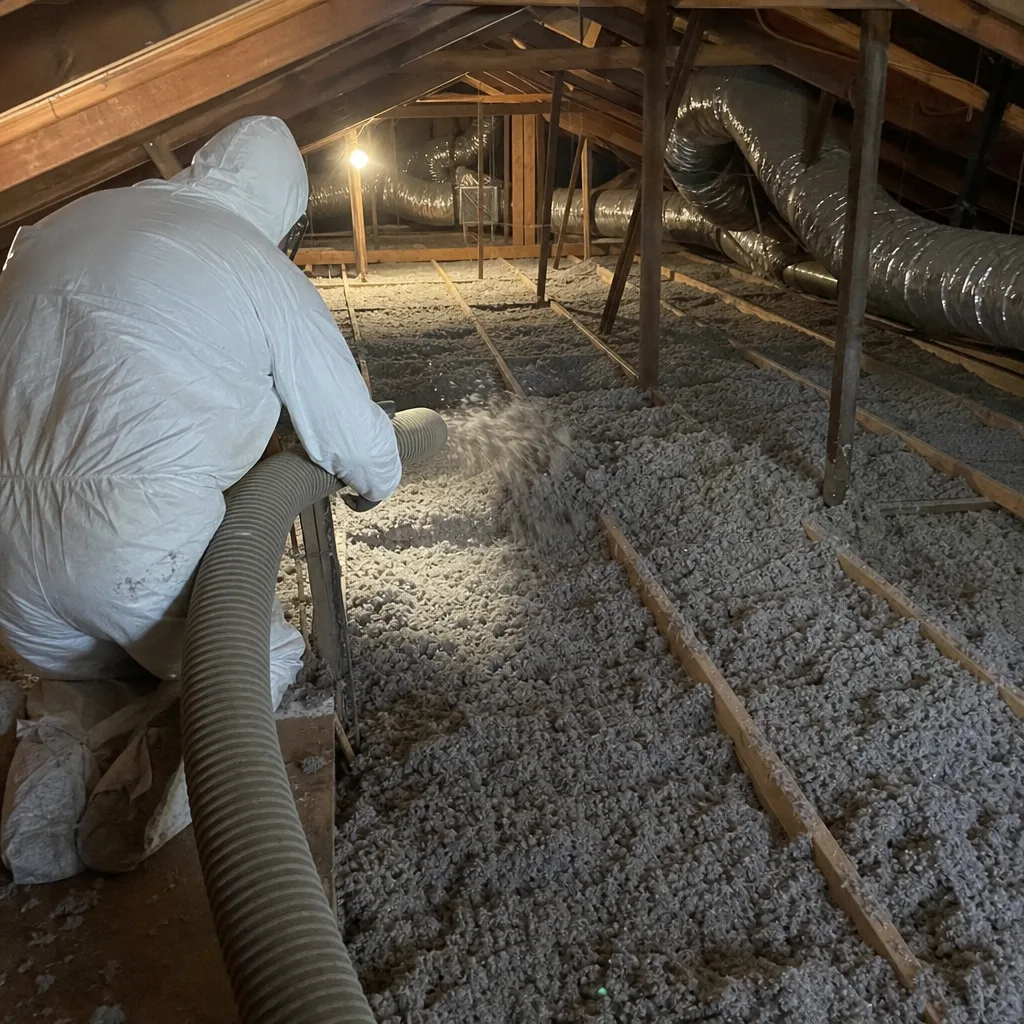
Blown-In Top-Up
Some Los Altos Hills attics have adequate insulation depth but degraded material, or adequate material with poor distribution. A top-up isn’t always the right call here. Because of the fog-belt moisture and rodent activity common in these older custom homes, we inspect first. If the existing layer is compromised, we quote removal and replacement with a full air-sealing package. If it’s clean and well-distributed, we’ll add to it and document the before-and-after R-value. No work starts without a written price and a scope that says exactly what we’re doing.
What happens when you call
- 1
A real person answersNo phone trees - you reach a local pro.
- 2
You get an upfront price rangeHonest numbers before anyone is dispatched.
- 3
A background-checked tech heads outLicensed & insured, dispatched right away.
- 4
You approve before work beginsNothing starts until you say go.
 Before
 After
AfterTrusted Brands We Service in Los Altos Hills
We source materials from GreenFiber, Icynene, and Demilec among others, with no proprietary lock-in that limits what’s right for your specific assembly. For Los Altos Hills homes, we stock GreenFiber cellulose treated for coastal moisture conditions and Icynene open-cell foam for hybrid applications where dense-pack and spray foam need to work together. Most common densities and treatments are available without special order delays, so your job isn’t held up waiting for material.
Common Blown-In Insulation Problems We See in Los Altos Hills Homes
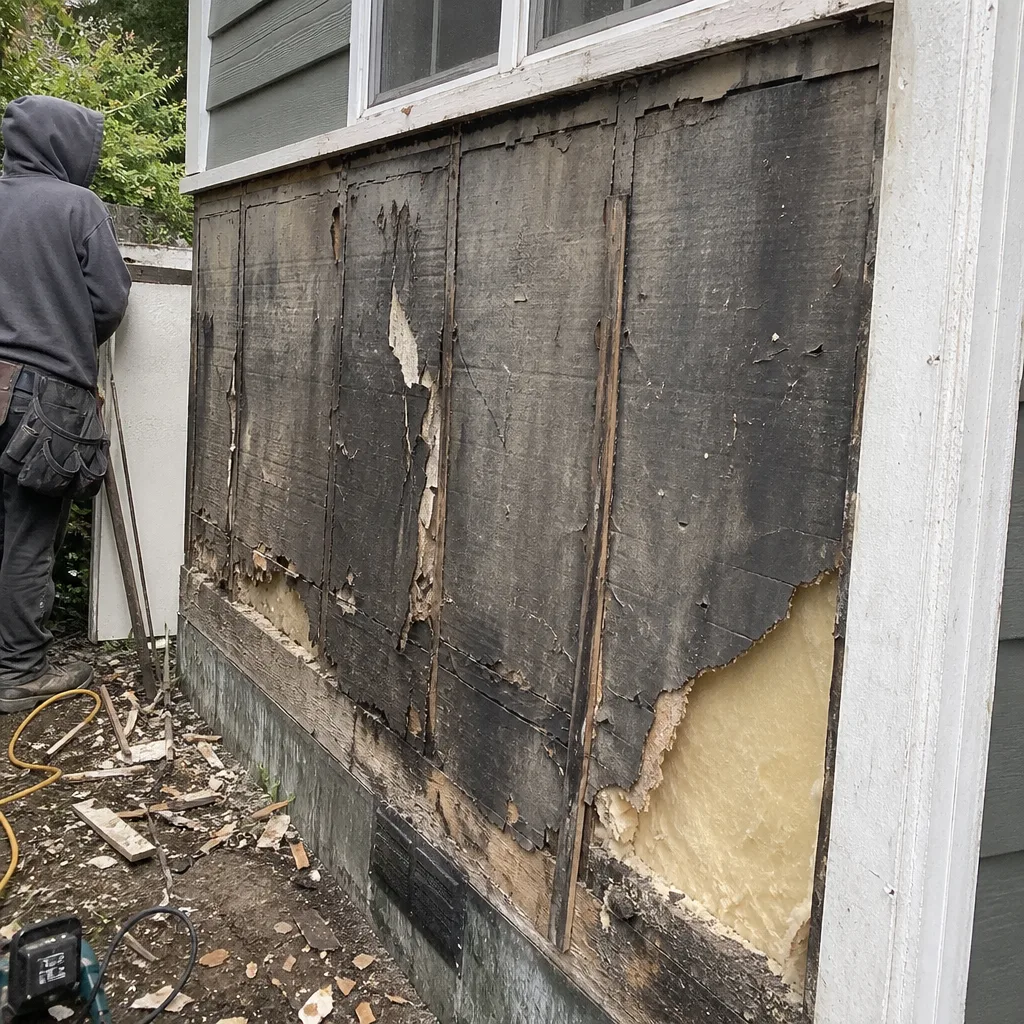
- Saturated original batts on downslope foundations. The exposed crawl-space wall faces uphill moisture flow with no vapor barrier, and we routinely find 1960s kraft-faced batts completely saturated and compressed flat against floor joists. Full removal and vapor remediation comes before any new insulation.
- Cellulose clumping from fog-belt moisture. Marine-layer fog keeps Los Altos Hills attics damp longer than the valley floor. Blown-in cellulose can clump and lose R-value if air sealing and venting aren’t corrected first. We test with a blower-door before we blow.
- Bridging in vaulted and cantilevered bays. Complex roof geometries in custom homes create dead-end cavities where blown-in material bridges and never reaches required density. We identify these during assessment and spec dense-pack or alternative fill methods.
- Compacted fiberglass from original 1950s-70s installation. Decades of settlement, pest disturbance, and occasional foot traffic have reduced many original batts to a fraction of their labeled R-value. The insulation is present but not performing.
Pricing for Blown-In Insulation in Los Altos Hills, CA
| Service | Typical Range in Los Altos Hills |
|---|---|
| Attic blown-in cellulose or fiberglass (per sq ft) | $2.80 - $4.50 |
| Dense-pack wall insulation (per sq ft of wall) | $3.50 - $6.00 |
| Complete attic removal + replacement with air sealing | $4,200 - $9,800 |
| Blown-in top-up over existing clean insulation | $1,800 - $4,500 |
| Vapor barrier + crawl-space remediation (add-on) | $1,200 - $3,400 |
What moves a Los Altos Hills job toward the higher end: custom home geometry with multiple attic planes and vaulted sections, full removal of saturated existing material, vapor-barrier installation on exposed crawl-space walls, and extensive air sealing of top plates and penetrations. What keeps it lower: straightforward rectangular attic, clean existing material, minimal sealing needed. Every quote is a flat written price, delivered before anyone lifts a tool. Call (510) 876-4113 for yours.
We Also Serve Cities Near Los Altos Hills
Our crews work throughout the mid-Peninsula and southern San Mateo County, including Los Altos Hills neighbors in Menlo Park, East Palo Alto, North Fair Oaks, and Atherton. The same written-price standard and documented photo record apply on every job, regardless of city limits.
Serving Los Altos Hills, CA - Our Local Coverage Area
We’re based in the Los Altos Hills area and know this community well. Use the map below to see our service coverage - if you’re nearby, we can almost certainly help.
FAQs - Blown-In Insulation in Los Altos Hills
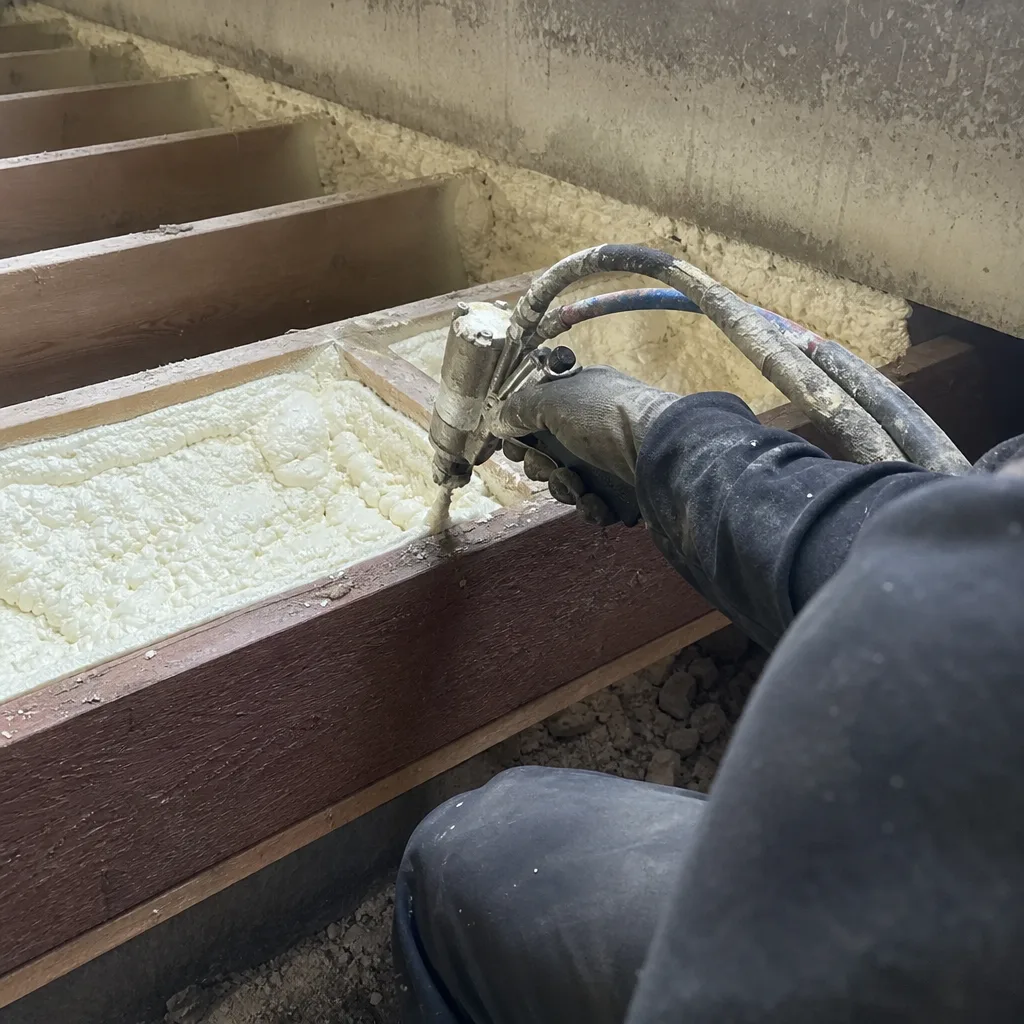
The elevated terrain keeps Los Altos Hills inside the coastal fog belt longer, with sustained moisture infiltration into crawl spaces and attics that accelerates insulation degradation and mold risk. Day-to-night temperature swings are also more pronounced at elevation, which stresses materials and makes air sealing as important as R-value. Call (510) 876-4113 for a free assessment of your specific conditions.
Yes, but it requires dense-pack technique rather than open blowing to achieve the required density in dead-end bays. Complex roof geometries in these custom homes create cavities where loose-fill material bridges and leaves gaps. We verify fill with cavity sampling and thermal imaging. Call (510) 876-4113 to discuss your specific ceiling configuration.
Typically poor. On downslope hillside foundations, which are extremely common here, the exposed crawl-space wall faces uphill moisture flow with no effective vapor barrier. We routinely find original 1960s kraft-faced batts completely saturated and compressed flat against floor joists, requiring full removal and vapor remediation before any new insulation can perform to spec. Call (510) 876-4113 for an inspection.
It changes the planning, not the per-square-foot pricing structure. Because there are no tract homes, every job is a one-off assessment of a custom home with unique roof geometry, foundation exposure, and moisture conditions. We don’t use standard templates; we write a custom scope for each property. The written price reflects what we find, not a square-footage guess. Call (510) 876-4113 for your specific quote.
The temperature differential between fog-season nights and sunny days is sharper at elevation than on the valley floor, and unsealed attics lose conditioned air faster when the pressure difference is greater. A blower-door test, which measures in one number how much air your building envelope is losing, lets us quantify that leakage before we add insulation. Under Haven Standard, we seal first, then insulate, then test again. Call (510) 876-4113 to schedule your blower-door assessment.
Written by Wes Okafor, Owner at Envelope Insulation Co., serving Los Altos Hills under The Haven Standard since 2016.