
Last updated September 24, 2026
How to Hire a Insulation Contractor in Menlo Park: A Step-by-Step Guide
Of the contractors who will give you a same-day quote for attic insulation in Menlo Park, most will never mention a blower-door test - not because it’s optional, but because it adds a step that slows the sale and reveals whether insulation alone will actually solve the problem. We’ve been in Menlo Park homes where the previous contractor packed R-38 fiberglass over a ceiling leaking 4,800 CFM50, and the homeowner’s PG&E bill barely moved. In this guide, you’ll learn the five license checks, five verbatim questions, and three red flags in a written quote that separate diagnostic contractors from product installers, plus links to more guides & resources on building performance. You’ll also learn how to read a blower-door report so you can verify whether the work actually worked.
Quick Answer
Hiring an insulation contractor in Menlo Park starts with verifying a CSLB C-2 license and current workers’ comp certificate, then requesting a blower-door test before any material is specified. The best contractors quote post-installation performance (ACH50 and CFM50 targets), not just R-value, and deliver a written scope, written warranty, and documented photo record before work begins. For a detailed look at current pricing, see our Insulation Cost Breakdown: The Menlo Park Homeowner’s Reference for 2026; expect to pay $2.80-$5.40 per square foot for comprehensive attic work including air sealing and blown-in insulation in Menlo Park’s current market, with spray foam running $4.50-$8.20 per board foot for open-cell applications.
Table of Contents
- Why the Blower-Door Test Must Come First
- The Five License and Credential Checks for California Insulation Work
- Five Verbatim Questions to Ask During the Estimate
- How to Read a Blower-Door Report: CFM50, ACH50, and ELA
- Red Flags in a Written Quote
- Installed R-Value vs. Post-Installation Performance
- Menlo Park-Specific Considerations: Climate, Codes, and Neighborhoods
- Common Mistakes to Avoid
- When to Call a Professional
- Frequently Asked Questions
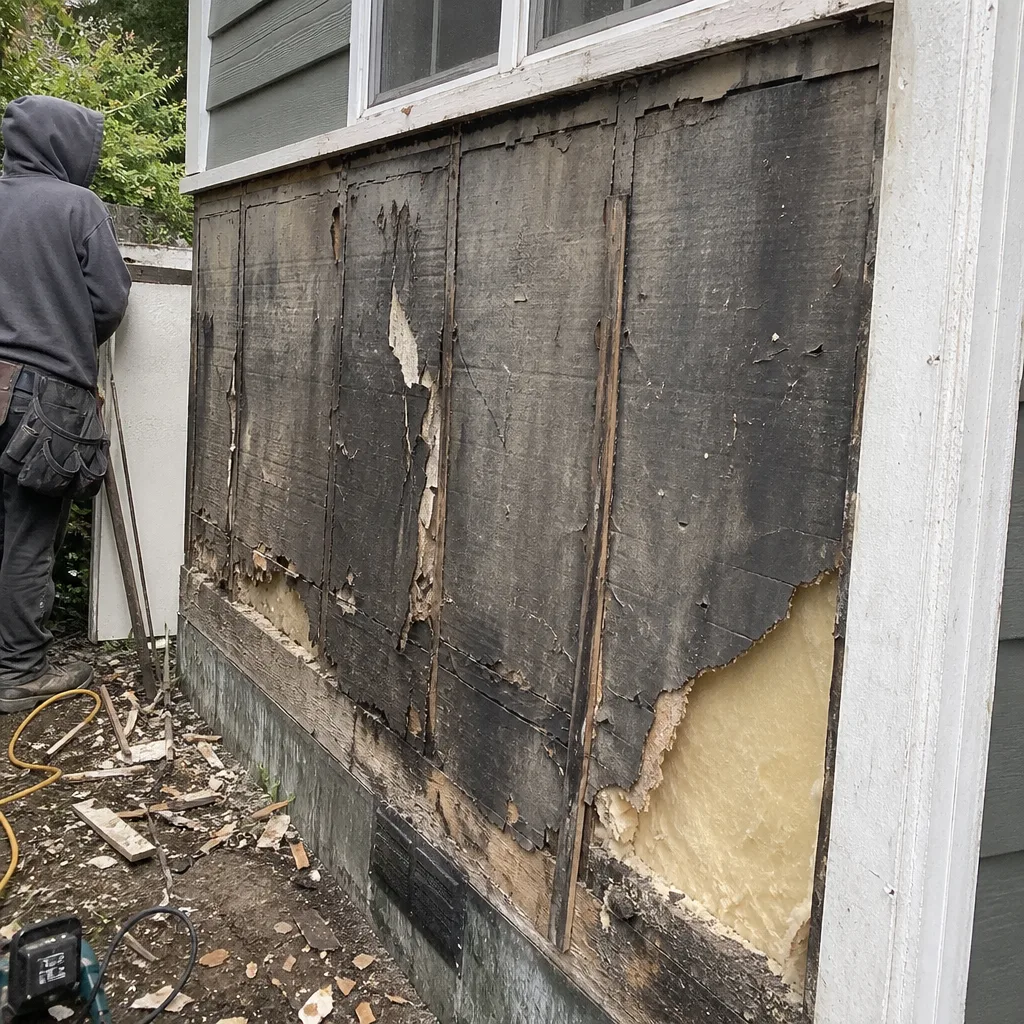 Before
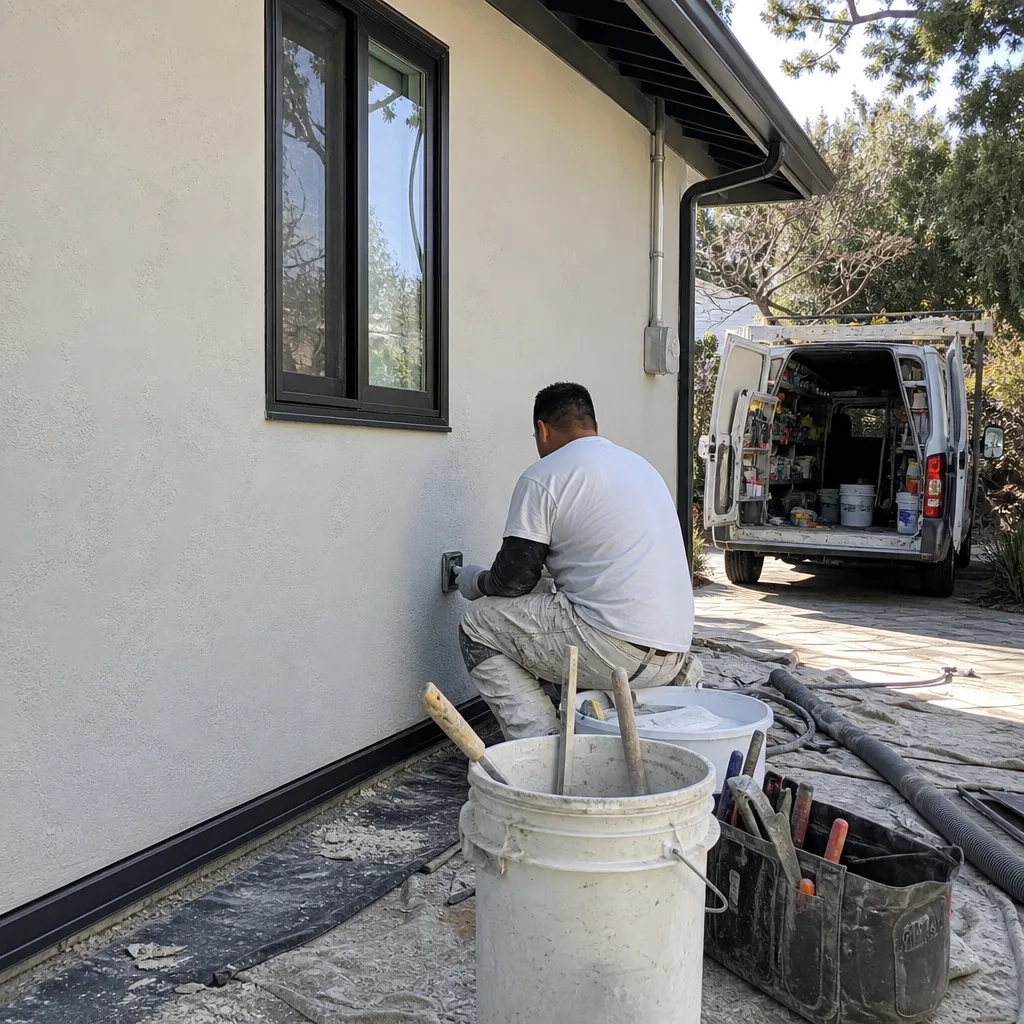 After
AfterWhy the Blower-Door Test Must Come First
Insulation does not stop air movement. It slows conductive heat transfer through materials. If your attic floor leaks like a sieve, new fiberglass or cellulose becomes an air filter, not a thermal barrier. In Menlo Park, where the afternoon delta-T between a 95°F attic and conditioned space can hit 30 degrees in July, that distinction costs real money on your PG&E bill.
A blower-door test - a pressurization reading that shows, in one number, how much air your building envelope is losing - measures the actual problem. The technician mounts a calibrated fan in an exterior door, depressurizes the house to 50 Pascals, and reads the airflow in cubic feet per minute (CFM50). A typical 2,000-square-foot Menlo Park ranch built in 1965 might read 3,500-5,000 CFM50 before any work. After proper air sealing of top plates, can lights, and duct penetrations, that same house should drop to 1,800-2,400 CFM50. Only then does adding insulation produce the performance you’re paying for.
Contractors who skip this step are guessing. They might guess right in a tight new build, but Menlo Park’s housing stock skews older - the Willows, Belle Haven, and Allied Arts neighborhoods have significant pre-1980 inventory with minimal original air sealing. We’ve found original knob-and-tube penetrations still unsealed in Menlo Park attics, decades after electrical upgrades. Without a blower-door number, neither you nor the contractor can know whether the priority is insulation, air sealing, or both.
The diagnostic contractor will also use the blower door with a smoke pencil or infrared camera to locate leaks during the test. This isn’t extra - it’s how you know where to seal. A contractor who says “we’ll seal the obvious stuff” without this mapping is working blind, and you’ll never know what they missed because there’s no baseline to compare against.
Under Haven Standard: Arrive on schedule, you get a named technician and a text when they are on the way. But more importantly, Haven Standard Clause 1 requires a written price before any work starts - and that written price must include the blower-door target, not just the material list.
The Five License and Credential Checks for California Insulation Work
California does not regulate insulation contractors as tightly as electrical or plumbing trades, which creates openings for underqualified operators. For the regulatory background, see Insulation Permits, Codes & Inspections in CA: What You Need to Know. Here’s what to verify before anyone enters your Menlo Park home:
- CSLB C-2 License Verification - The Contractors State License Board issues C-2 (Warm-Air Heating, Ventilating and Air-Conditioning) as the primary classification for insulation work involving building envelopes. Some contractors hold a B (General Building) license with insulation as a supplemental activity. Either is legal, but verify active status at cslb.ca.gov and confirm the license matches the business name on the quote. Check for pending disciplinary actions or bond claims.
- Workers’ Compensation Certificate with Current Dates - Request a certificate of insurance directly from the contractor’s broker, not a photocopy from the contractor. Confirm the policy dates cover your project period and that Menlo Park or San Mateo County is within the covered territory. Uninsured workers on your property create direct liability exposure.
- Title 24 Compliance Documentation Capability - California’s energy code requires specific insulation performance documentation for permitted work. Your contractor must provide the HERS (Home Energy Rating System) compliance forms or demonstrate equivalent documentation for Title 24 Part 6 requirements. Ask for a sample compliance package from a recent Menlo Park job. Contractors who “handle permits for you” without explaining this documentation are routing around accountability.
- OSHA 10 or Equivalent for Confined Space Attic Work - Attic work involves heat stress, electrical hazards from buried wiring, and structural risks from stepping between joists. OSHA 10-Hour Construction certification is the minimum; OSHA 30 is better. Ask specifically about confined space protocols - how the crew monitors for heat exhaustion in a Menlo Park attic that can reach 140°F in August, and what rescue procedures are in place if a technician becomes incapacitated.
- Manufacturer-Certified Installation Training - Spray foam especially requires manufacturer-specific certification for warranty validity. Owens Corning, Johns Manville, and Demilec each certify installers for their product lines. A contractor using multiple brands, as we do, should hold current certifications for each material they propose. Ask to see the certification card with expiration dates.
We background-check every technician and maintain current certifications across Owens Corning, Johns Manville, Knauf, Rockwool, CertainTeed, Icynene, Demilec, and GreenFiber product lines. No proprietary lock-in means we specify what’s right for the assembly, not what we have a quota to move.
Five Verbatim Questions to Ask During the Estimate
These questions expose whether a contractor diagnoses or just sells product. Ask them exactly as written, listen to the answer, and compare against what follows.
- “What is the current ACH50 of this house?”
Good answer: A specific number (“Your last test read 8.2 ACH50, which is about average for a 1970s Menlo Park split-level”) plus context about what that means for your climate zone.
Evasive answer: “We don’t usually test first” or “ACH50 isn’t that important for insulation” or “We’ll test after if you want.” This contractor treats insulation as a product sale, not a performance upgrade. Move on.
- “What documentation will I receive when the job is complete?”
Good answer: A specific list: written scope, written warranty, photo documentation, and blower-door before/after readings on applicable jobs. Under Haven Standard, you receive a Documented Photo Record on every visit - included, not available on request.
Evasive answer: “We’ll give you a receipt” or “The invoice shows what we did.” This contractor has no systematic quality record and no accountability trail.
- “Will you seal the attic floor before adding insulation, and what specific locations?”
Good answer: Named components - top plates of interior walls, electrical penetrations, can light housings, chimney chases, duct boots, plumbing vent stacks - with specified materials (acoustical sealant, fire-rated foam, metal flashing with high-temp sealant).
Evasive answer: “Air sealing is included” with no itemization. This usually means a cursory foam gun pass around obvious gaps, missing the thermal bypasses that actually matter.
- “How will you handle existing insulation, and what determines removal versus addition?”
Good answer: Criteria for removal (moisture damage, rodent contamination, compression below 50% of original thickness, incompatible material types) plus a visual assessment protocol and photo documentation of existing conditions.
Evasive answer: “We’ll just blow over what’s there” or “Removal is extra if you want it.” This contractor is optimizing for speed, not performance, and may bury problems that affect indoor air quality.
- “What is your process if the post-installation blower-door test doesn’t meet the target?”
Good answer: A defined remediation protocol - return visit at no charge, additional sealing locations identified, target numbers specified in the original contract. Our 365-Day Done Right Promise covers this explicitly: if it’s not done right, we make it right.
Evasive answer: “That rarely happens” or “We guarantee our work” with no specific mechanism. A guarantee without a defined trigger and remedy is marketing language, not enforceable protection.
We’ve given free second opinions on competing estimates where the contractor’s written scope was two lines: “Insulate attic to R-38.” No air sealing locations, no existing insulation assessment, no performance target. That homeowner in the Linfield Oaks area would have paid $4,200 for a product installation with no measurable outcome.
How to Read a Blower-Door Report: CFM50, ACH50, and ELA
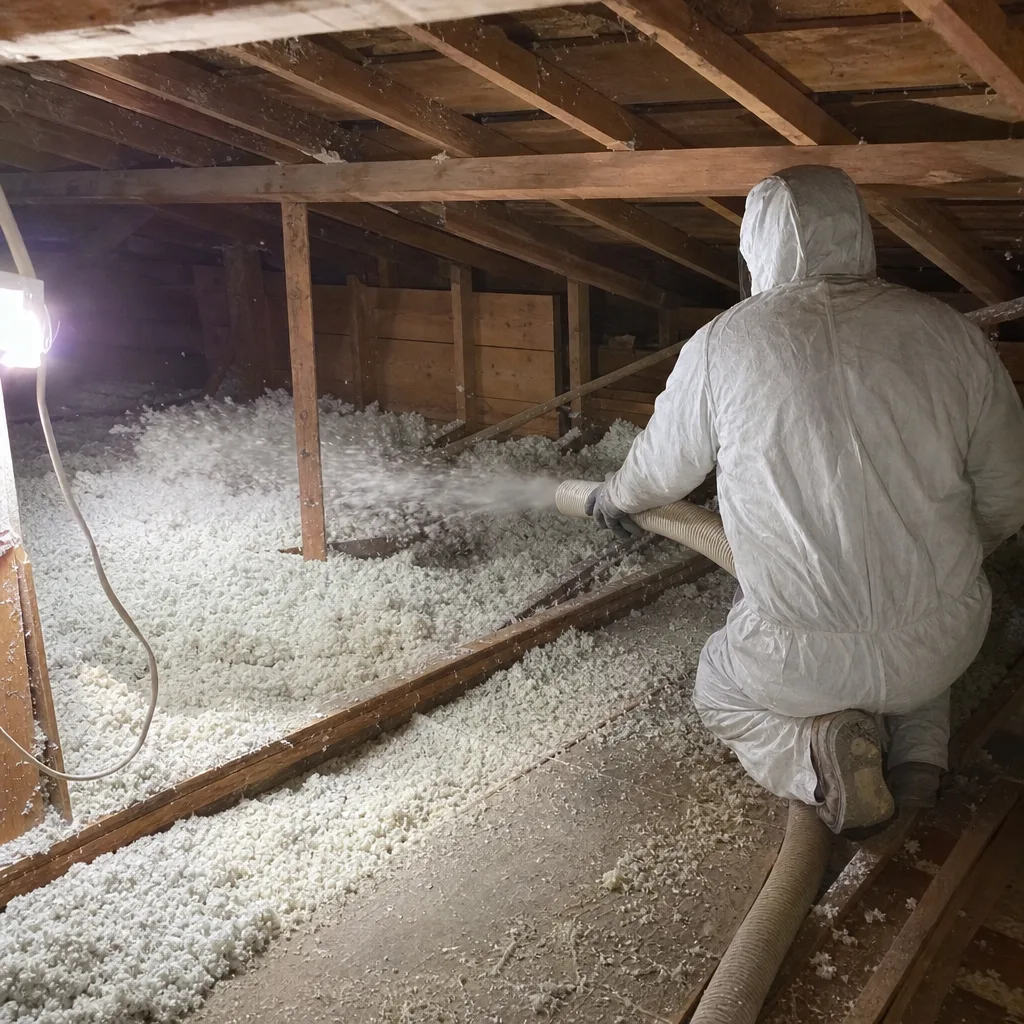
The report you receive should contain three primary metrics. Understanding them lets you verify whether the work produced actual improvement.
CFM50 (Cubic Feet per Minute at 50 Pascals) - The raw airflow through all leaks combined at a standardized pressure difference. Think of it as the “hole size” in your envelope, expressed as airflow rather than geometry. A 2,000-square-foot Menlo Park home with CFM50 of 4,000 is leaking roughly equivalent to a 144-square-inch hole open to outside, 24/7. After proper air sealing, that same home might drop to 2,000 CFM50 - a 72-square-inch equivalent hole. The contractor should provide both numbers, not just percentage improvement.
ACH50 (Air Changes per Hour at 50 Pascals) - CFM50 converted to how many times the house’s air volume would be replaced in one hour at test pressure. This normalizes for house size, so you can compare a 1,200-square-foot cottage to a 3,500-square-foot two-story. California energy code references ACH50 for compliance. A Menlo Park home targeting HERS verification typically needs 7 ACH50 or better for existing construction; new construction targets 3-5 ACH50 depending on program. If your contractor doesn’t know your home’s volume calculation or can’t explain the ACH50 target, they didn’t design the work to a standard.
ELA (Effective Leakage Area in square inches) - The cumulative size of all leaks if they were combined into one idealized hole. This helps visualize the problem: ELA of 200 square inches means a 10″ x 20″ opening to outside, distributed across dozens of cracks. ELA below 100 square inches indicates a reasonably tight envelope for our climate zone.
Here’s what a proper before-and-after report looks like in practice:
| Metric | Pre-Work | Post-Work | Target Met? |
|---|---|---|---|
| CFM50 | 4,200 | 2,100 | Yes (50% reduction) |
| ACH50 | 12.4 | 6.2 | Yes (< 7 ACH50) |
| ELA (sq in) | 168 | 84 | Yes (< 100 sq in) |
We publish these numbers on every applicable job so homeowners can verify the air-sealing result. A contractor who won’t commit to post-work testing, or who defines success as “we installed what we quoted,” is selling installation, not performance. In Menlo Park’s competitive housing market, documented efficiency improvements also transfer to resale value - buyers and appraisers increasingly request utility histories and efficiency documentation.
Red Flags in a Written Quote
The written quote is where vague promises become enforceable terms - or don’t. These three patterns appear repeatedly in Menlo Park estimates we’ve reviewed during free second opinions:
No line-item breakdown. A single lump sum with a scope description like “attic insulation” prevents you from comparing material costs, labor rates, and contingency allowances across bids. It also prevents you from verifying what was actually delivered. Under Haven Standard Clause 1: flat price, written scope, written warranty before anyone lifts a tool - and that scope must be itemized.
“Air sealing included” with no specification of locations or materials. This phrase allows a contractor to claim compliance after 20 minutes with a foam gun around the attic hatch. Proper air sealing in a Menlo Park home typically requires 4-8 hours for a crew of two, addressing top plates, electrical penetrations, can lights, chimney chases, and duct boots with appropriate materials for each. The quote should name the locations and the sealant type.
No mention of how existing insulation will be handled. In Menlo Park’s older neighborhoods, we regularly find vermiculite (possible asbestos content), rodent-contaminated batts, or fiberglass compressed below functional thickness by decades of storage traffic. A quote that assumes “blow over existing” without assessment commits you to a material stack with unknown properties and potential health hazards. The quote should specify the inspection protocol and criteria for removal versus retention.
For a fuller list of problems to watch for, read our Insulation Warning Signs: A Menlo Park Homeowner’s Reference Guide. Additional warning signs include quotes valid for “48 hours only” (pressure tactics violate Haven Standard), no license number on the document, or a scope that copies manufacturer marketing language rather than describing your specific home’s assembly.
Installed R-Value vs. Post-Installation Performance
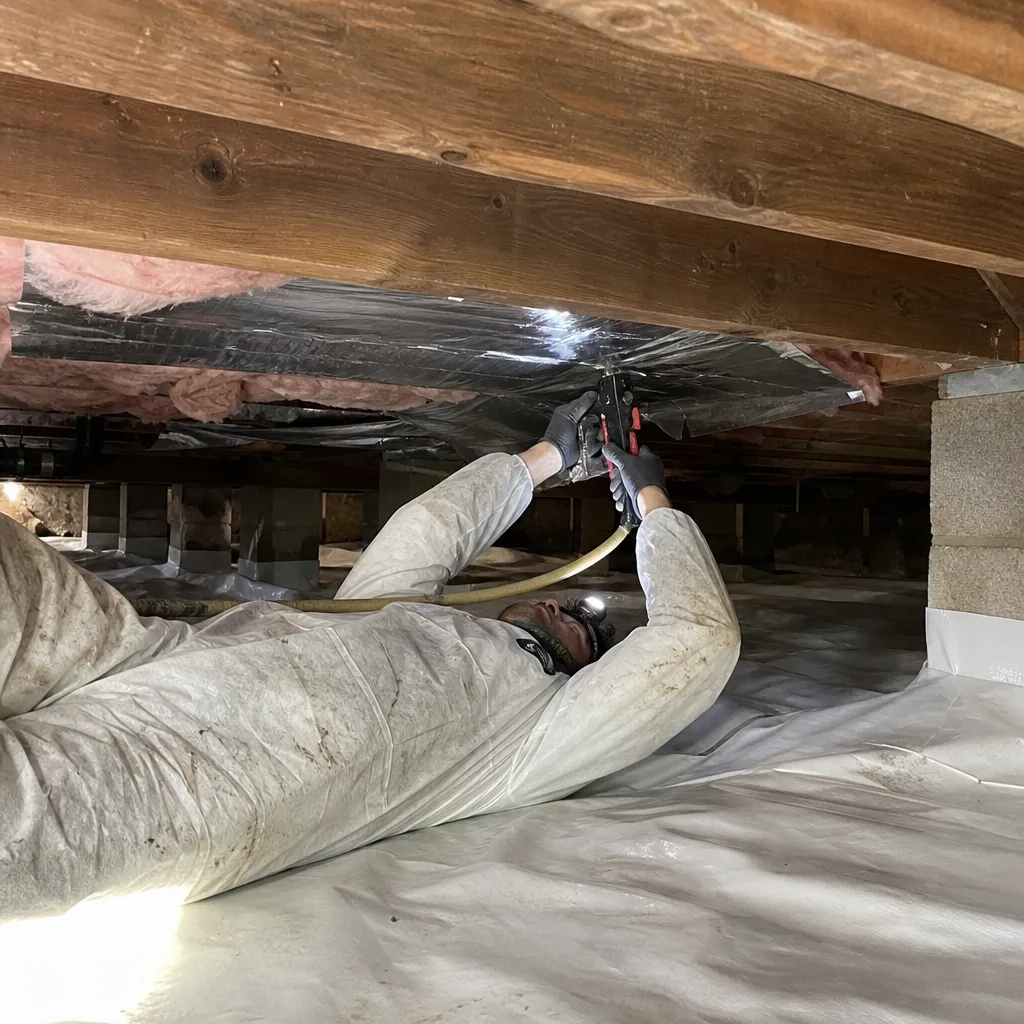
This distinction determines whether you can hold a contractor accountable for results.
Installed R-value contracts specify a material and thickness: “Install R-38 fiberglass batt.” This is easy to verify - measure the thickness, check the bag label - but proves nothing about whether the insulation actually works in your assembly. Compressed batts, gaps around obstructions, and air movement through the cavity all degrade real-world performance without violating the contract. A contractor can deliver exactly R-38 by the label and leave you with an attic that performs like R-22.
Post-installation performance contracts specify measurable outcomes: “Attic assembly to achieve effective R-value of R-32 minimum, verified by thermal imaging, with post-air-sealing ACH50 of 6.5 or better.” This is enforceable. If the thermal imaging shows gaps, or the blower door reads 9.0 ACH50, the contractor has specific obligations to meet. The materials and methods become means to an end, not the end itself.
Menlo Park’s Climate Zone 3 (per Title 24) requires minimum attic insulation of R-38 for new construction and major renovations, but existing construction has more flexibility. A performance-based approach lets a contractor recommend R-30 plus comprehensive air sealing if the blower door shows that’s the faster path to your actual goal: lower HVAC load and more even temperatures. We’ve seen homes in the Sharon Heights area where R-30 with tight air sealing outperformed neighbors’ R-44 installations because the R-44 homes still leaked through unsealed can lights and top plates.
The written scope under Haven Standard specifies both: target installed R-value and target ACH50, with the latter taking precedence if trade-offs are required. You receive this document before anyone lifts a tool, so you know what leaving looks like before we arrive.
Menlo Park-Specific Considerations: Climate, Codes, and Neighborhoods
Menlo Park sits in a microclimate transition zone between the Bay’s marine influence and the Peninsula’s warmer interior valleys. This creates specific conditions that affect insulation strategy.
Coastal influence in the Willows and Belle Haven. These neighborhoods receive more fog penetration and higher relative humidity than areas west of El Camino Real. Attic assemblies here need vapor-permeable exterior strategies and careful attention to roof deck condensation risk. We’ve found moisture accumulation in unvented attics where spray foam was applied without hygrothermal analysis. A contractor who specifies the same assembly for Willows and Sharon Heights without climate adjustment is applying a template, not a diagnosis.
Title 24 and local amendments. Menlo Park adopts California’s Title 24 energy code with local amendments through the Menlo Park Building Division. Permitted work requires HERS verification for insulation and air sealing measures. Your contractor should know whether your project triggers HERS requirements and include that cost in the quote. We’ve reviewed estimates where the contractor “forgot” the $400-$600 HERS verification, leaving the homeowner to manage compliance or face permit closure issues.
Neighborhood housing stock patterns. Allied Arts and downtown Menlo Park have significant 1920s-1940s construction with balloon framing and minimal original insulation. These homes need different air sealing strategies than 1960s ranchers in Suburban Park, which typically have platform framing and accessible attic floors. The 1980s-1990s builds in Linfield Oaks often have original fiberglass batts installed with gaps and compression that look adequate but perform poorly. A contractor who doesn’t ask about construction era and framing type is not customizing the scope.
PG&E rate structures and payback calculation. Menlo Park homeowners on PG&E’s time-of-use rates see the highest electricity costs during 4-9 PM summer peaks, when attic heat gain strains air conditioning. Insulation and air sealing that reduces afternoon cooling load produces faster payback here than in climates with flat rate structures. We calculate simple payback on our proposals using current PG&E rate schedules, not generic national assumptions.
Tree canopy and wildfire considerations. Menlo Park’s urban forest is valued, but overhanging branches create debris accumulation and moisture retention in gutters and attic vents. Some neighborhoods near the foothills have elevated wildfire risk ratings. Insulation contractors should assess ventilation pathways for debris blockage and, in higher-risk zones, discuss ignition-resistant exterior envelope strategies that integrate with insulation work.
For attic insulation in Menlo Park, these factors determine whether you get a product installation or a performance upgrade. The same applies to crawl space encapsulation and vapor barrier work, where Menlo Park’s clay-heavy soils in some areas create distinct moisture dynamics.
Common Mistakes to Avoid
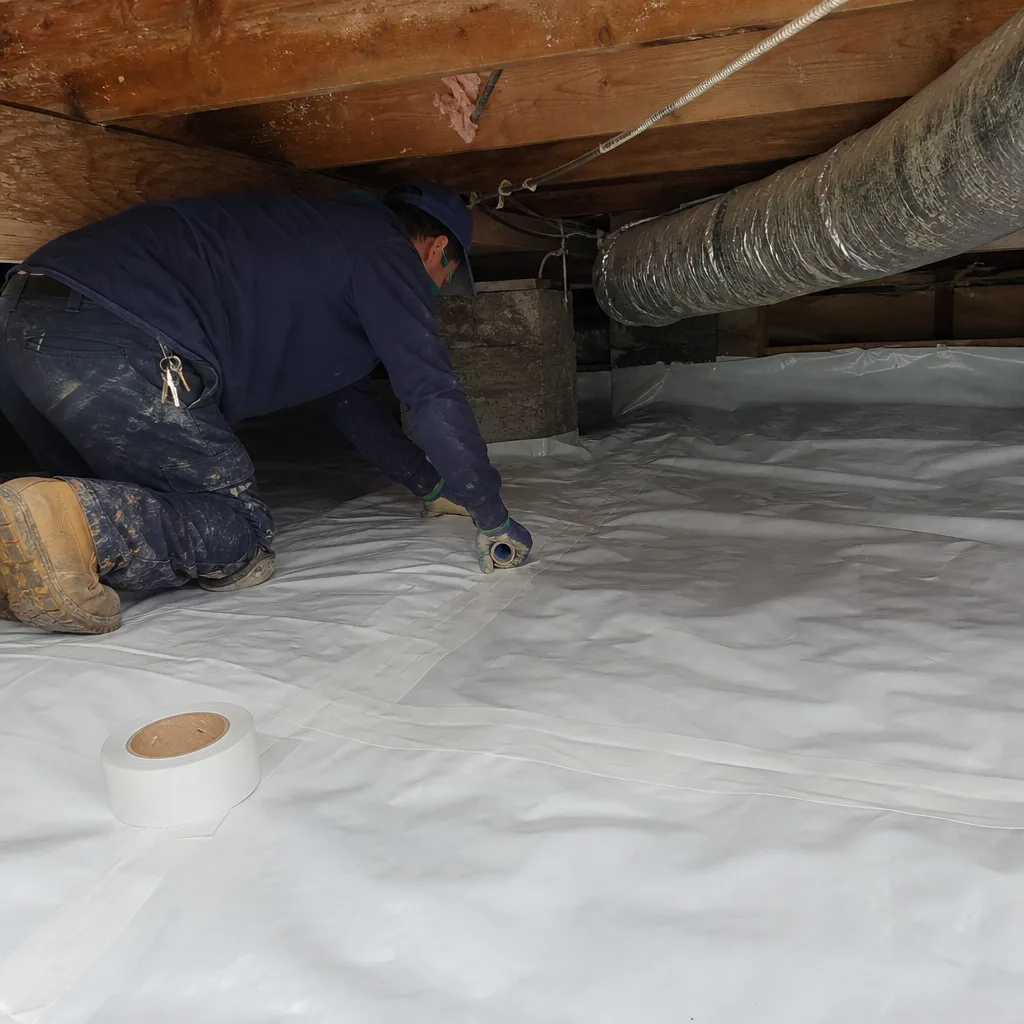
- Hiring based on lowest price per square foot. A $1.89/sq ft quote that blows fiberglass over unsealed leaks produces no measurable improvement. We’ve tested Menlo Park homes after “budget” insulation jobs that showed zero CFM50 reduction. The money was spent on material that became an air filter.
- Accepting a phone estimate without site visit. No contractor can assess attic access, existing conditions, or air leakage pathways from satellite imagery. A phone quote guarantees either a padded contingency or change-order pressure later. Haven Standard requires site assessment for every written price.
- Ignoring the existing insulation condition. In Menlo Park’s older neighborhoods, original insulation may contain vermiculite, show rodent contamination, or be compressed below functional thickness. Burying these problems with new material creates indoor air quality risks and prevents the new insulation from performing. The contractor must inspect and document existing conditions with photos.
- Not requesting the blower-door report in writing. Verbal claims of “we improved your home’s efficiency” are unverifiable. The report with CFM50, ACH50, and ELA before and after is your documentation for utility rebate applications, resale disclosures, and warranty claims if performance falls short.
- Assuming all spray foam is equivalent. Open-cell (half-pound density) and closed-cell (two-pound density) have different vapor permeance, R-value per inch, and structural contribution. In Menlo Park’s mixed-humidity climate, open-cell on roof decks requires careful hygrothermal analysis to avoid moisture accumulation. A contractor who specifies “spray foam” without naming the product type and density is not designing the assembly.
- Neglecting to verify permit requirements. Menlo Park Building Division requires permits for insulation work that involves structural modification, changes to ventilation, or spray foam application. Unpermitted work can complicate resale, insurance claims, and warranty enforcement. The contractor should handle permit submission as part of the scope, not as an optional add-on.
- Choosing R-value without considering air leakage. This is the fundamental error this guide exists to prevent. In Menlo Park’s climate, a leaky R-38 attic underperforms a tight R-30 assembly. The blower-door number reveals whether your priority is insulation, air sealing, or both in specific proportions.
When to Call a Professional
Call a diagnostic insulation contractor when your PG&E bills are rising without rate increases, when rooms have persistent temperature stratification (more than 4°F difference between floor and ceiling), or when you’re planning HVAC replacement and want to right-size the new equipment to the actual load. Also call before any attic storage project - the traffic compresses insulation and creates air leakage pathways that are invisible from below.
In Menlo Park, we see seasonal patterns: calls spike in September after summer cooling bills arrive, and in January after the first cold snap reveals inadequate envelope performance. Emergency calls come when homeowners discover moisture staining on ceiling drywall, often from roof leaks amplified by attic air leakage that deposits condensation on cold sheathing.
Topside Attic Insulation Menlo Park offers free estimates in Menlo Park - call (510) 876-4113. Every estimate includes a blower-door test on applicable jobs, a written scope with itemized pricing, and a Documented Photo Record of existing conditions. We also provide free second opinions on any written estimate from another contractor; bring us their scope and we’ll read it with you.
Frequently Asked Questions
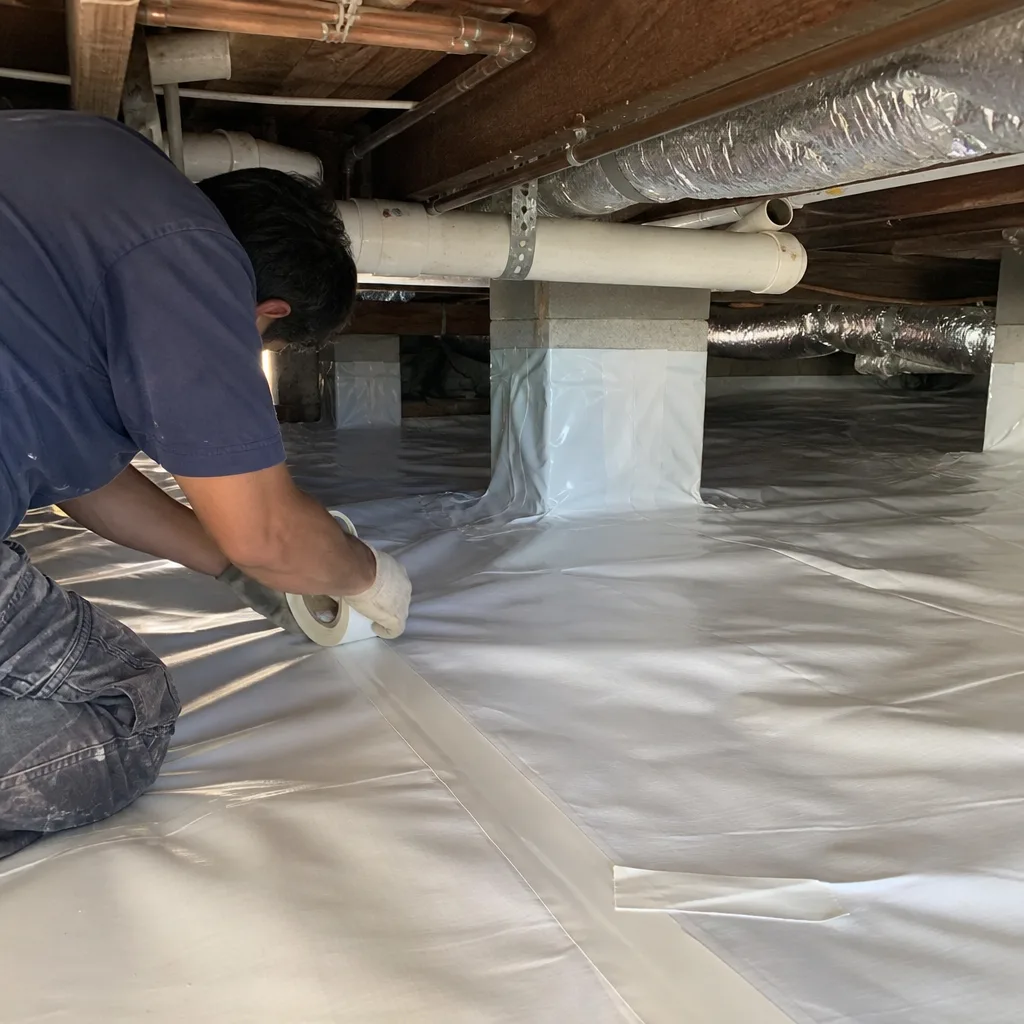
Most comprehensive attic jobs in Menlo Park - including air sealing, existing insulation assessment, and blown-in cellulose or fiberglass - run between $2.80 and $5.40 per square foot of attic floor, with typical whole-project ranges of $3,200-$7,800 for homes between 1,200 and 2,500 square feet. Spray foam applications range from $4.50-$8.20 per board foot for open-cell and $6.50-$11.00 for closed-cell, with total project costs highly dependent on thickness and surface area. Call (510) 876-4113 for a written price specific to your home - estimates are free and include blower-door testing where applicable.
Repair is cheaper only when existing insulation is dry, uncontaminated, and retains at least 75% of its original thickness and loft. In Menlo Park, we find this condition most often in homes built after 1990 with fiberglass batts that were never used for storage. Older homes, or any home with rodent activity, moisture staining, or vermiculite insulation, require removal for health and performance reasons. Removal and disposal adds $1.20-$2.80 per square foot but prevents the new insulation from being compromised by underlying problems. We assess existing conditions with photos and provide both options in writing.
Same-day remediation is possible for localized issues - a displaced batt over a dropped soffit, a disconnected duct in the attic, or a single unsealed penetration causing a cold spot. Comprehensive attic upgrades require scheduling: air sealing needs cure time for sealants, and blown-in insulation requires setup and containment that doesn’t rush well. We do offer same-day emergency response for moisture or rodent issues that threaten indoor air quality. Call (510) 876-4113 to discuss urgency - a live person answers 24/7.
ACH50 measures how many times your home’s air volume would be completely replaced in one hour at a standardized test pressure of 50 Pascals. For existing Menlo Park homes, 7 ACH50 or lower indicates reasonable envelope tightness; new construction or deep energy retrofits should target 3-5 ACH50. A 1960s ranch without prior air sealing might test at 12-18 ACH50. The target should be specified in your written scope, with post-work verification required to confirm achievement.
Demand blower-door testing before and after, with the report provided in writing. Without this, you’re trusting visual inspection of work performed in a dark, cramped space you won’t enter. The CFM50 reduction is objective proof. We also provide time-stamped photos of sealed locations as part of our Documented Photo Record. If a contractor won’t commit to post-work testing, they likely don’t trust their own crew’s work - and neither should you.
Menlo Park Building Division requires permits for insulation work involving structural changes, ventilation modifications, or spray foam application. Simple batt or blown-in insulation over an existing attic floor may not require permit if no structural or ventilation changes occur, but the determination depends on specific scope. A contractor who says “we never pull permits for insulation” is either uninformed or avoiding accountability. We handle permit submission as standard practice when required, with fees disclosed in the written price.
The Bottom Line
Hiring an insulation contractor in Menlo Park is not about finding someone who can install a product. It’s about finding a diagnostician who measures air leakage first, specifies performance rather than just R-value, and documents results you can verify. The five license checks, five verbatim questions, and three quote red flags in this guide separate contractors who sell installation from those who deliver measurable improvement. In a housing market where energy costs rise and resale documentation matters, the blower-door number is your proof of value. Anything less is a guess, and guesses don’t show up on your PG&E bill.
Written by Wes Okafor, Owner at Topside Attic Insulation Menlo Park, serving Menlo Park since 2016.