
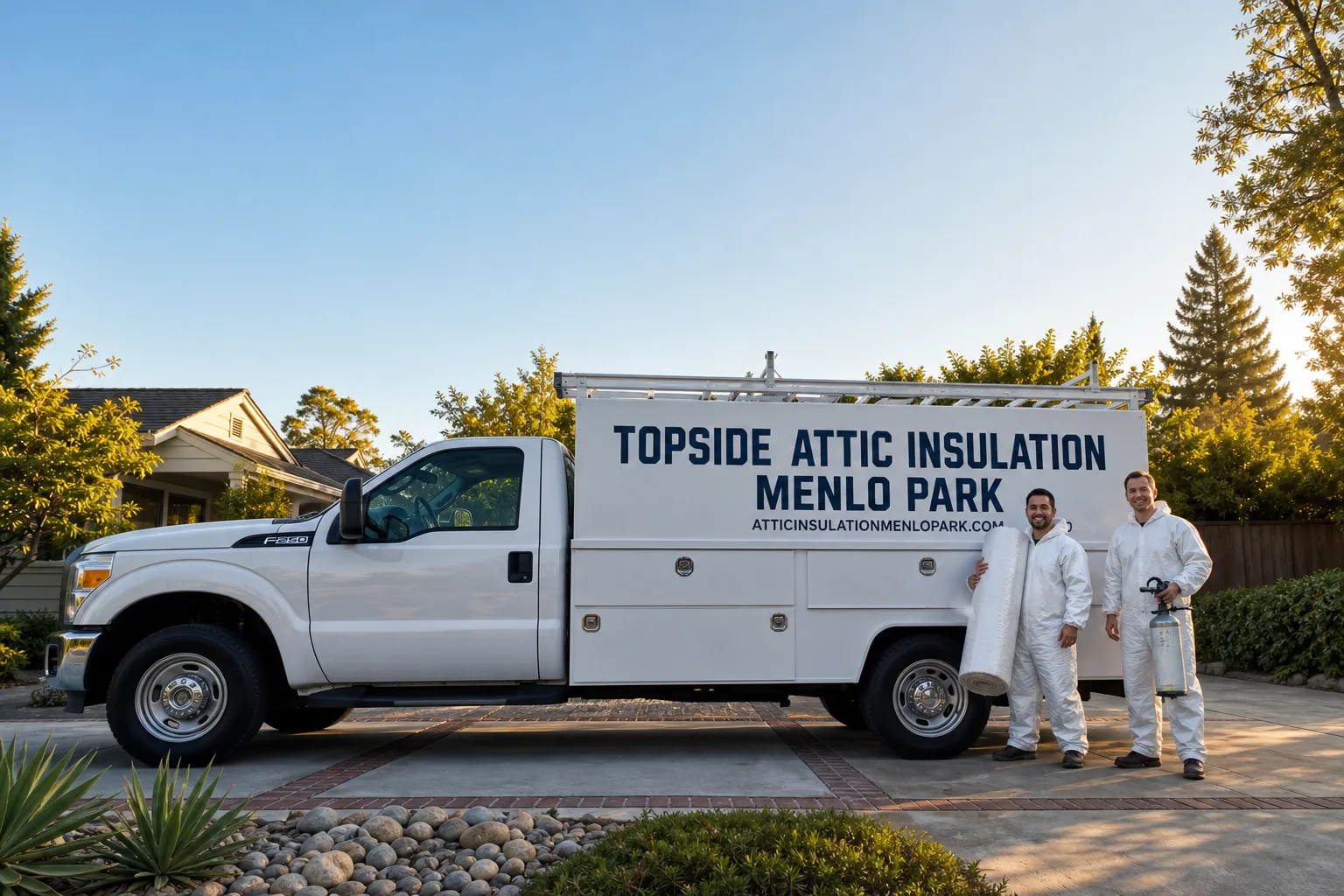
How Much Does Attic Insulation Cost in Menlo Park?
Attic Insulation Near Me in Menlo Park, CA typically costs between $1,800 and $4,200 for a standard single-story home, with most jobs landing around $2,400 to $3,100 once air sealing is included. That range reflects the Peninsula market specifically – Bay Area labor rates, the mix of older ranchers and two-story Eichler-influenced homes common to neighborhoods like Allied Arts and Suburban Park, and the fact that doing the job correctly means sealing air leaks before a single inch of insulation goes in.
If you’ve seen quotes that look much lower, check whether air sealing is in the scope. A quote for blown-in insulation alone, without sealing the top plates, can lights, and attic penetrations first, will likely underperform – and you’ll have paid twice when you eventually fix it.
Attic Insulation Cost Breakdown (2026)
Most attic insulation projects in Menlo Park involve three to four line items. Here’s how those typically break down, priced to the local market as of 2026:
| Scope Item | Typical Range (Menlo Park) | Notes |
|---|---|---|
| Attic air sealing (top plates, penetrations, can lights) | $400 – $900 | Should always precede insulation. This is where most energy is lost. |
| Blown-in fiberglass or cellulose insulation (per 1,000 sq ft) | $900 – $1,600 | Most Menlo Park attics run 1,200 to 1,800 sq ft of floor area. |
| Existing insulation removal | $500 – $1,400 | Required when old insulation is compressed, contaminated, or contains rodent debris. |
| Spray foam at rim joists or critical gaps | $200 – $600 | Often added where blown-in can’t reach effectively. |
| Radiant barrier installation | $800 – $1,800 | Useful in Menlo Park’s warm summers; stapled to roof decking underside. |
| Blower-door test (pre and post) | $150 – $350 | Measures actual air leakage; gives you a number, not a feeling. |
| Full job (air seal + blown-in, 1,500 sq ft attic) | $1,800 – $4,200 | Most common project scope in Menlo Park. |
The biggest cost variable isn’t insulation material – it’s attic condition. A clean, accessible attic in a 1960s Menlo Park ranch house near Willows or Linfield Oaks will come in toward the lower end of that range. An attic in a two-story craftsman near downtown with knee walls, HVAC ducts running through unconditioned space, and old vermiculite or fiberglass batts that need to come out first will run higher. Labor is the other driver: Peninsula rates reflect Peninsula wages, and any contractor pricing this job below $1,500 without a removal line item is leaving something out of the scope.
Materials sourced for Menlo Park jobs typically come from manufacturers like Owens Corning, Johns Manville, Knauf, GreenFiber, and for spray foam applications, Icynene or Demilec. None of these carry exclusive arrangements with any insulation contractor – that’s worth knowing if a competitor claims otherwise.
What Affects Attic Insulation Pricing in Menlo Park
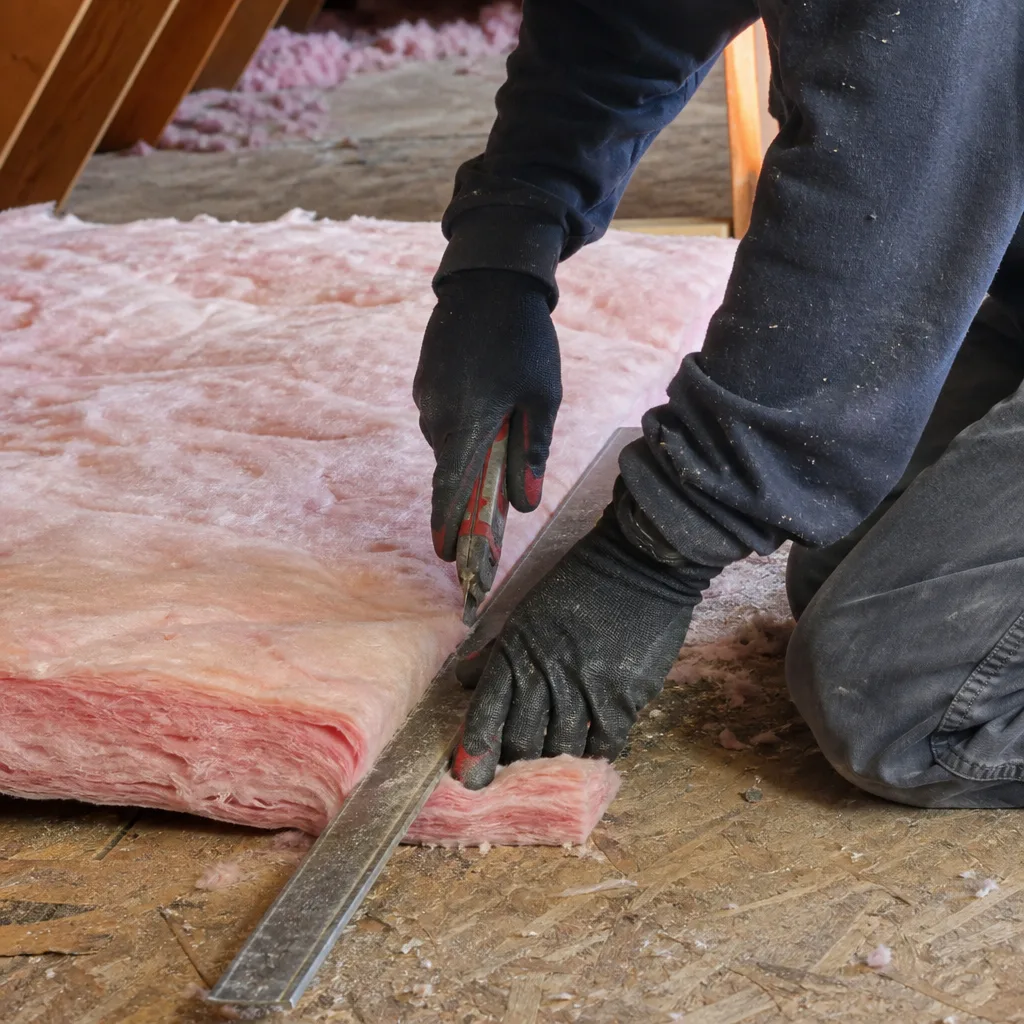
Six factors move the number up or down more than any other:
- Attic square footage and access: Menlo Park’s housing stock ranges from compact 900 sq ft attic floors in postwar bungalows near the Caltrain corridor to sprawling 2,400 sq ft attic decks in newer construction along Oak Grove Avenue. More floor area means more material and more labor hours. Tight access hatches or low-clearance soffits add time and, therefore, cost.
- Existing insulation condition: Homes built before 1985 in neighborhoods like Lorelei Manor or Menlo Oaks often have compressed fiberglass batts at R-11 or less – well below California’s current Title 24 minimum of R-38 for attics in Climate Zone 3. If that material is water-damaged, contaminated with rodent debris, or layered over knob-and-tube wiring, removal is mandatory before anything new goes in.
- Air sealing complexity: This is the line item most quotes bury or omit entirely. An attic with 40 recessed can lights punched through the ceiling plane, two bath fans venting into the attic instead of outside, and unsealed top plates along every partition wall will take three to four hours of air-sealing labor before insulation starts. That’s appropriate. Skipping it means the new insulation underperforms because conditioned air still moves through the gaps.
- Climate Zone 3 requirements: Menlo Park sits in California’s Climate Zone 3, which sets the Title 24 minimum for attic insulation at R-38. If you’re pulling a permit – and for full replacement projects, you should be – the installed depth of blown-in cellulose or fiberglass has to meet that threshold. Contractors quoting below R-38 on a permitted job are quoting a job that won’t pass inspection.
- HVAC ducts in the attic: Many Menlo Park homes built in the 1970s and 1980s route duct systems through unconditioned attic space. If ducts are leaking or uninsulated, blowing insulation over them adds R-value to the floor but doesn’t fix duct losses. Properly scoping this means either duct sealing before insulation or noting the limitation in writing so you can make an informed decision. A written scope that identifies duct condition is a basic quality standard.
- Permit requirements: San Mateo County and the City of Menlo Park both require permits for insulation removal and replacement projects over certain thresholds. Permit fees typically add $200 to $450 to a project. Any contractor telling you permits aren’t needed for a full attic replacement is worth questioning – the permit creates an inspection record that protects you at resale.
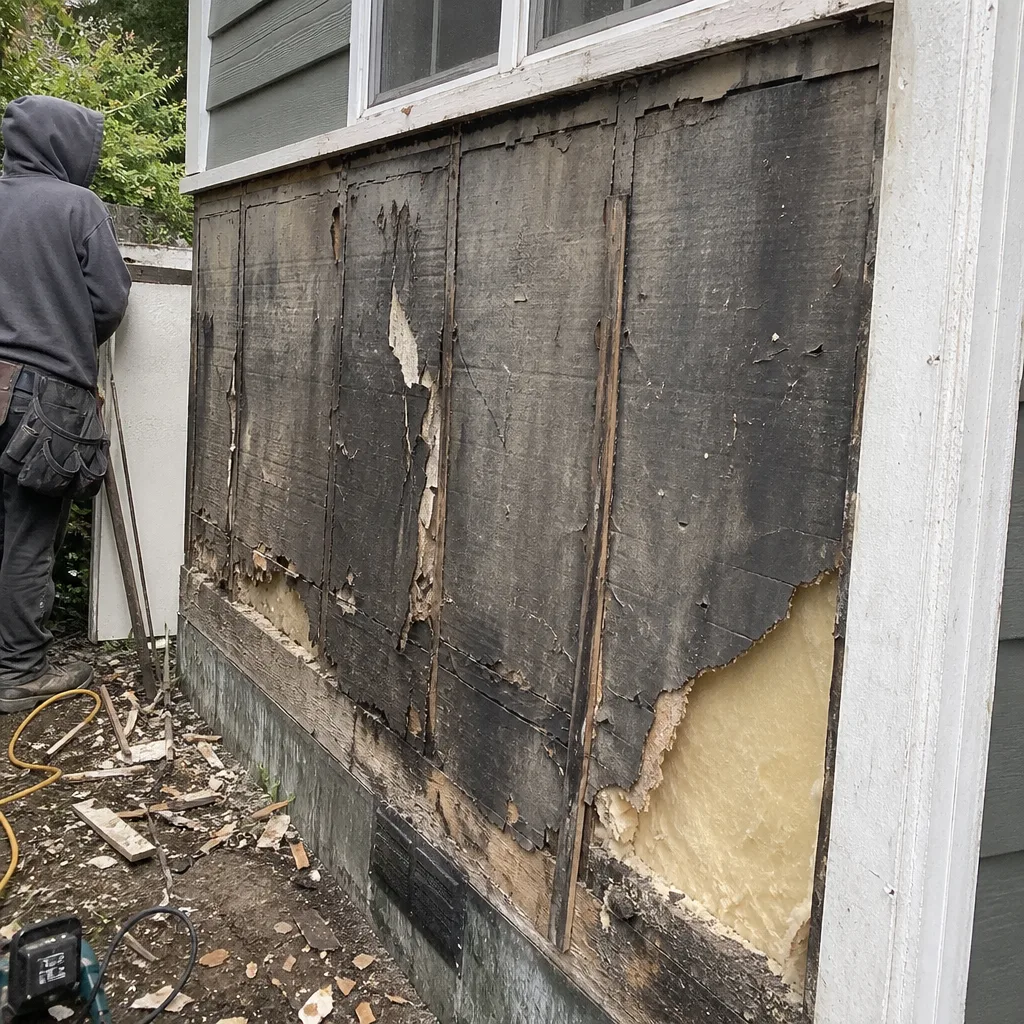 Before
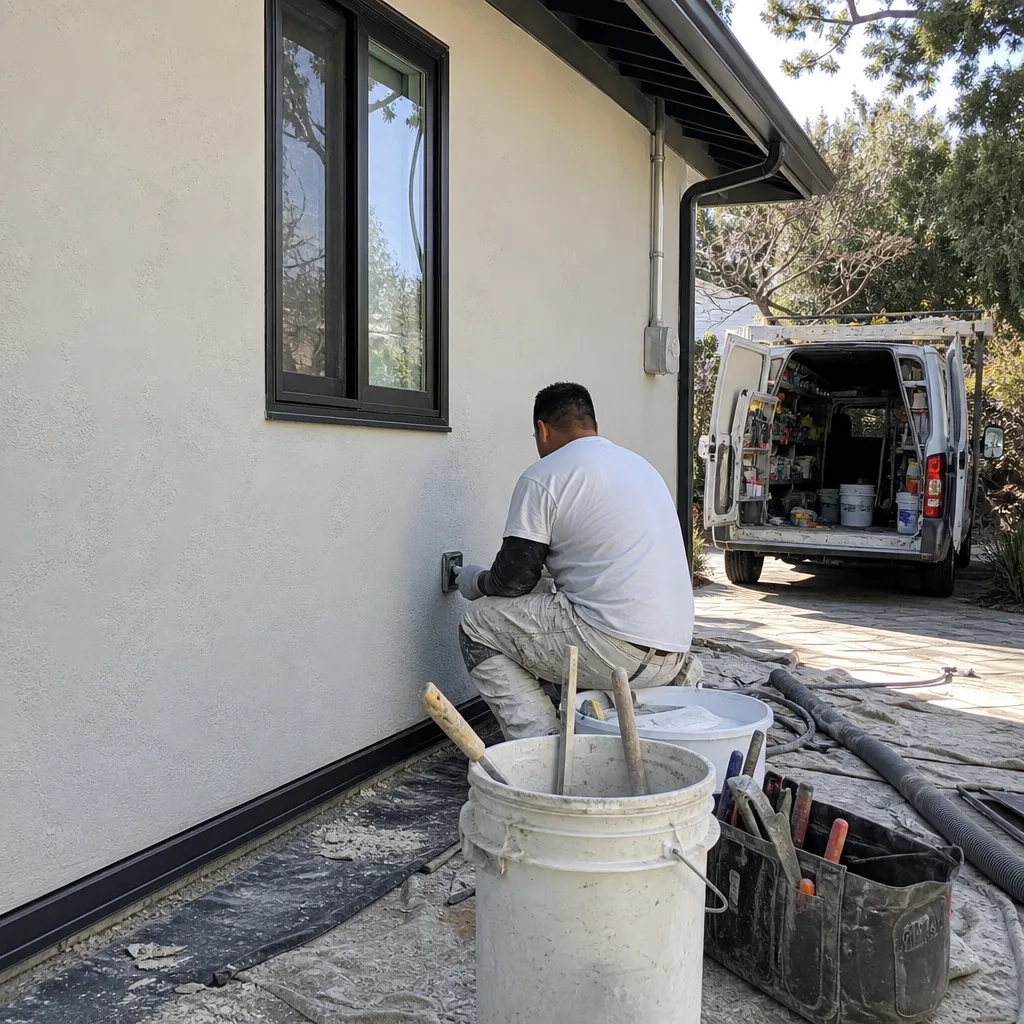 After
AfterInsulation Material Comparison – Which Makes Sense for Menlo Park Homes?
Menlo Park’s climate is mild compared to the Central Valley, but summer afternoons in Atherton-adjacent neighborhoods and the areas east of El Camino Real get hot enough that attic temperatures regularly exceed 140°F. Here’s how the main insulation materials compare in this market:
Blown-In Cellulose
Made primarily from recycled paper, treated with borates for fire and pest resistance. In Menlo Park’s older housing stock, blown-in cellulose from manufacturers like GreenFiber or Knauf is a strong choice: it settles well around existing obstructions, achieves R-38 in roughly 10 to 11 inches of depth, and performs well in the moderate humidity that coastal influence occasionally brings into the Peninsula. Cost per square foot installed: typically $1.20 to $1.80.
Blown-In Fiberglass
Products from Owens Corning and Johns Manville are the most common alternatives. Fiberglass doesn’t settle as much as cellulose over time, which matters in attics where depth verification years later is worth something. It requires slightly more depth to hit R-38 – roughly 13 to 14 inches – but is less prone to absorbing moisture in the rare event of a roof leak. Cost per square foot installed: typically $1.00 to $1.60.
Spray Foam (Two-Part Open or Closed Cell)
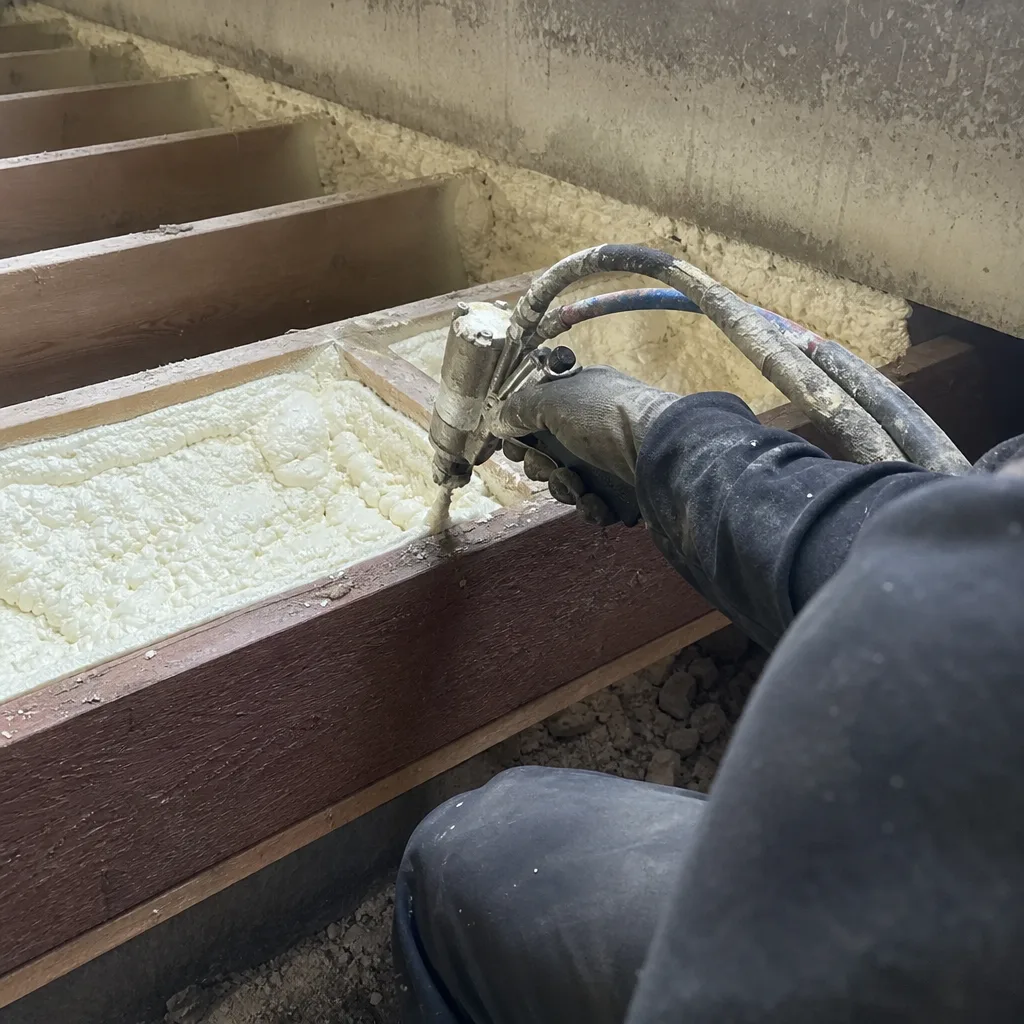
Open-cell spray foam from Icynene or closed-cell from Demilec is not typically used as the primary attic floor insulation – it’s expensive relative to blown-in for large surfaces. Where it earns its cost is at rim joists, around attic hatches, and sealing complex penetrations that caulk alone won’t address. Closed-cell spray foam also doubles as a vapor retarder, which matters if any part of the attic has moisture history. Cost for targeted applications: $3.50 to $7.00 per square foot depending on thickness and product.
Radiant Barrier
Not an insulation material in the traditional sense – a radiant barrier is a reflective foil stapled to the underside of the roof decking that reduces radiant heat transfer from the roof into the attic. In Menlo Park’s Climate Zone 3, a radiant barrier won’t replace adequate R-value insulation, but added together with R-38 blown-in, it can meaningfully reduce cooling loads during July and August afternoons. Installed cost: $800 to $1,800 depending on attic geometry and roof pitch.
The Air Sealing Step Most Quotes Leave Out
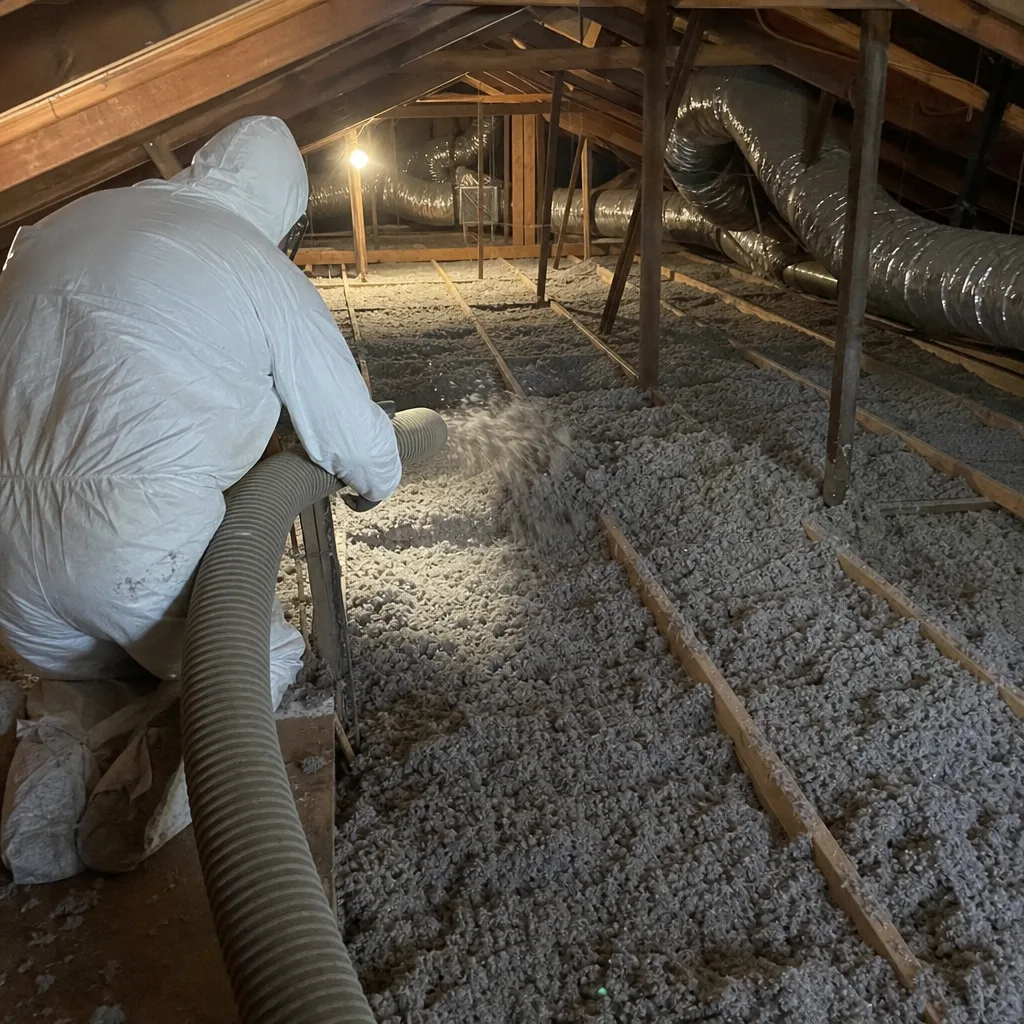
This deserves its own section because it accounts for more wasted money than any other single mistake in attic insulation. Here’s what happens without it:
A typical Menlo Park home – say, a 1,600 sq ft ranch built in 1962 in the Suburban Park neighborhood – might have 60 to 80 linear feet of top plate gaps where interior walls meet the ceiling drywall, 20 to 30 recessed can lights that are open to the attic above, one or two bath fans venting into the attic cavity rather than to the exterior, and multiple plumbing, electrical, and HVAC penetrations through the ceiling plane. Every one of those is a direct opening between your conditioned living space and an attic that is 140°F in summer and 35°F on a cold January night.
When you add insulation over those openings without sealing them first, you’ve added thermal resistance – R-value – but not air resistance. Warm air still moves through the gaps by convection and pressure differential. The blower-door number barely changes. The energy bills barely change. We see this regularly when a homeowner calls because a previous job isn’t performing the way they were told it would.
Under the approach Wes Okafor and the Envelope Insulation Co. team follow on every Attic Insulation in Menlo Park job: air sealing happens first, it’s documented in the written scope, and the before-and-after blower-door readings are included in the job record so you can see the performance change in a single number. That’s not a differentiator worth advertising – it’s the minimum standard for doing the job correctly.
How to Save on Attic Insulation in Menlo Park
There are real ways to reduce cost without cutting corners on the actual work:
- PG&E rebates: Pacific Gas and Electric offers rebates for insulation upgrades that meet specific R-value thresholds. As of 2026, rebates for attic insulation in qualifying homes run up to $0.20 per square foot for reaching R-49 from a lower baseline. On a 1,500 sq ft attic, that’s $300 off the project cost. The contractor needs to be participating in the program and the project needs to be documented to claim it – confirm both before signing anything.
- Federal tax credit (25C): The Inflation Reduction Act’s 25C energy efficiency tax credit covers insulation improvements at 30% of project cost, up to $1,200 per year. On a $2,400 attic insulation and air sealing job, that’s $720 back at tax time. The insulation has to meet IECC standards and the contractor needs to provide documentation. A written job record with material specs satisfies that requirement.
- Combine air sealing and insulation in one mobilization: Scheduling both services at the same time costs less than two separate visits. The crew sets up once, seals the attic floor, and then loads the blower. Splitting it across two visits adds setup time that you pay for.
- Skip the removal if it isn’t necessary: If your existing insulation is clean, uncontaminated, and just thin (say, R-11 fiberglass batts in decent condition), blowing new material over it is often appropriate. That removes the removal line item entirely. If the existing material is contaminated or damaged, removal isn’t optional – but if it’s in reasonable shape, you shouldn’t pay to remove it.
- Get a second opinion on any written estimate: If you have a written quote from another contractor, bring it in. A legitimate contractor will read it with you and identify what’s in scope and what isn’t – not to undercut the number, but to make sure you’re comparing the same work. At Envelope Insulation Co., that’s offered as a no-cost second opinion on any written estimate, under the Haven Standard.
For a free estimate with a written price before any work starts, call (510) 876-4113. The number you get on the phone is the number that goes on paper – no adjustments after the crew arrives.
Menlo Park Neighborhoods: What We See on the Job
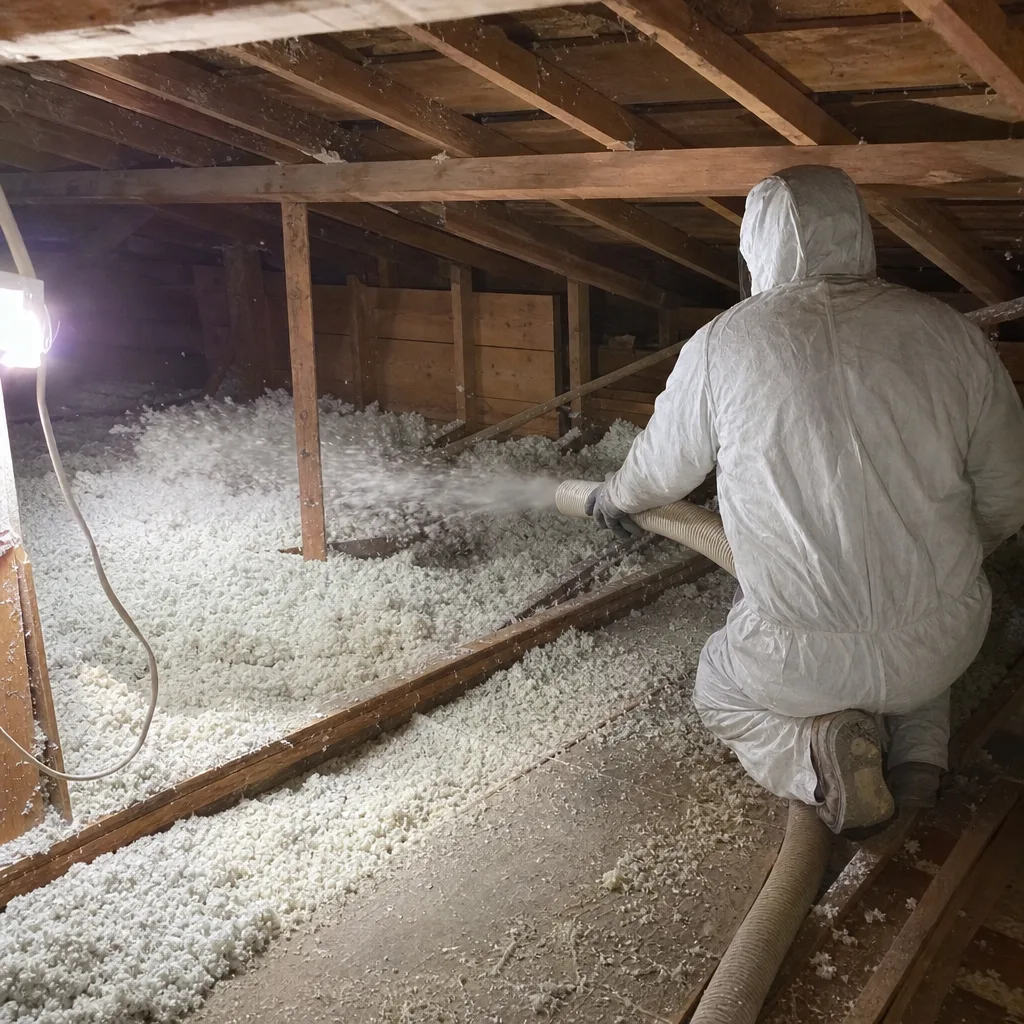
Attic conditions vary more by neighborhood and build decade than by zip code in Menlo Park. Here’s a rough guide to what’s typical:
Allied Arts and Suburban Park (1950s-1970s builds)
Single-story ranchers with accessible flat attic floors. Most have original blown-in fiberglass or batts compressed to R-7 or less. Air sealing complexity is moderate – typically 20 to 40 can lights and unsealed top plates. These jobs run $1,900 to $2,800 when the existing insulation is in salvageable condition.
Downtown and Oak Grove area (pre-1945, mixed two-story)
Older construction with knee walls, complex roof geometry, and sometimes knob-and-tube wiring that has to be addressed before insulation can go in. Attic access is often through a pull-down stair with poor weatherstripping. Air sealing here takes longer. These jobs run $2,600 to $4,200 more often than not.
Linfield Oaks and Lorelei Manor (1960s-1980s)
Similar to Suburban Park in structure. The main variable is duct condition – many homes in this range have original fiberglass duct wrap that’s degraded or disconnected at joints. If duct sealing is included, add $400 to $900 to the project total.
Sharon Heights and near-Atherton borders (1980s-2000s, larger footprints)
Larger attic floor areas and more HVAC complexity. Newer construction here sometimes has better baseline insulation but more penetrations from smart home cabling and added HVAC zones installed after original construction. Typical project range: $2,800 to $4,500.
What You Receive When the Job Is Done
A written price before anyone starts – that’s Haven Standard Clause 1, and it applies to every job Wes Okafor’s team runs in Menlo Park. But the documentation at the end of the job matters as much as the price at the beginning:
- Documented Photo Record: Photos of attic condition before sealing, during sealing, post-sealing, and after insulation installation. Included on every job – not available on request, just included.
- Before-and-after blower-door readings: On applicable jobs, a pressurization reading before sealing and a second reading after. The number shows you, in CFM50 – cubic feet per minute at 50 pascals of pressure – how much conditioned air the home was losing before and after the work. If the air sealing did its job, the number drops. You can see that.
- Written scope and written warranty: Both delivered before work starts. The 365-Day Done Right Promise is in writing – if it’s not done right, we make it right, no negotiation required.
- Material documentation: Product data sheets for installed materials, which you’ll need for PG&E rebate claims and the federal 25C tax credit.
FAQs – Attic Insulation Cost in Menlo Park
How much does attic insulation cost in Menlo Park in 2026?
Most our Attic Insulation services in Menlo Park run between $1,800 and $4,200, with the most common projects – air sealing plus blown-in insulation in a 1,200 to 1,800 sq ft attic – landing between $2,400 and $3,100. Removal of old insulation, if needed, adds $500 to $1,400. Get a written price before any work starts – that number should be fixed, not an estimate that shifts after the crew arrives. Call (510) 876-4113 and we’ll put the number on paper after looking at your attic, not before.
Is it cheaper to add insulation over the old or remove and replace?
Adding over existing material costs less upfront – you avoid the $500 to $1,400 removal line item. It’s appropriate when the old insulation is uncontaminated, structurally intact, and not covering buried knob-and-tube wiring. Attic Insulation Replacement is necessary when the existing material has rodent debris, moisture damage, or when the attic needs a blower-door-documented air seal that can’t be done properly over a full layer of existing material. A good contractor looks at what’s there and tells you which applies, in writing, before you decide.
Does attic insulation in Menlo Park require a permit?
Full removal-and-replacement projects in Menlo Park typically require a permit from the City’s Building Division. San Mateo County permit fees add roughly $200 to $450 to project cost. Adding insulation over existing material without removal often falls below the permit threshold, but this should be confirmed with the city before work starts. A contractor who tells you permits are never required for attic insulation work in Menlo Park is worth pressing on that – the permit inspection record protects you at resale.
What R-value does California require for attic insulation in Menlo Park?
Menlo Park is in California Climate Zone 3. Title 24 requires a minimum of R-38 for attic insulation. That translates to roughly 10 to 11 inches of blown-in cellulose or 13 to 14 inches of blown-in fiberglass to hit the threshold. Some contractors recommend upgrading to R-49 if you’re going to the trouble of a full replacement – the incremental material cost is modest and PG&E offers rebates for reaching the higher threshold.
How do PG&E rebates and the federal tax credit affect the actual cost?
Combined, they can reduce your out-of-pocket cost by $1,000 or more on a typical Menlo Park project. PG&E rebates run up to $0.20 per square foot for qualifying upgrades – roughly $300 on a 1,500 sq ft attic. The federal 25C tax credit covers 30% of project cost up to $1,200 per tax year. Both require documentation: material specs, installed R-value, and contractor records. Make sure any contractor you hire can provide that documentation before the job closes. Call (510) 876-4113 and we’ll walk through which rebates your project qualifies for before writing the estimate.
Can you do attic insulation in Menlo Park the same day I call?
Same-day installation is possible for smaller jobs with clean, accessible attics – but the right sequence matters more than speed. Air sealing should happen first, and that requires a site assessment. Most projects are scoped, priced in writing, and scheduled within a few days of first contact. A live person answers at (510) 876-4113, 24 hours a day – no voicemail loop, no callback window measured in business days.
Key Takeaways
- Attic insulation in Menlo Park costs $1,800 to $4,200 for most homes, with the typical project running $2,400 to $3,100.
- Air sealing – not just insulation – is where most of the performance gain comes from. Any quote that doesn’t include it deserves a follow-up question.
- California Climate Zone 3 requires R-38 minimum for attic insulation under Title 24. Permitted replacement jobs must meet this threshold at inspection.
- PG&E rebates and the federal 25C tax credit can together reduce net cost by $1,000 or more – but only if the contractor provides proper documentation.
- Older Menlo Park neighborhoods like Allied Arts, Suburban Park, and Lorelei Manor often have compressed original insulation well below current minimums, and many attics need removal before a code-compliant installation is possible.
- Before-and-after blower-door readings are the only way to verify that air sealing actually worked. Get that number in writing.
Get a Written Price for Your Menlo Park Attic
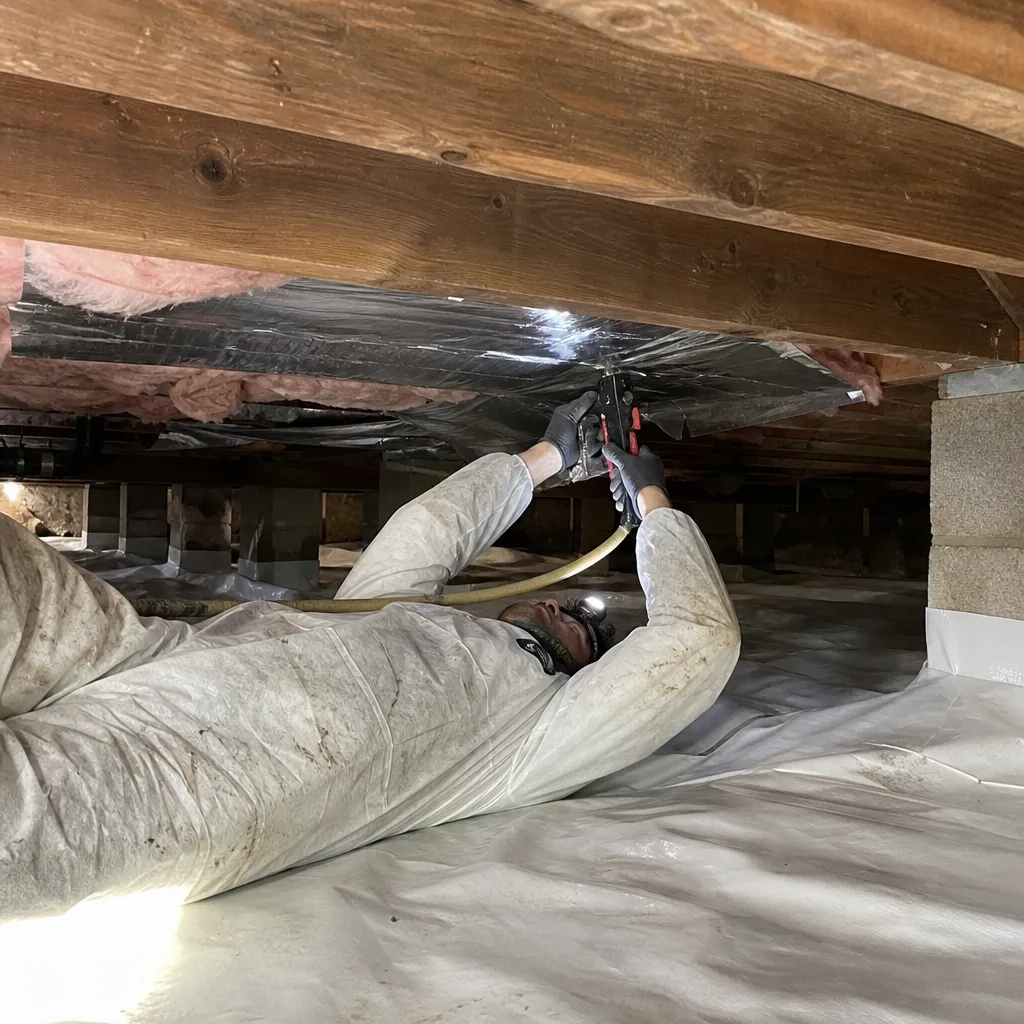
Wes Okafor and the team at Envelope Insulation Co. have sealed and insulated over 9,000 homes since 2016 – every one with a written price before the crew started and a documented record when they left. For Menlo Park homeowners researching this job, the starting point is a site assessment and a flat written price, not a phone estimate that changes after arrival.
Call (510) 876-4113 to schedule your free estimate. A live person will answer. You’ll get a named technician, a text when they’re on the way, and a written price before anyone touches your attic. The 365-Day Done Right Promise applies to every job we complete – if it’s not done right, we make it right.
If you have a written estimate from another contractor, bring it. We’ll read it with you at no charge and tell you what’s in scope and what isn’t – under the Haven Standard, that’s a standing offer, not a sales tactic.
Pricing reflects the Menlo Park market as of 2026. Written by Wes Okafor, Owner at Topside Attic Insulation Menlo Park, serving Menlo Park, CA since 2016.
What Our Customers Say
"Crawl space encapsulation done properly. Photographs of the vapour barrier at every seam, and the damp smell in the hallway is gone."
- Ainsley P."They photographed rodent damage in the old insulation that we had no idea about, and priced the exclusion work separately so we could decide."
- Harriet N."Two other companies quoted to blow more insulation on top of what was there. These were the only ones who said the existing material had to come out first, and explained why."
- Clifford E.