
Attic Insulation Top-Up in Menlo Park, CA
An attic insulation top-up adds a fresh layer of blown-in or batt insulation over what’s already in your attic, bringing the total depth up to current energy-code levels without removing the existing material. Most Menlo Park homes built before 2005 are sitting at R-19 to R-25 – well short of the R-49 to R-60 that CalGreen and PG&E rebate programs now reference as the target for this climate zone. Topping up typically costs between $900 and $2,400 for a standard 1,200-to-1,800 square foot attic, and the crew is usually finished in a single morning.
What a lot of contractors skip – and what we won’t – is the attic baffles and ventilation prep step that comes before any insulation goes in. At Topside Attic Insulation Menlo Park, we seal every air leak at the attic floor first: top plates, recessed can lights, plumbing penetrations, wiring chases. Only after that work is done and documented do we add insulation. Blowing new material over an unsealed attic floor is the single most common reason a top-up underperforms. We’ve tracked it on blower-door tests across hundreds of Peninsula homes, and the data is consistent.
If you’re researching the full scope of what’s possible in your attic, our Attic Insulation in Menlo Park parent page covers every service category. If you already know you want a top-up quote, call (510) 876-4113 – a live person answers, and we’ll give you a written price before anyone sets foot in your attic.
When You Need Attic Insulation Top-Up
A top-up makes sense under specific, recognizable conditions. Here’s what we see most often in Menlo Park:
- Insulation depth below 10 inches. If you can see or easily feel the tops of your attic floor joists, you’re likely below R-30. In Menlo Park’s Climate Zone 4, that gap costs real money on every PG&E bill from November through February and again during the dry-heat stretches in July and August.
- Rooms over the attic running hot in summer. Bedrooms on the top floor of homes in the Belle Haven and Linfield Oaks neighborhoods frequently overheat because the attic above them has settled, compressed, or was never insulated to depth in the first place. Adding R-value at the attic floor is the correct fix; it’s faster and less disruptive than roofline spray foam.
- An energy audit flagged inadequate attic insulation. PG&E’s Home Energy Checkup and third-party auditors regularly cite Menlo Park homes – especially those built in the 1950s and 1960s along Middlefield Road and Encinal Avenue – as having attics with 3 to 5 inches of old fiberglass batt that has compressed and lost more than 30 percent of its rated R-value.
- You’ve recently added recessed lighting or a bathroom exhaust fan. Any penetration through the attic floor is an air leak until it’s sealed. If your remodel opened up the ceiling plane, you need both sealing and a top-up – not just insulation dropped in around new fixtures.
- HVAC ducts in the attic are already scheduled for repair or replacement. The sequencing matters here: duct work first, air sealing second, insulation third. If the ducts go in last, the insulation gets torn up and never properly restored. We flag this during inspection and coordinate accordingly.
- The existing insulation contains old vermiculite or has visible moisture staining. Both conditions call for removal before any top-up, not an addition on top. We’ll tell you clearly which situation you’re in after the initial inspection.
Our Attic Insulation Top-Up Process
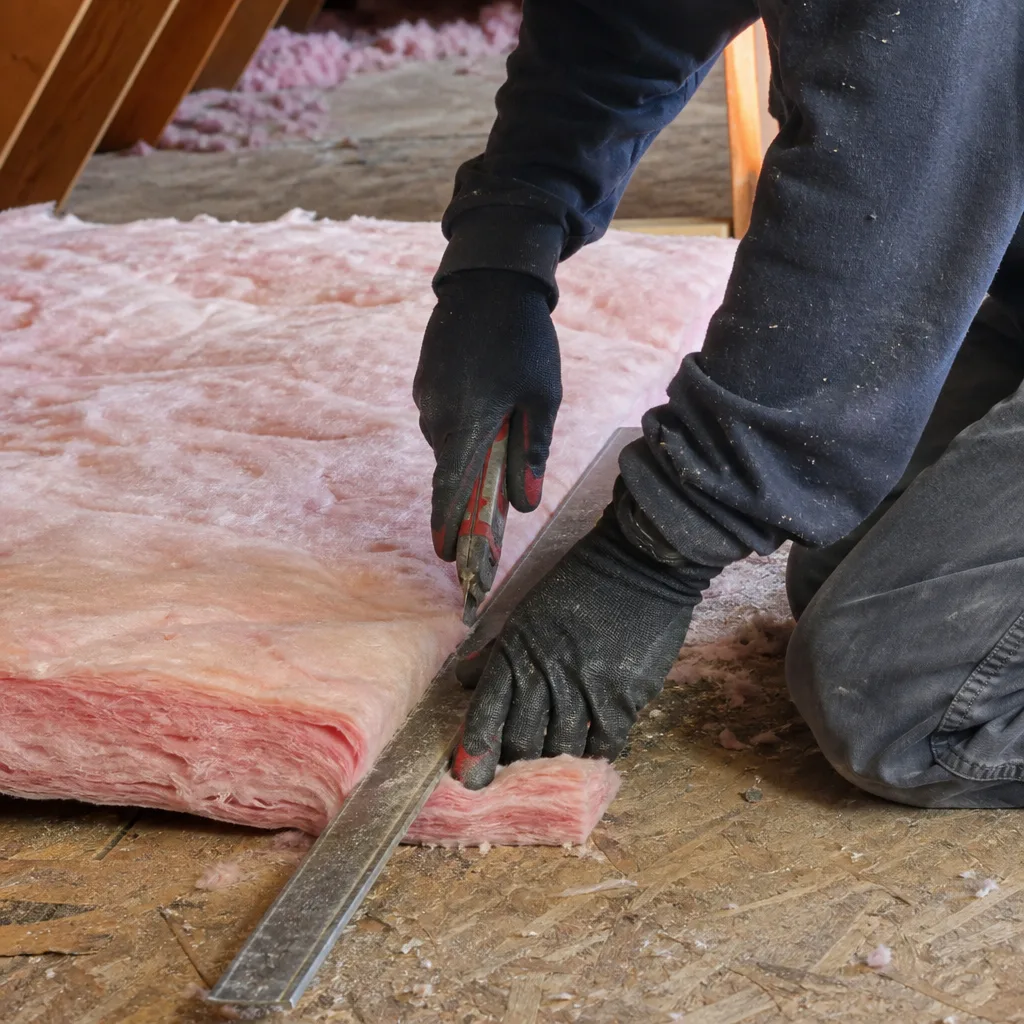
Every job follows the same sequence. Skipping steps is how performance problems happen; this is the order we’ve used on every applicable job since 2016.
- Written scope and price before any work starts. Under Haven Standard Clause 1, no crew touches your attic until you have a flat price, a written scope of work, and a written warranty in hand. We measure the attic, calculate existing R-value, identify the target depth, and put the number on paper. There are no “estimates that might change.”
- Blower-door baseline reading. Before we open an insulation bag, we run a blower-door test – a pressurization measurement, in CFM50, that shows how much conditioned air your home’s envelope is losing. That number is your before-reading. It goes into the job file.
- Attic floor air sealing. This is the step that separates a real top-up from a fast-and-cheap one. We seal top plates between framing bays, foam around every penetration (pipes, wires, exhaust fans), and install insulation dams around recessed cans if they aren’t already IC-rated and sealed. In older Menlo Park homes, this stage routinely uncovers 15 to 30 unsealed penetrations.
- Post-seal blower-door reading. We run the blower-door a second time after sealing, before any insulation goes down. That gives you a documented air-sealing result as its own line item – not blended invisibly into the insulation job.
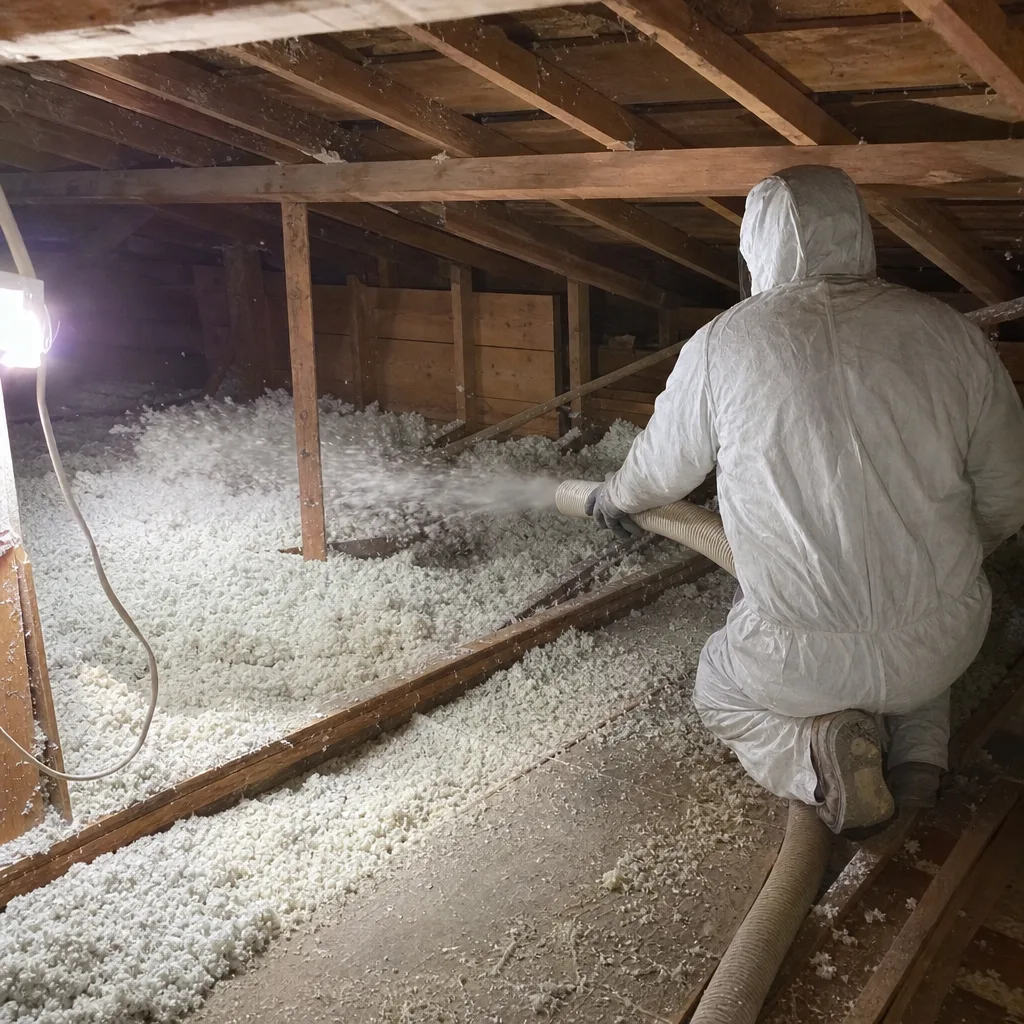
- Blown-in insulation installed to target depth. We use CertainTeed or Rockwool product depending on what your existing insulation type, attic geometry, and target R-value call for – no proprietary lock-in. Depth rulers are installed every 150 square feet so you can verify the depth yourself when we’re done. For most Menlo Park attics, we’re targeting R-49 to R-60 at the floor plane.
- Documented photo record delivered before we leave. Every job closes with a photo file: before photos of the existing insulation and unsealed penetrations, photos of the air sealing work, and photos of the finished insulation depth at multiple measurement points. That file is yours. Under the 365-Day Done Right Promise, if the result doesn’t match the written scope, we come back and make it right.
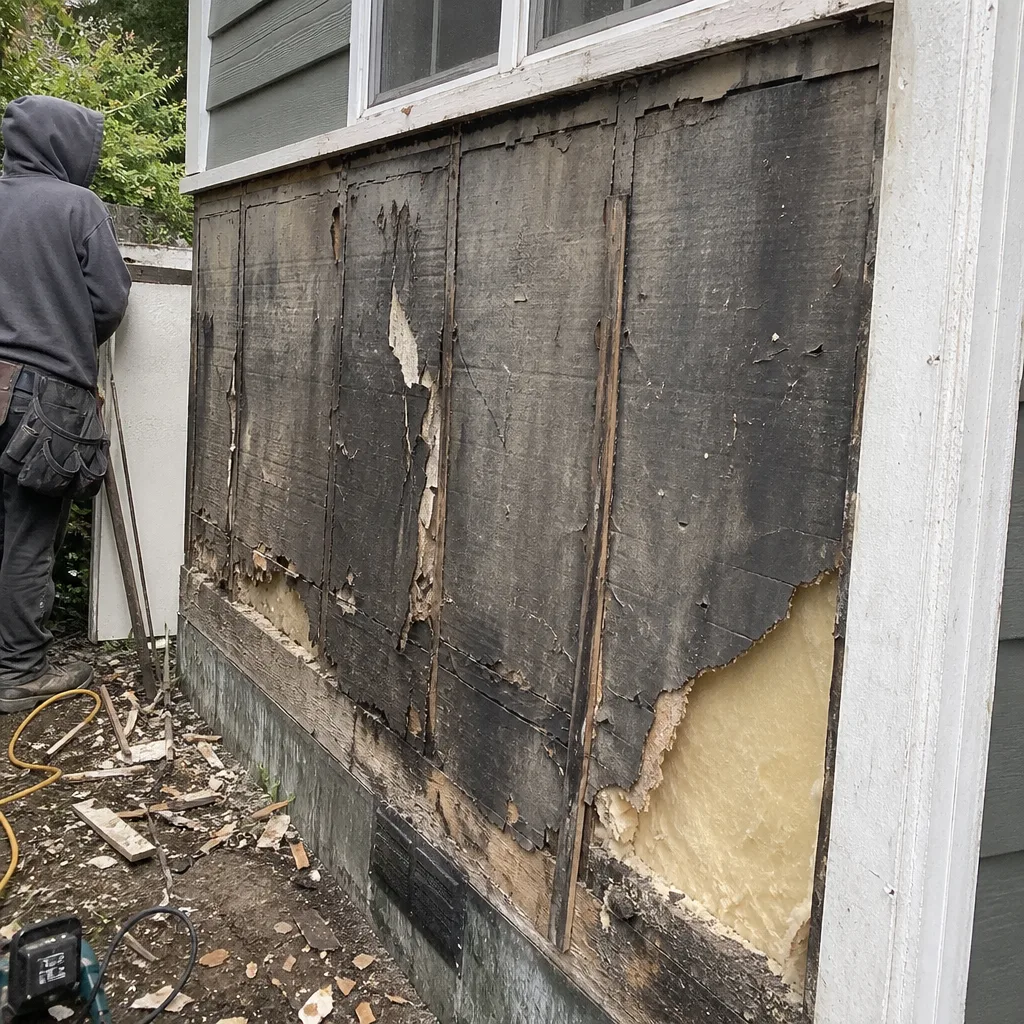 Before
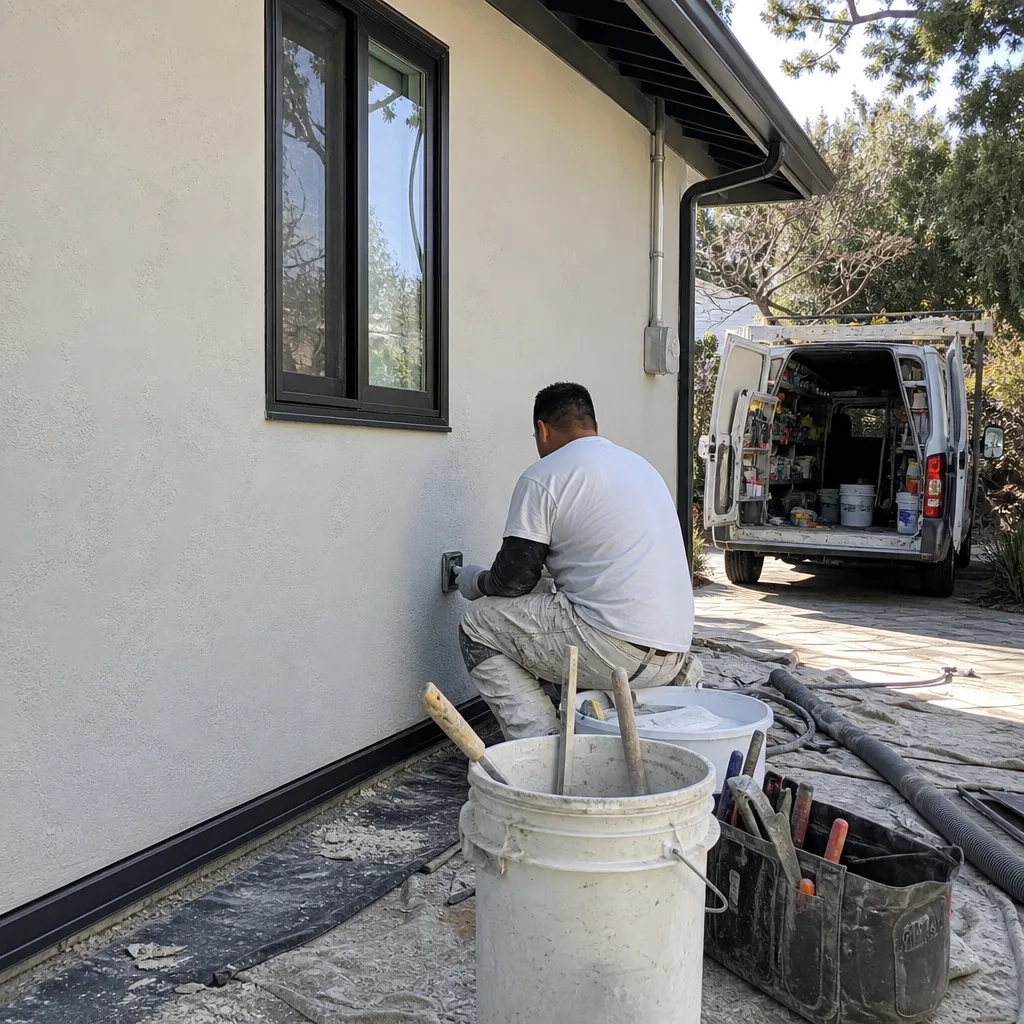 After
AfterAttic Insulation Top-Up Pricing in Menlo Park
Attic insulation top-up pricing in Menlo Park depends on four variables: attic square footage, the R-value gap between what’s there and the target, access difficulty, and the scope of air sealing required before insulation goes in. Here’s how it typically breaks down:
| Attic Size | Typical R-Value Gap | Estimated Range (incl. air sealing) |
|---|---|---|
| 800-1,200 sq ft | R-19 to R-49 | $900 – $1,450 |
| 1,200-1,800 sq ft | R-19 to R-49 | $1,300 – $2,000 |
| 1,200-1,800 sq ft | R-11 to R-60 | $1,700 – $2,400 |
| 1,800-2,400 sq ft | R-19 to R-60 | $2,100 – $3,200 |
Air sealing is included in every top-up quote we write. It is not a separate line item you choose to add. If your attic has an unusual configuration – a low hip section, knee walls, a whole-house fan cutout – the written scope will call that out specifically and the price will reflect it. What it won’t do is change after the job starts.
What can push a job toward the higher end of the range:
- More than 20 unsealed penetrations at the attic floor (common in remodeled Menlo Park Eichler homes)
- Access limited to a single 22-inch hatch, which slows material staging
- HVAC equipment or ductwork filling a portion of the attic floor
- Existing insulation that needs to be redistributed before topping up
PG&E and BayREN rebates: Menlo Park homeowners upgrading to R-38 or above in Climate Zone 4 may qualify for rebates through PG&E’s Energy Upgrade California program or BayREN’s Home+ program. Eligibility depends on current R-value, income, and whether the project is paired with other improvements. We don’t file rebate paperwork on your behalf, but the documented R-value readings and blower-door results we provide are exactly what those programs ask for in the application.
Every job begins with a written price. To get yours, call (510) 876-4113.
Why Menlo Park Homes Specifically Benefit from a Proper Top-Up
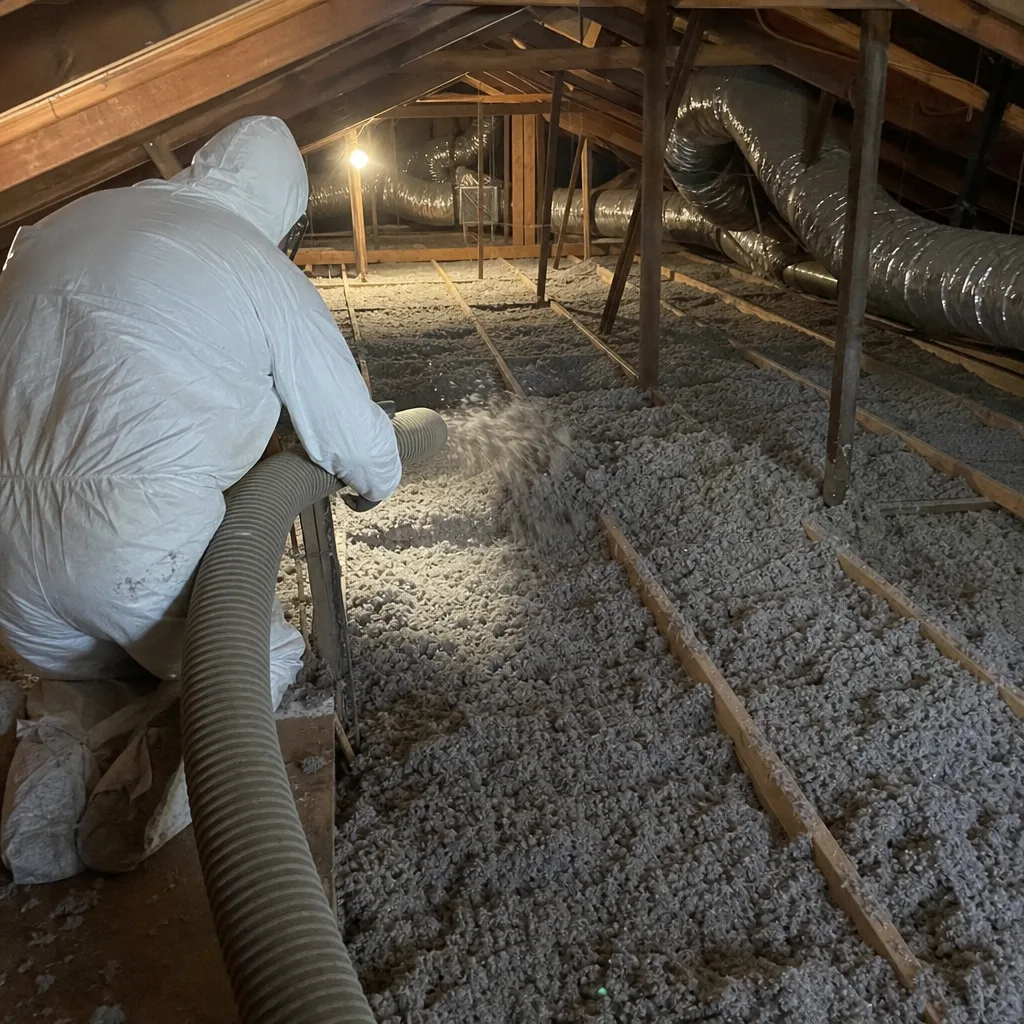
Menlo Park sits in a microclimate pocket that doesn’t behave like the rest of the Bay Area in ways that matter for insulation decisions. Summer afternoons in the western neighborhoods near Burgess Park can run 8 to 12 degrees cooler than the Willows or the eastern edge of Belle Haven, which borders East Palo Alto’s hotter, more exposed grid. That east-west temperature split means a home’s top-floor comfort depends heavily on how well the attic floor is performing – not just whether the HVAC system is sized correctly.
We’ve also found that many homes in the Sharon Heights and Allied Arts neighborhoods were built during the 1960s and 1970s with fiberglass batts laid flat across attic joists but with no air sealing whatsoever at the ceiling plane. The batts slow conductive heat transfer but do almost nothing to stop the convective air movement that carries conditioned air straight out through gaps around light fixtures, top plates, and plumbing chases. A blower-door reading on those homes before sealing often comes in at 3,500 to 4,800 CFM50. After sealing and topping up, we typically see that number drop to 1,800 to 2,600 CFM50 – a change you feel in the house within the first billing cycle.
The full scope of Attic Insulation services – including removal, replacement, and radiant barrier work – is available to Menlo Park homeowners where the situation calls for more than a straight top-up. Wes Okafor and the inspection team will tell you clearly which path applies to your attic after the initial assessment.
Key Takeaways
- Most Menlo Park attics built before 2005 are 20 to 30 R-value points short of current targets and are good candidates for a top-up.
- Air sealing comes before insulation – always. Blowing material over an unsealed attic floor is the most common reason a top-up fails to deliver measurable results.
- Before-and-after blower-door numbers are documented on every applicable job so you can see the air-sealing result as a specific number, not a general claim.
- Written price, written scope, written warranty – all before any work starts. Haven Standard Clause 1, no exceptions.
- Most standard top-ups in Menlo Park run between $900 and $2,400, depending on attic size and the R-value gap being closed.
- The 365-Day Done Right Promise applies: if the result doesn’t match the written scope, we come back and correct it.
FAQs – Attic Insulation Top-Up
How much does attic insulation top-up cost in Menlo Park?
A typical attic insulation top-up in Menlo Park costs between $900 and $2,400, with most standard 1,200-to-1,800 square foot attics falling between $1,300 and $2,000 when air sealing is included. The main drivers are attic square footage, the depth of insulation you’re starting from, and the number of penetrations that need to be sealed before any new material goes in. To get a flat written price specific to your attic, call (510) 876-4113.
Can you add new insulation on top of my existing insulation, or does the old material need to come out first?
In most Menlo Park homes, the existing insulation can stay in place and new material is blown directly over it – that’s the definition of a top-up. The exceptions are when the existing material shows moisture damage, contains vermiculite, is contaminated by rodent activity, or is so badly compressed that it would create an uneven base affecting final depth accuracy. We assess the existing material during the initial inspection and document the condition in photos before making any recommendation. If removal is genuinely necessary, we’ll tell you that with specifics, not as a default upsell.
How long does an attic insulation top-up take?
Most top-ups in Menlo Park are completed in three to five hours, including the blower-door readings and air sealing work that precede the insulation installation. Larger attics above 2,000 square feet, or attics with difficult access or extensive penetrations, can run a full day. The written scope we provide before work starts will include a time estimate, so you’re not guessing on the day of the job.
Will a top-up actually lower my energy bills, or is it hard to measure?
The result is measurable, and we measure it. We run a blower-door test – a pressurization reading in CFM50 – before any work starts and again after air sealing is complete. That before-and-after number shows, in a single figure, how much the building envelope tightened. In Menlo Park homes where we’ve documented this, a properly sealed and topped attic typically produces a CFM50 reduction of 30 to 50 percent compared to the baseline reading. On a home heating and cooling a 1,500-square-foot conditioned space, that range generally corresponds to a 15-to-25 percent reduction in HVAC runtime hours, which shows up on your PG&E bills within the first full season.
Written by Wes Okafor, Owner at Topside Attic Insulation Menlo Park, serving Menlo Park.