
Attic Baffles & Ventilation Prep in Menlo Park, CA
Attic baffles are rigid channels – typically cardboard, foam, or polypropylene – that run from the soffit vent up to the attic floor deck, keeping a clear airway open so outside air can flow from the eaves through the attic and out the ridge or gable vents, even after insulation is blown in on top of them. Without them, blown-in insulation buries the soffit vents and the ventilation system fails entirely. In Menlo Park, where homes in Belle Haven, the Willows, and the Stanford Research Park corridor were built across several different eras, we find baffles missing in roughly half the attics we inspect during Attic Insulation Near Me in Menlo Park, CA visits – and that absence quietly defeats everything else done to improve comfort and energy performance.
This page covers what ventilation prep involves, when you actually need it, what we do step by step, what it costs in Menlo Park’s market, and what questions homeowners here ask us most often. If you want the short version: ventilation prep is not optional work we tack on to inflate a job. It is a prerequisite. We will not install insulation in an attic that is not properly vented and sealed first – that is the same discipline we apply to Attic Insulation in Menlo Park across every job we take on.
Questions before you read further? Call us at (510) 876-4113 – a live person picks up, no voicemail loop.
When You Need Attic Baffles & Ventilation Prep
Not every Menlo Park attic needs Attic Batt Insulation baffles installed from scratch. Some already have them – but the baffles are crushed, disconnected, or too short to reach above the existing insulation line. Here are the situations where ventilation prep is clearly necessary before any insulation work begins:
- Soffit vents present but blocked by insulation. This is the most common scenario we see in Menlo Park homes built between 1955 and 1985, particularly in the Vintage Oaks and Allied Arts neighborhoods. The original insulation was pushed to the eaves at some point, and now the soffit vents – which are supposed to draw cool outside air into the attic – are completely buried. The ventilation system exists on paper but is not doing anything.
- No baffles installed at all. Many homes built before the late 1970s were insulated before baffle requirements became standard practice. We regularly find attics in the Felton Gables and Sharon Heights areas with solid insulation right up against the roof deck at the eaves, no channel, no airway. Once we blow additional insulation in, those soffit openings would be sealed permanently without baffles installed first.
- Existing baffles that are crushed, torn, or too short. Cardboard baffles from jobs done 15 or 20 years ago deteriorate. A baffle that has collapsed inward at the eave provides almost no useful airway. We measure the clear height of every baffle we find – if it does not extend at least one inch above the finished insulation depth, it gets replaced.
- Ice dam history or unusual moisture in the attic. Menlo Park does not get the freeze-thaw cycles that produce classic ice dams, but we do see moisture damage at the eave zone – staining, mold, or wood degradation – that tells the same story: warm air escaping through the ceiling, condensing near the cold roof deck at the eaves. Proper baffle installation and ventilation prep corrects the underlying airflow problem driving that moisture.
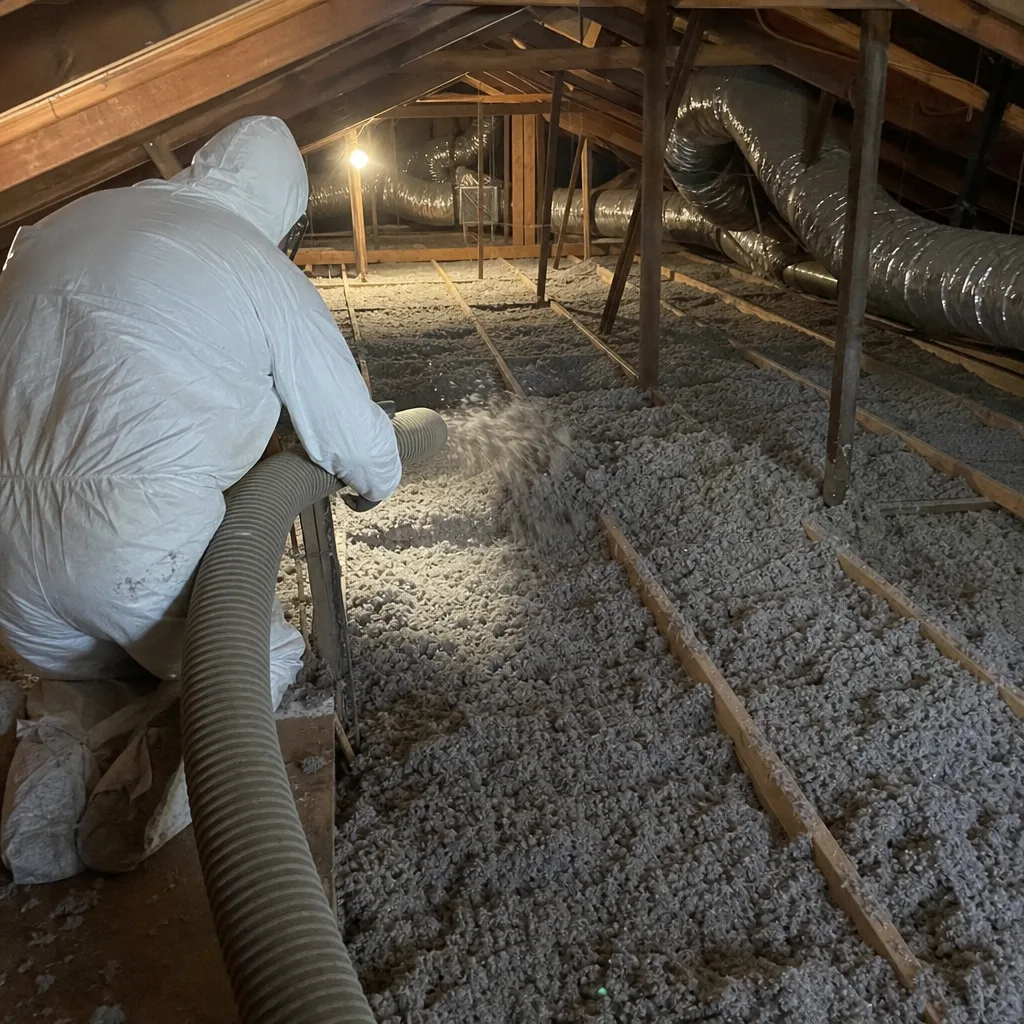
- Preparing for blown-in insulation, including Rockwool or dense-pack cellulose. Any blown product – Rockwool mineral wool, GreenFiber cellulose, fiberglass – will migrate toward the soffit vents during installation if there is no physical barrier holding it back. Baffles are that barrier. This is not optional under current California building practice, and skipping it to save time is how an insulation job becomes a ventilation failure.
- HVAC or can-light work recently completed in the attic. When an HVAC contractor or electrician works in an attic, baffles get kicked loose or removed entirely. We see this frequently in Menlo Park homes that had mini-split systems or recessed lighting added in the last decade. Before insulation goes back in, the baffle layout needs to be checked and restored.
Our Attic Baffles & Ventilation Prep Process
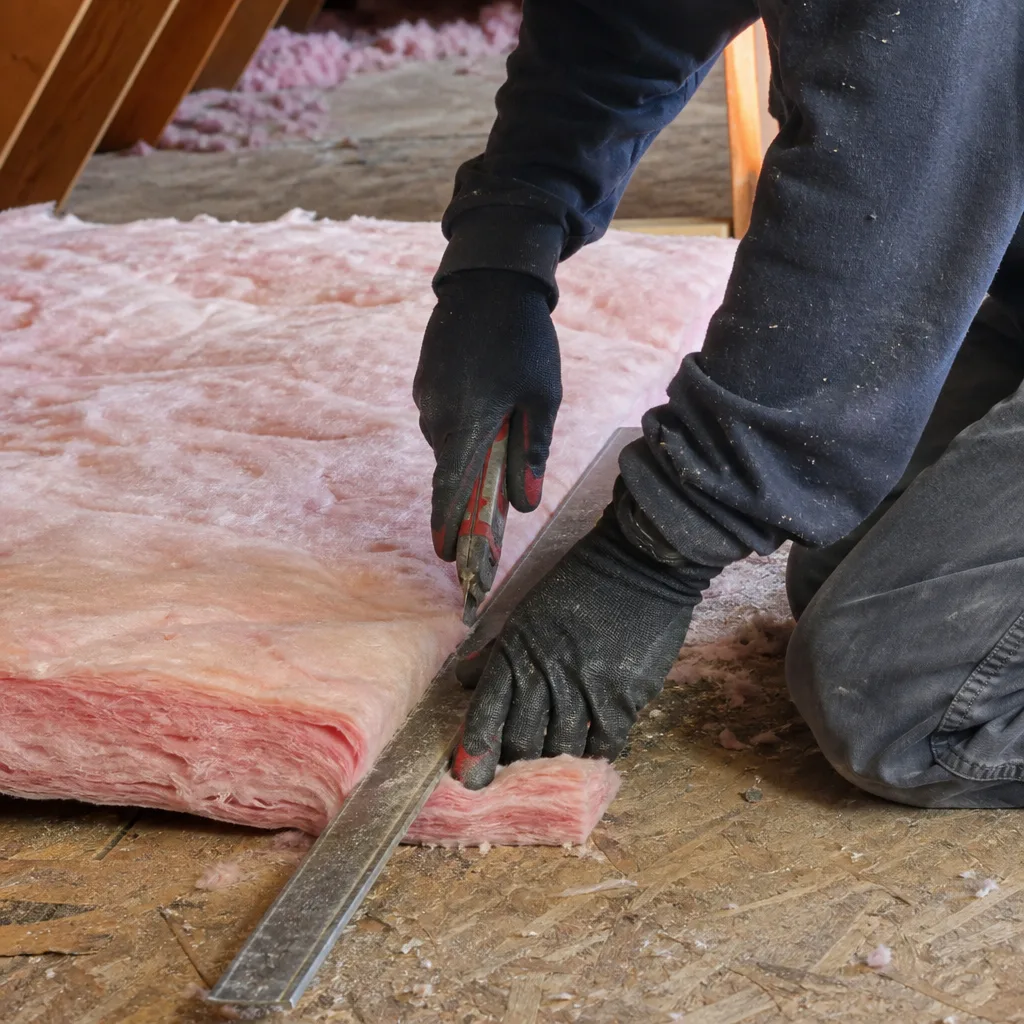
What we do follows a fixed sequence. Ventilation prep is not a walk-through inspection followed by a report – it is physical work that leaves the attic ready for insulation. Here is exactly how we run it:
- Full attic inspection with documentation before anything is touched. Before we move a single piece of existing insulation, we photograph the current state of every soffit bay, the ridge vent or gable vent condition, any existing baffles, and the penetrations at the attic floor – top plates, plumbing stacks, can lights, HVAC boots. This is the “before” in the Documented Photo Record every job carries under the Haven Standard. The homeowner gets this record regardless of what we find.
- Attic floor air sealing – completed before baffles go in. We seal top plates, can-light housings, plumbing and electrical penetrations, and any visible gaps at the ceiling plane using the appropriate product for each location. This step matters because insulation does not stop air movement – it only slows heat transfer. An attic with unblocked can lights and open top-plate gaps will lose conditioned air regardless of how much insulation sits on top. On applicable jobs, we run a blower-door test – a pressurization reading that shows, in a single number, how much air the building envelope is losing – before and after air sealing, so you have a documented measurement of what changed, not just our word for it.
- Clear and measure each soffit bay. We move or remove existing insulation from the eave zone to expose each soffit bay and measure the rafter cavity depth and the clear distance to the soffit vent opening. This tells us what baffle length and profile we need and confirms whether existing soffit vents are actually open or have been painted or screened shut over decades of maintenance.
- Install baffles to full required height. We install rigid baffles – polypropylene or high-density foam, depending on rafter depth and the insulation product being applied – in every soffit bay, secured to the roof deck and extended to a height that keeps at least one inch of clear airway above the finished insulation surface. On cathedral ceiling sections or homes with compact rafter bays, we size the baffle to preserve the full two-inch minimum airway the California Energy Code requires. Every bay gets a baffle, not just the ones that were obviously missing them.
- Verify ridge or exhaust vent condition. Baffles bring fresh air in at the soffit. That air needs a path out. We check the ridge vent, gable vents, or roof-mounted vents for blockage, damage, or insufficient net free area. If we find a ridge vent that is blocked with debris or a gable vent screen that has failed, we note it in the scope. Ventilation is a system – fixing the intake without confirming the exhaust is half a job.
- Final photo documentation and written scope delivered before insulation begins. Once ventilation prep is complete, we photograph the finished baffle installation in every soffit bay and add those images to the job’s photo record. The written scope – including what was installed, what materials were used, and the Haven Standard 365-Day Done Right Promise – is delivered before the insulation crew starts. Under Haven Standard Clause 1: Written Price Before Any Work Starts, the price for both ventilation prep and any subsequent insulation work is flat, written, and signed before anyone picks up a hose.
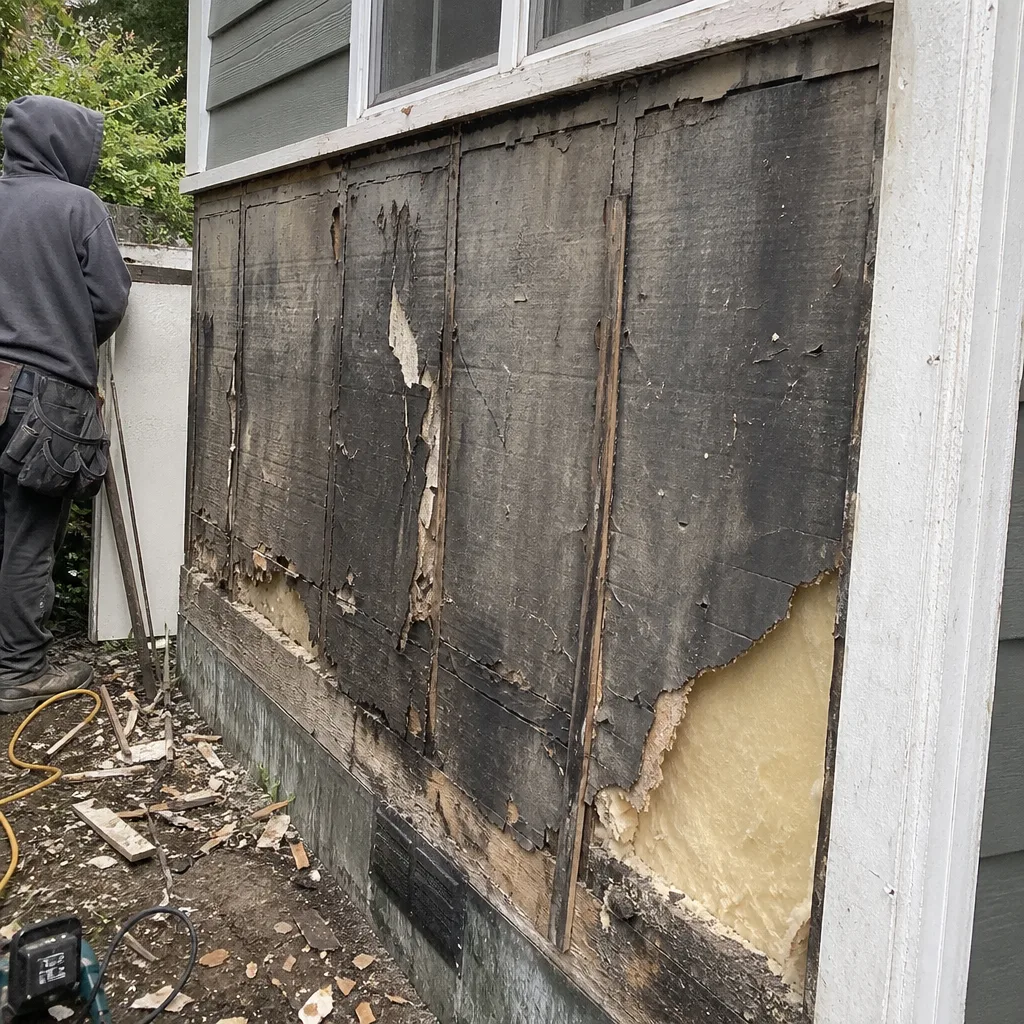 Before
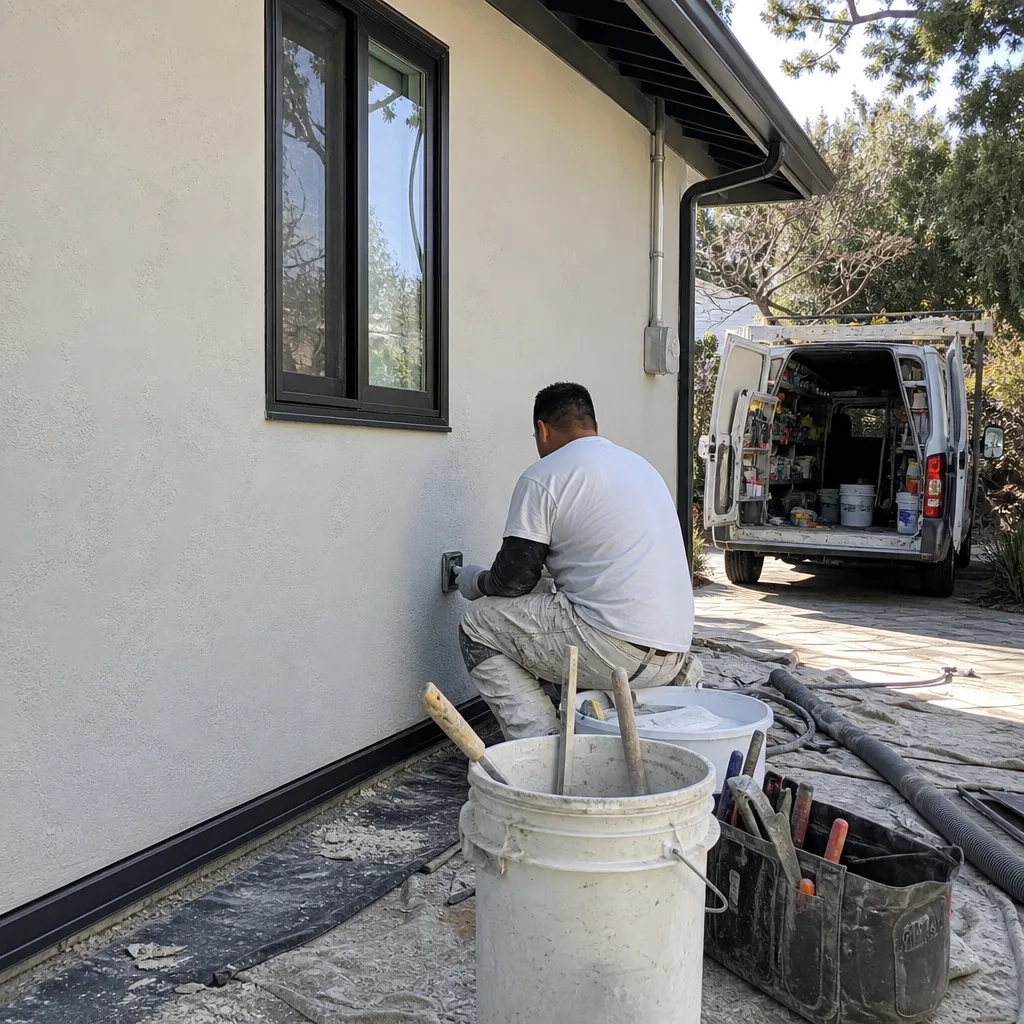 After
AfterAttic Baffles & Ventilation Prep Pricing in Menlo Park
In Menlo Park, ventilation prep typically runs between $350 and $950 as a standalone scope before Attic Insulation services, depending on attic size, the number of soffit bays, access difficulty, and whether air sealing is included or has already been completed. Below is how the main cost variables break down:
| Scope component | Typical range (Menlo Park market) |
|---|---|
| Baffle installation only, 1,000-1,500 sq ft attic footprint | $350 – $550 |
| Baffle installation, 1,500-2,500 sq ft attic footprint | $550 – $850 |
| Attic floor air sealing (top plates, can lights, penetrations) added to baffle scope | +$200 – $450 depending on penetration count |
| Blower-door test before and after air sealing (on applicable jobs) | Included when performed as part of air-sealing scope |
| Documented Photo Record | Included on every job |
A few things affect where your job falls in those ranges. Attics with low clearance – we see this often in single-story ranch homes in the Willows and in some of the original Belle Haven housing stock – take longer to work in and cost slightly more in labor. Homes with hip roofs have more soffit perimeter per square foot than gable-roof homes, which means more baffle bays and more material. And if the attic has a large number of recessed can lights from a past renovation, air sealing that penetration count before baffles go in adds time.
What we will not do is give you a price over the phone and then adjust it when we arrive. Under Haven Standard Clause 1, you get a flat written price before anyone starts work – no exceptions and no “we found additional issues” surprises that weren’t in the original scope. If we do find something during work that wasn’t visible at inspection, we stop and show you before we proceed.
If you have a written estimate from another contractor, bring it to us. We offer a Free Second Opinion on any written estimate – we will read it with you and tell you what we see in plain language.
To get a written price for your attic, call (510) 876-4113.
FAQs – Attic Baffles & Ventilation Prep
What exactly is an attic baffle and why does my Menlo Park home need one?
An attic baffle is a rigid channel installed in each rafter bay – the space between roof rafters at the eave – that creates a clear airway from the soffit vent up into the open attic space. Without a baffle, blown-in insulation fills that rafter bay completely and blocks the soffit vent, which is supposed to admit fresh outside air. When that inlet is blocked, the attic has no functioning ventilation circuit: heat and moisture build up under the roof deck, sheathing degrades faster, and in winter the differential between warm attic air and the cold eave zone can drive moisture into the wood. In Menlo Park, where many homes were built or reinsulated before baffles were standard practice, we find this situation in a significant portion of the attics we inspect. Call (510) 876-4113 and we can tell you whether your attic has functional baffles before any work is scheduled.
Can’t the insulation installer just be careful around the soffit vents instead of installing baffles?
No – not with any blown product, and not in a way that holds over time. Blown-in insulation settles and migrates slightly after installation. Even if an installer manually hollows out a small channel at the eave on installation day, that channel will close over months without a physical baffle holding it open. More practically, there is no way to control where blown product goes at the soffit without a hard physical boundary in place. Any contractor who tells you baffles are optional for a blown-in job is either planning to do it incorrectly or is describing a different scope than what was agreed. We will not begin a blown-in installation without confirmed baffles in every soffit bay – it is the same reason we will not blow insulation over an unsealed attic floor.
How much does attic ventilation prep typically cost in Menlo Park, and is it a separate charge from insulation?
Ventilation prep in Menlo Park typically costs between $350 and $950 depending on attic footprint, number of soffit bays, and whether attic floor air sealing is part of the same scope. When we quote a combined insulation and ventilation prep job, the ventilation prep is listed as its own line item in the written scope – you can see exactly what you are paying for each part of the work. It is not bundled into the insulation price in a way that obscures the cost. On most jobs, the full written price – insulation plus ventilation prep – runs between $1,800 and $4,200 for a typical Menlo Park single-family home, though that range shifts based on square footage and current R-value; see How Much Does Attic Insulation Cost? (2026 Price Guide) - Menlo Park, CA for more detail. Call (510) 876-4113 for a written price specific to your home.
What is the difference between attic ventilation and attic air sealing, and do I need both?
Attic ventilation is the controlled flow of outside air through the attic space – in at the soffits, out at the ridge or gable vents – which manages temperature and moisture at the roof deck. Attic air sealing is the process of blocking uncontrolled air movement between the conditioned living space below and the attic above: sealing the gaps around can lights, top plates, plumbing stacks, and other penetrations at the attic floor. They solve different problems and both matter. Ventilation without air sealing means the conditioned air your HVAC system produces is still escaping into the attic through gaps in the ceiling before it ever reaches the ventilation circuit. Air sealing without proper ventilation means moisture that does reach the attic has nowhere to go. In practice, we do both in sequence – air sealing first, then baffle installation, then insulation – and we document the blower-door readings before and after the air sealing step so you have a measured result, not just our assurance. This is part of what makes the full scope of home envelope work different from a simple insulation top-up.
Key Takeaways
- Attic baffles keep soffit vents clear after insulation is installed – without them, blown-in products seal the ventilation inlet and the system fails.
- Ventilation prep in Menlo Park typically runs $350 to $950 depending on attic size, access, and whether air sealing is included in the scope.
- We complete air sealing before baffles and baffles before insulation – every time, in that order.
- Before-and-after blower-door readings are provided on applicable jobs so you have a documented measurement of the air-sealing result.
- Every job includes a Documented Photo Record and a flat written price before work starts, under Haven Standard Clause 1.
- The 365-Day Done Right Promise applies to all completed ventilation prep and insulation work.
If your Menlo Park attic needs baffles installed, replaced, or inspected before a new insulation layer goes in, call (510) 876-4113. A live person will answer, you’ll get a named technician assigned, and a written price before any work begins – that’s how every job has run since 2016. We also offer a Free Second Opinion if you already have a written estimate from another contractor.
Written by Wes Okafor, Owner at Topside Attic Insulation Menlo Park, serving Menlo Park.