
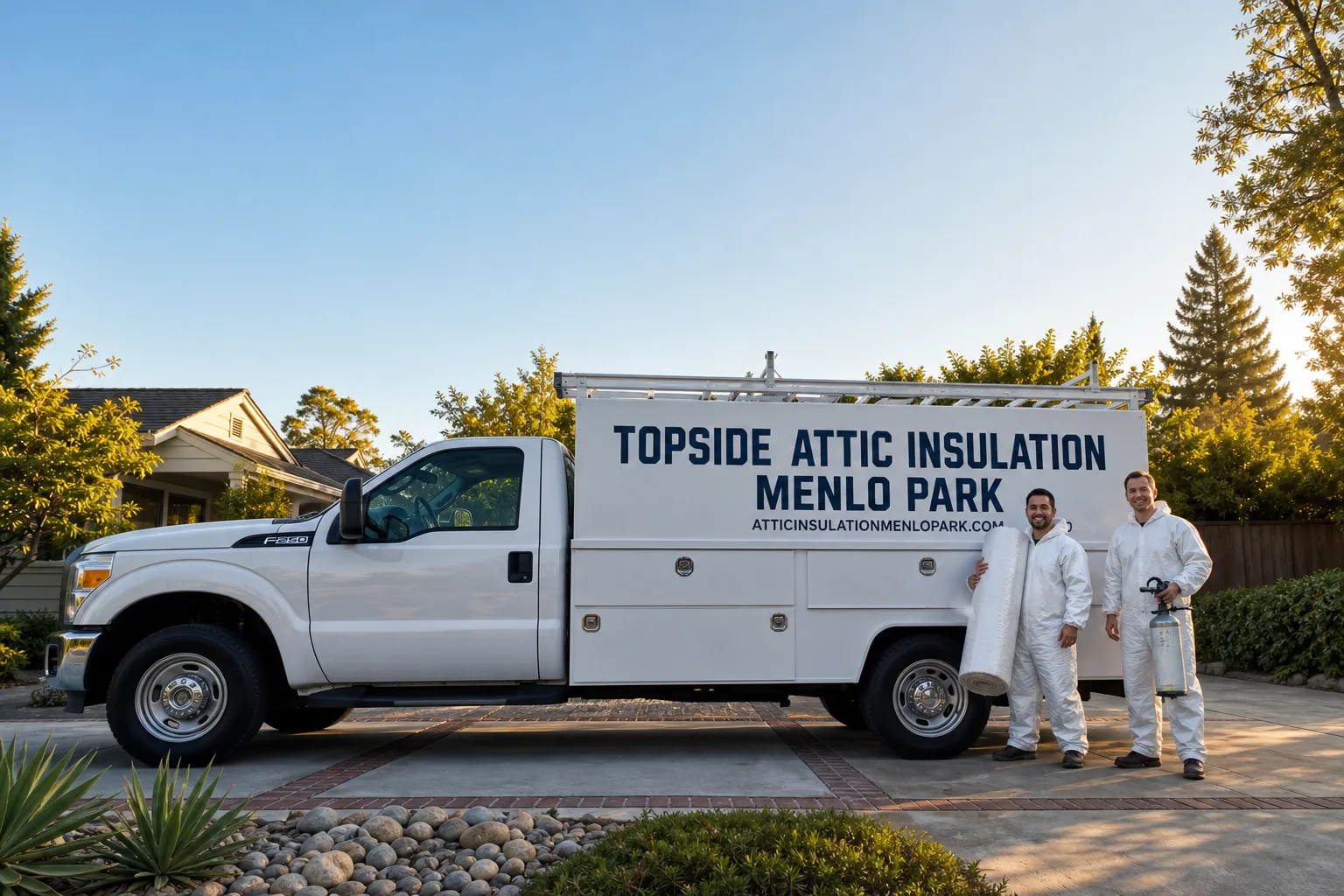
Insulation in Stanford, CA
Crawl space encapsulation and vapor barrier work in Stanford runs $3,200-$7,800 for most homes, with university-owned properties in Frenchman’s Hill and Escondido Village requiring coordination through Stanford Facilities Management rather than direct homeowner approval. Because Stanford sits at the base of the Santa Cruz Mountain foothills where marine air meets valley heat, crawl spaces here collect moisture from both soil vapor and dramatic diurnal temperature swings, making proper encapsulation essential for indoor air quality and structural protection. Call (510) 876-4113 for a written price before any work starts.
Why Stanford Homes Are Different
Stanford is not a conventional municipality. Virtually all land and structures are owned and managed by Stanford University, so insulation contractors must work within the university’s Facilities Management and internal sustainability framework rather than a city building department. Stanford’s own carbon-neutrality commitments and energy programs, including its Stanford Energy System Innovations initiative, frequently drive insulation standards that exceed California’s already-stringent Title 24 baseline. Compliance knowledge of both state code and university policy is essential for any contractor working here.
The residential stock consists almost entirely of university-owned properties: pre-WWII and mid-century faculty homes in leased neighborhoods like Frenchman’s Hill and Escondido Village, plus large post-1960s graduate student housing complexes. Residents are tenants rather than owners, so insulation retrofits require sign-off from Stanford Facilities Management. The historic Inner Quad sandstone buildings, original Richardsonian Romanesque construction from 1887-1906, require insulation approaches vetted through Stanford’s Historic Preservation guidelines. Contractors cannot simply retrofit standard batt or spray foam without addressing the masonry thermal mass and vapor dynamics of century-old unreinforced walls.
Climatically, Stanford’s position at the foothills creates a pronounced diurnal swing: afternoon heat from the inland valley pushes summer highs into the low-to-mid 90s while coastal marine air keeps nights cool. Winter nights dip into the 30s near the Stanford Dish. This means insulation performance matters in both directions seasonally, and attic air-sealing has outsized impact on cooling loads.
Our Main Stanford Services
Stanford homeowners and Facilities Management coordinators most often call us about attic insulation and spray foam for thermal upgrades in mid-century faculty housing, and blown-in insulation for cost-effective retrofits in larger multi-unit complexes.
Attic Insulation in Stanford
Attic insulation in Stanford typically involves upgrading pre-WWII and mid-century homes in Frenchman’s Hill where original insulation has settled below current R-value requirements. We begin with a blower-door test to establish baseline air leakage, then seal top plates and penetrations before adding insulation, since Stanford’s diurnal temperature swings amplify the penalty of an unsealed attic floor. Every job closes with documented before-and-after blower-door numbers. Attic Insulation in Stanford
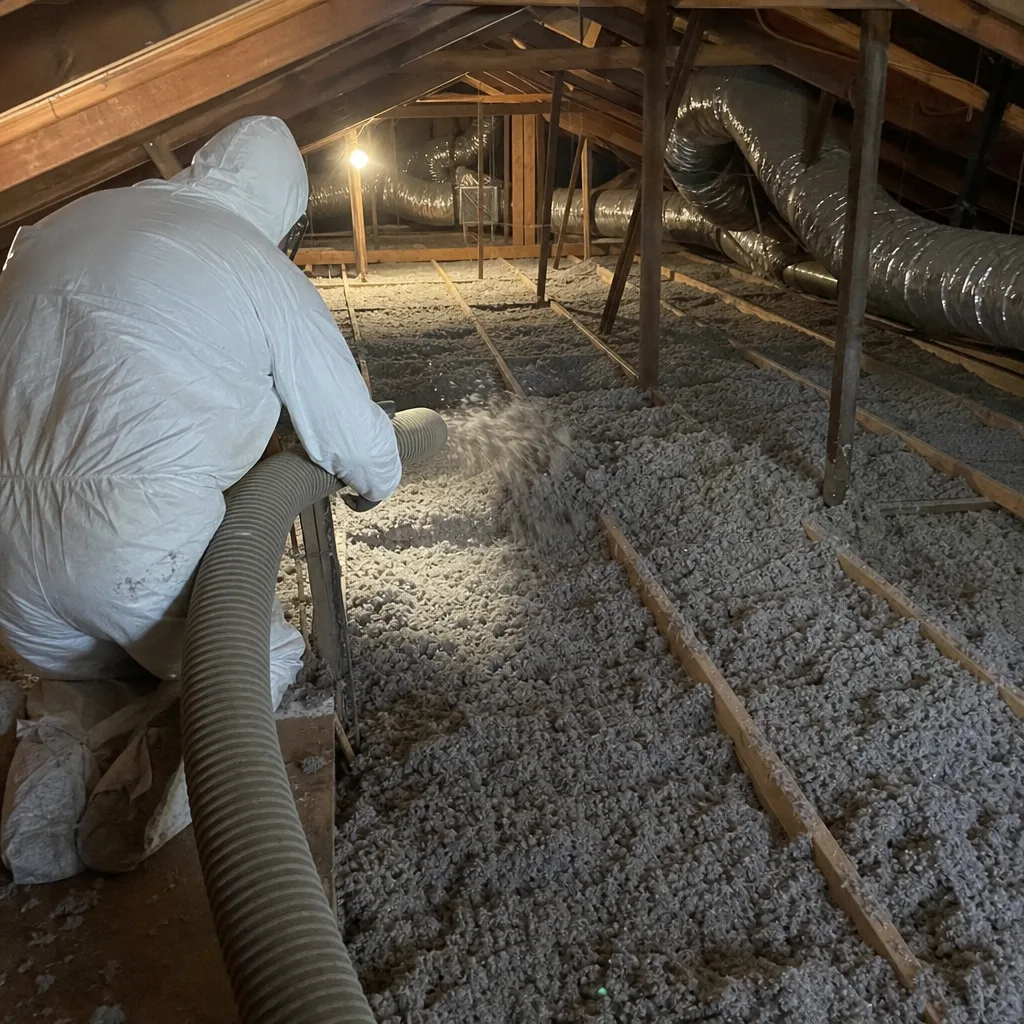
Spray Foam Insulation in Stanford
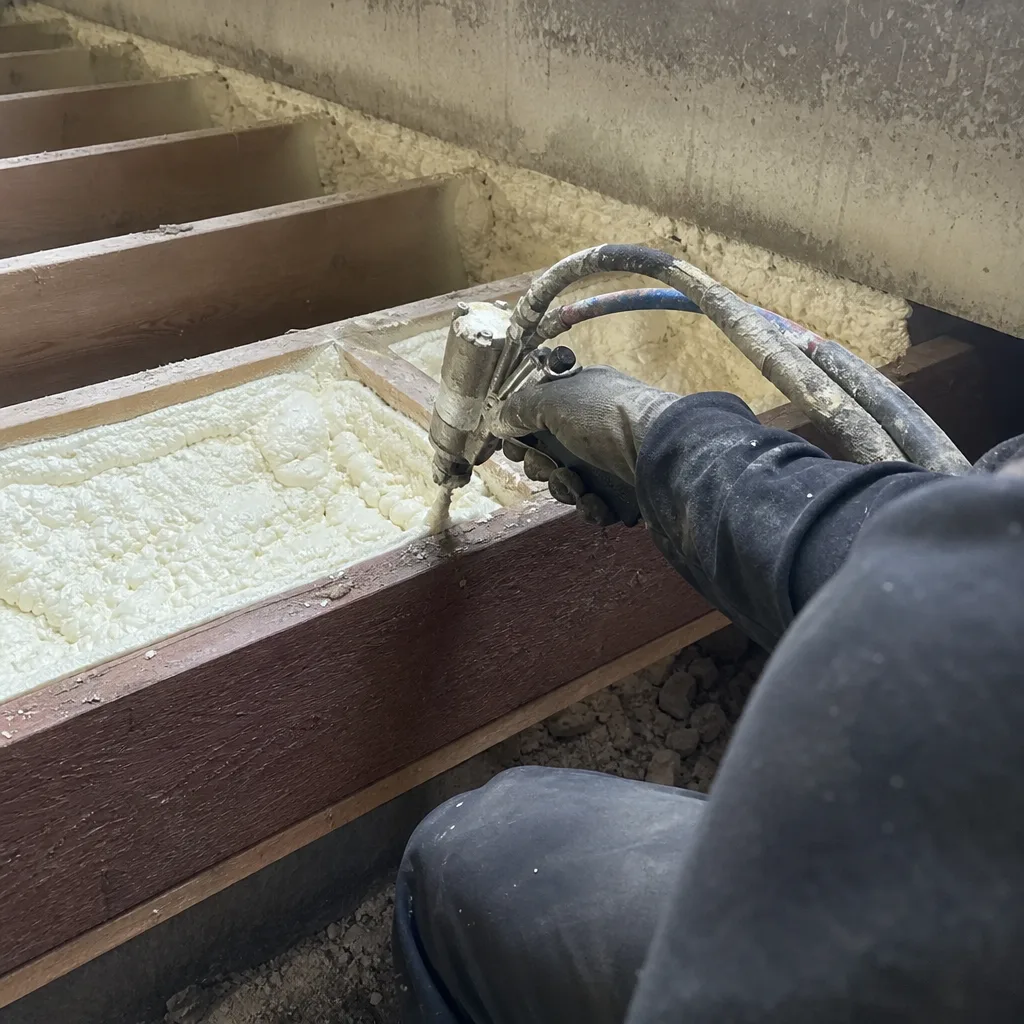
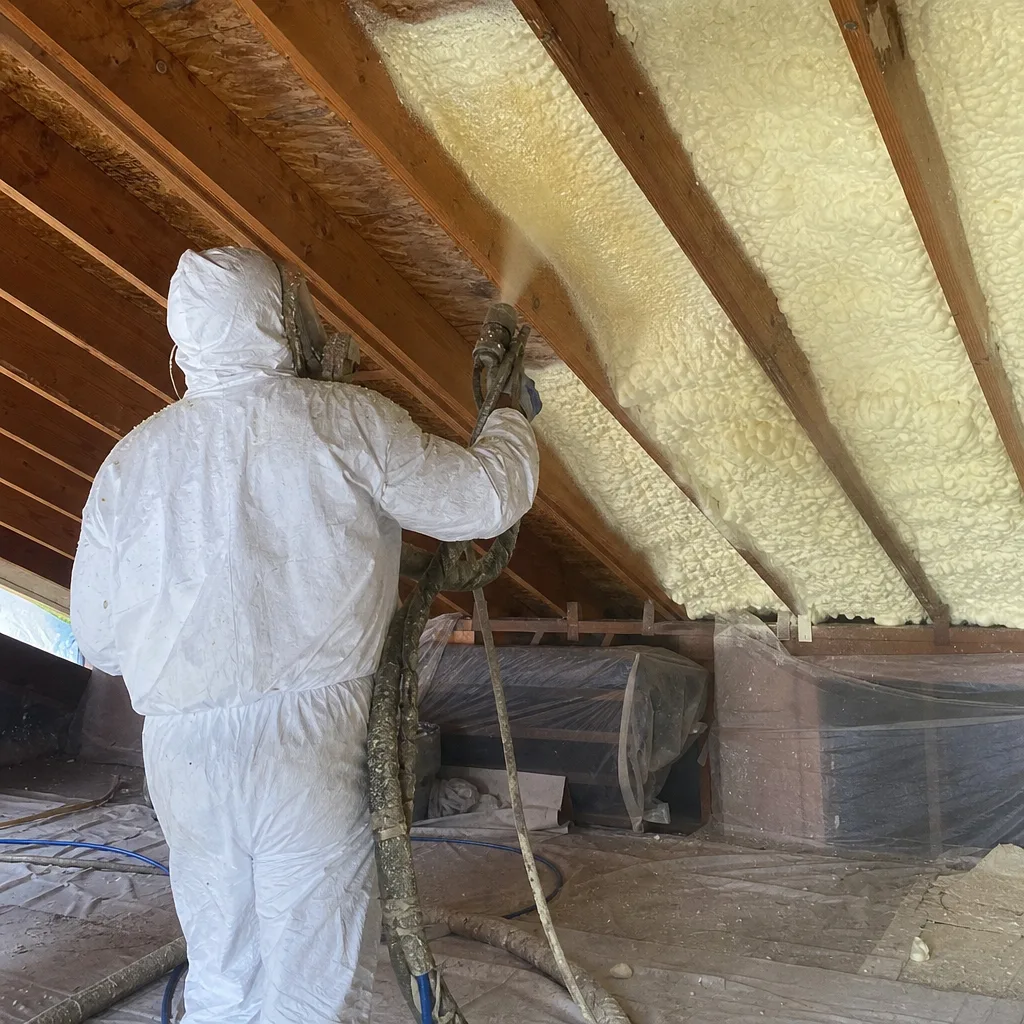
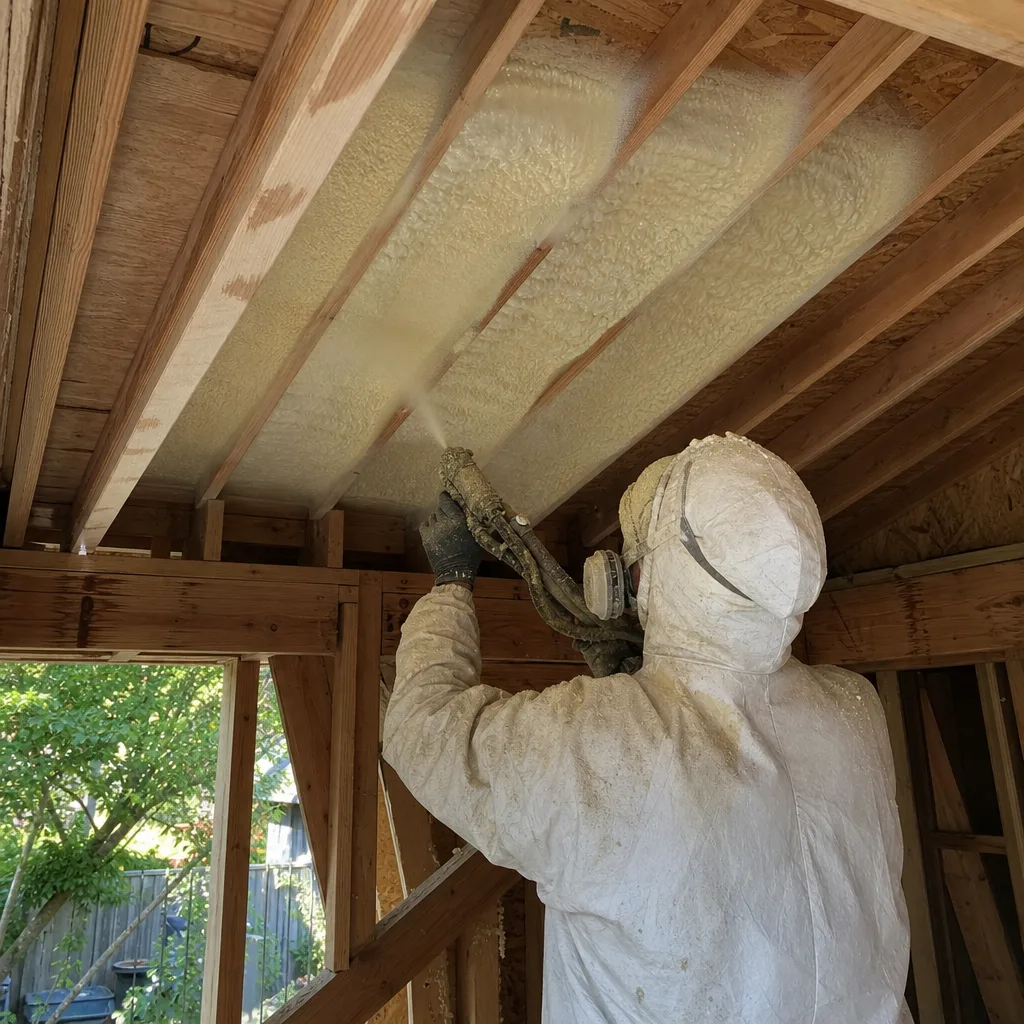
Spray foam insulation in Stanford is specified most often for complex rooflines and conditioned attic conversions in newer graduate housing where space constraints make traditional batt installation impractical. We use open-cell and closed-cell formulations from Icynene and Demilec, selected for the specific assembly and moisture profile. Because Stanford’s sustainability framework emphasizes long-term building performance, we provide written scope, warranty, and blower-door verification on every spray foam job. Spray Foam Insulation in Stanford
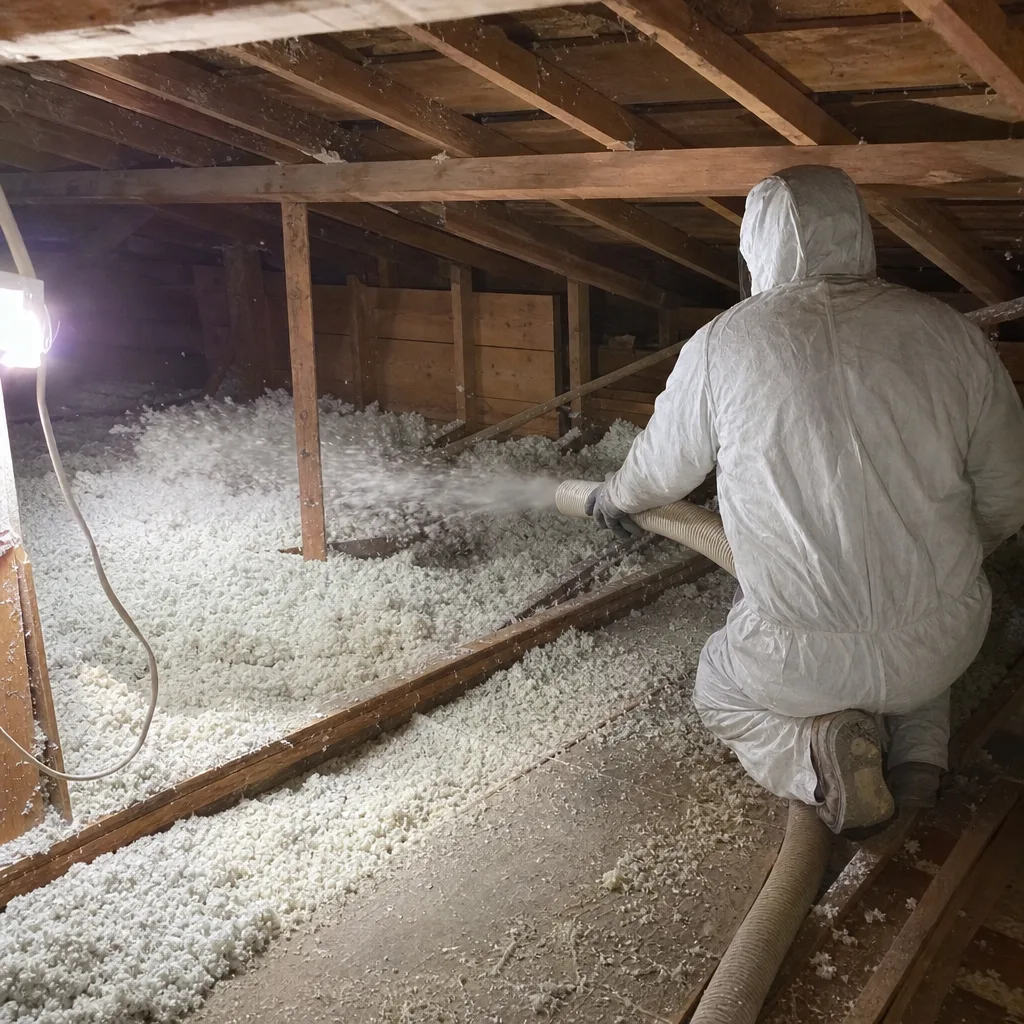
Blown-In Insulation in Stanford
Blown-in insulation in Stanford offers the most cost-effective path to code-compliant R-values for large-scale retrofits in Escondido Village and similar multi-unit complexes where labor efficiency matters. We install cellulose from GreenFiber and fiberglass from Owens Corning, always after completing attic floor air sealing. The material is dense-packed to resist settling, and we photograph depth markers throughout for the Documented Photo Record. Blown-In Insulation in Stanford
What happens when you call
- 1
A real person answersNo phone trees - you reach a local pro.
- 2
You get an upfront price rangeHonest numbers before anyone is dispatched.
- 3
A background-checked tech heads outLicensed & insured, dispatched right away.
- 4
You approve before work beginsNothing starts until you say go.
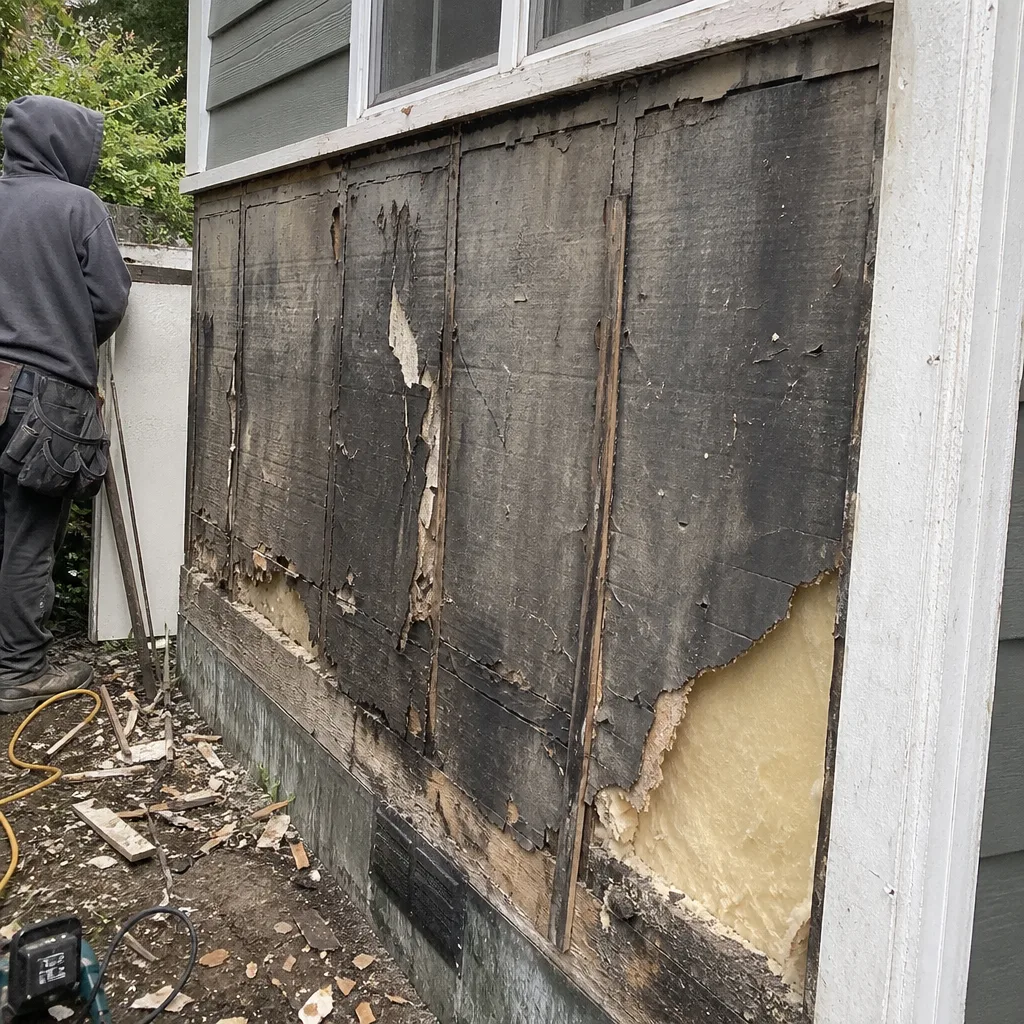 Before
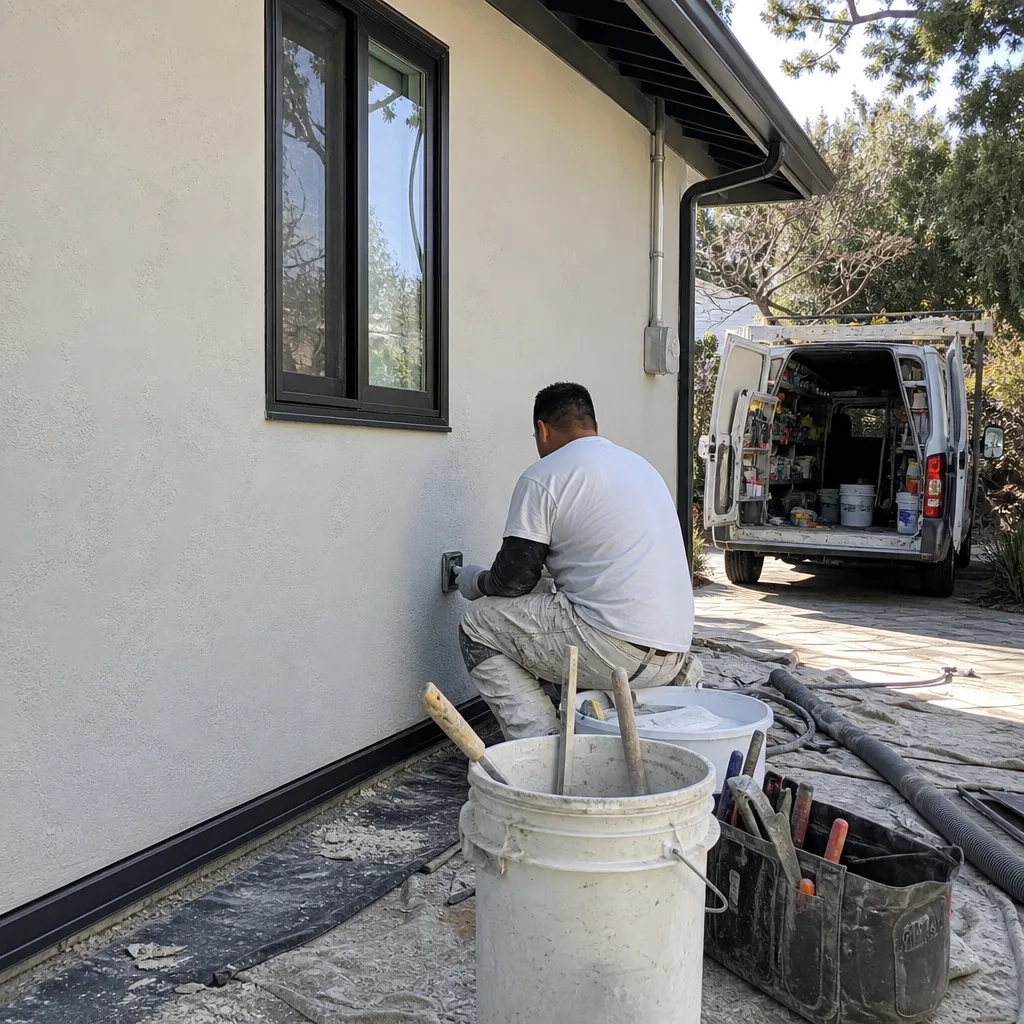 After
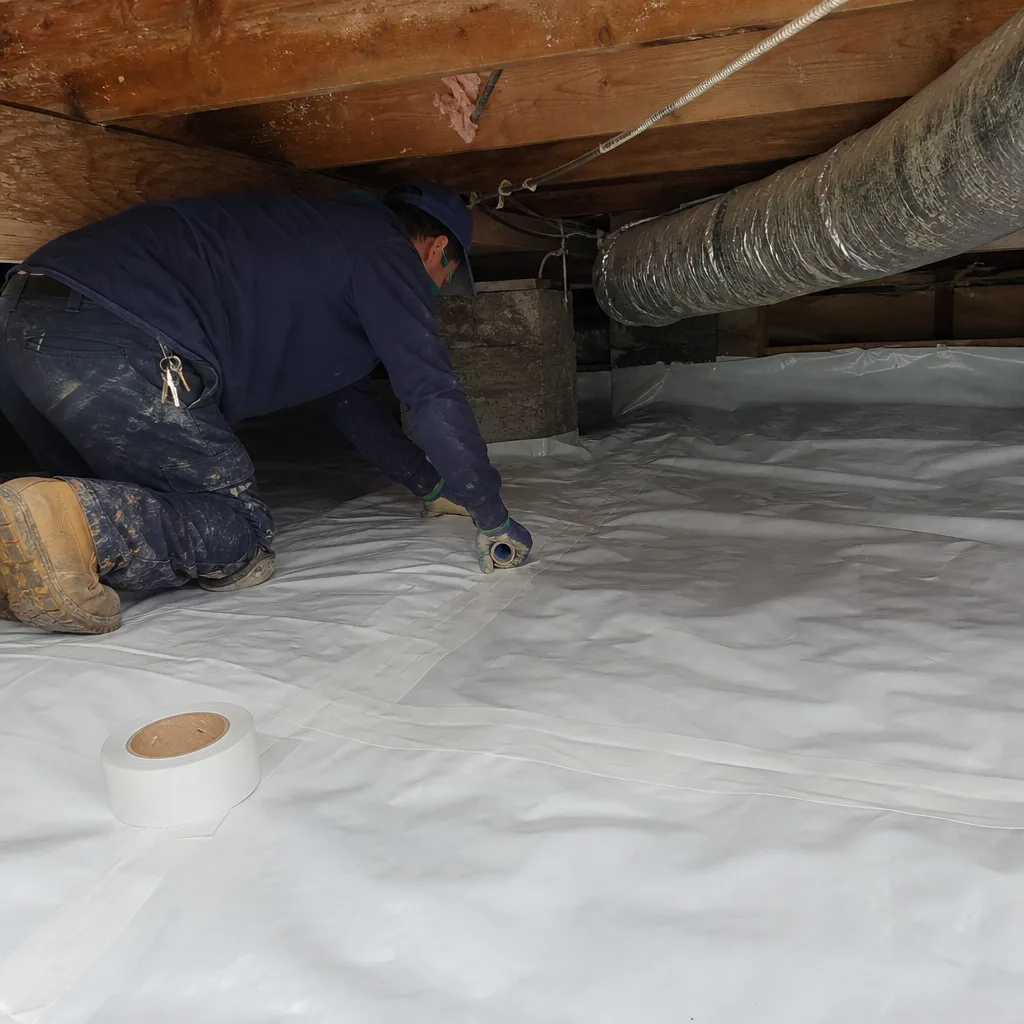
AfterCrawl Space Encapsulation & Vapor Barrier in Stanford
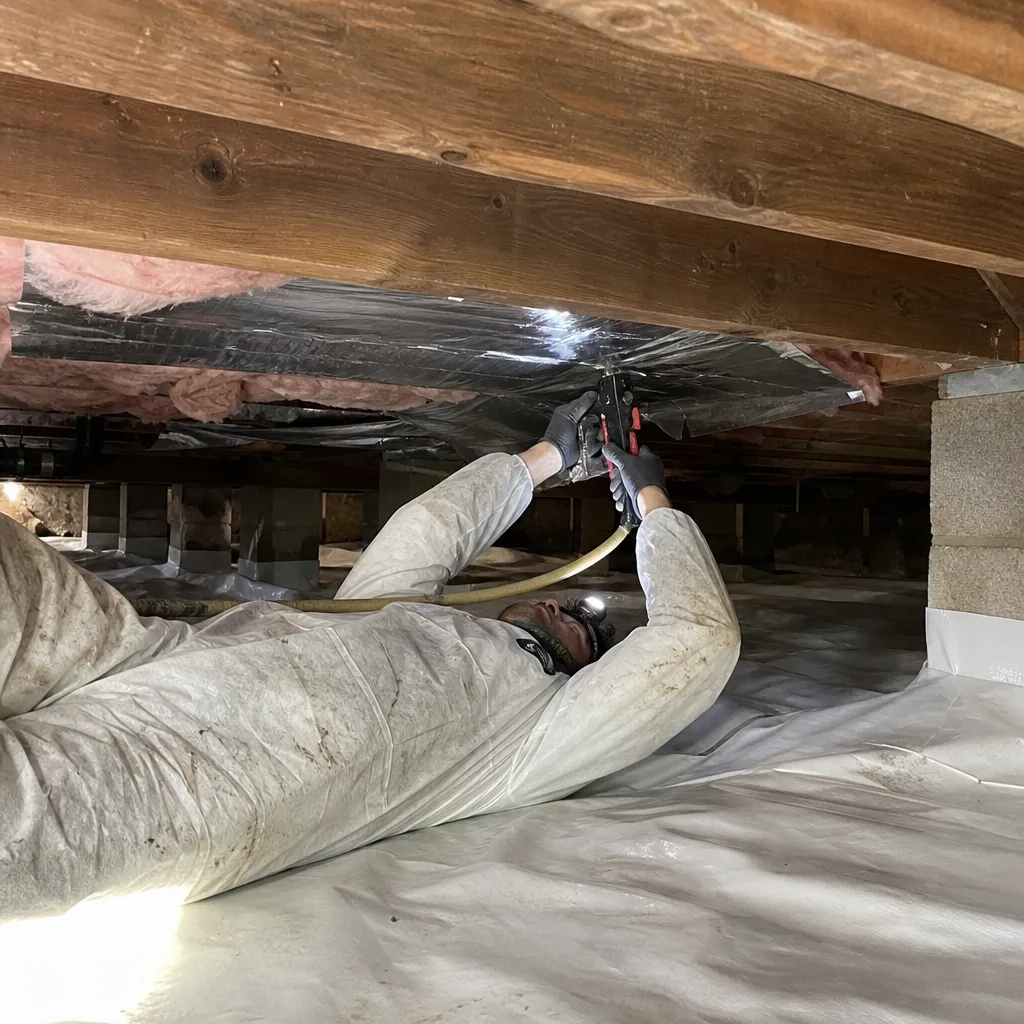
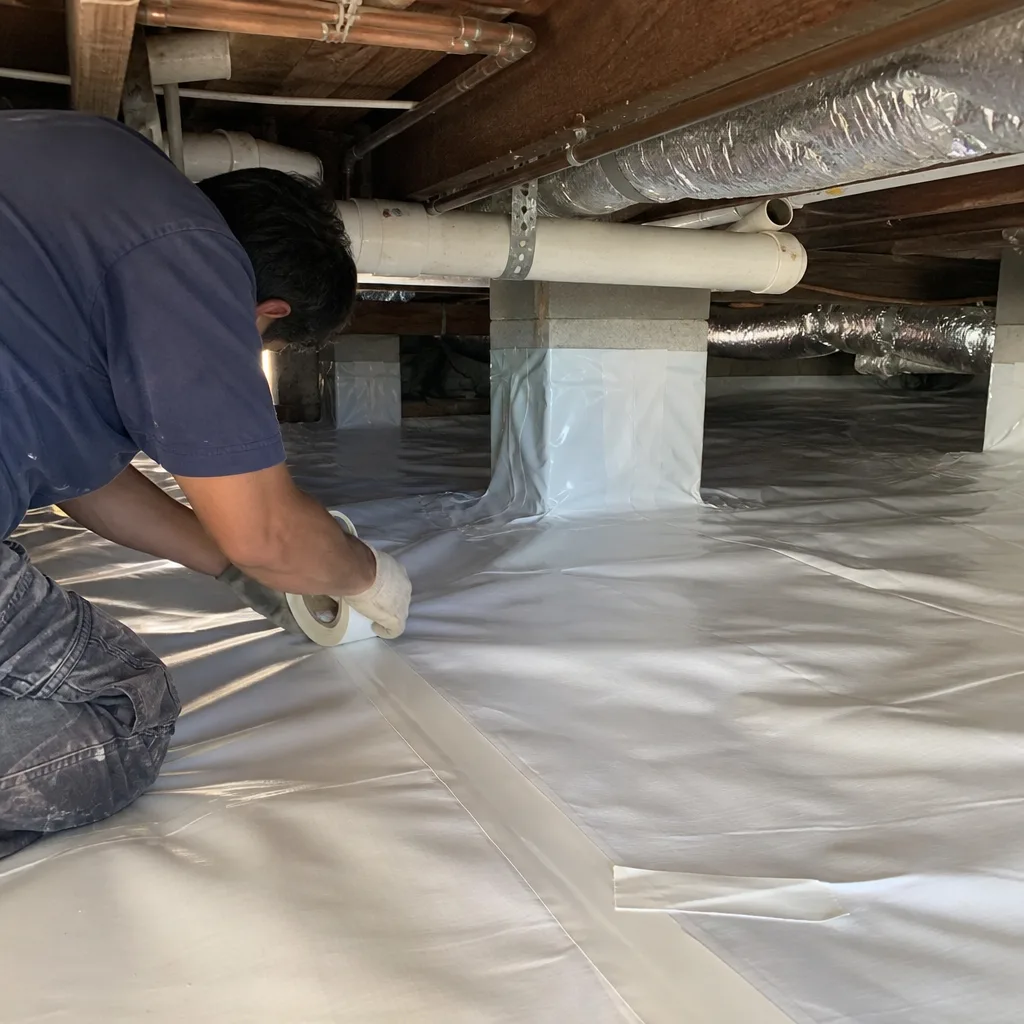
Crawl space encapsulation and vapor barrier installation in Stanford addresses a specific regional problem: homes at the base of the Santa Cruz Mountain foothills draw soil moisture from below while experiencing rapid temperature swings that drive condensation on cool foundation surfaces. In university-owned properties, moisture damage in crawl spaces triggers work orders through Facilities Management, but the underlying vapor drive remains unaddressed without proper encapsulation. We install crawl space encapsulation and vapor barrier systems that start with sealing the envelope, not just laying plastic.
Crawl Space Vapor Barrier
Signs you need it
Standing water, efflorescence on foundation walls, or musty odors rising through floor registers in winter months indicate vapor barrier failure.
What it costs in Stanford
A 6-mil to 20-mil vapor barrier installed over prepared ground in a typical Stanford crawl space runs $1,800-$3,500.
How we do it
We rake and level the ground, seam-seal polyethylene sheeting at all overlaps, and mechanically fasten to foundation walls with termination bars.
Crawl Space Encapsulation
Signs you need it
Chronic humidity above 70% RH, mold on floor joists, or fiberglass batts sagging and dropping from moisture saturation mean full encapsulation is needed.
What it costs in Stanford
Complete encapsulation with sealed vapor barrier, wall insulation, and conditioned air supply for a standard Stanford crawl space ranges $5,500-$9,200.
How we do it
We install sealed crawl space liners on floors and walls, seal vents and penetrations, add rigid foam wall insulation, and connect a dehumidifier or conditioned air supply.
What Crawl Space Encapsulation & Vapor Barrier Costs in Stanford
| Item | Typical range in Stanford |
|---|---|
| Vapor barrier (ground only) | $1,800 - $3,500 |
| Full encapsulation | $5,500 - $9,200 |
| Crawl space insulation add-on | $2,400 - $4,800 |
Does Stanford Facilities Management require approval for crawl space work?
Yes. For university-owned properties, we coordinate directly with Stanford Facilities Management to obtain written authorization before accessing any crawl space, and we provide our written scope, warranty, and photo documentation to both the tenant and Facilities.
How long does crawl space encapsulation take in Stanford?
Most vapor barrier installations finish in one day; full encapsulations with wall insulation and dehumidification typically take two to three days. We schedule around Stanford’s academic calendar to minimize disruption.
Radiant Barrier Installation in Stanford
Radiant barrier installation in Stanford targets the specific cooling-load penalty created by afternoon solar gain on roof decks, amplified by the inland valley heat that pushes daily highs into the 90s while nights stay cool. In mid-century faculty homes with unconditioned attics, radiant heat transfer from the roof deck to the ceiling plane can raise cooling costs significantly even when insulation depth meets code. We install radiant barrier systems that reflect radiant heat rather than absorb it, reducing the temperature differential across the attic floor.
Attic Radiant Barrier
Signs you need it
Ceiling surfaces that are hot to the touch on summer afternoons, or cooling systems that run continuously despite adequate insulation depth, indicate excessive radiant heat transfer.
What it costs in Stanford
Radiant barrier foil installed across attic rafters or truss chords in a typical Stanford home runs $1,400-$2,800.
How we do it
We staple perforated aluminum foil across the underside of roof rafters, maintaining a minimum one-inch air gap above the foil surface for convective cooling.
Radiant Barrier Roof Deck
Signs you need it
New roof installations or re-roofing projects where the decking is exposed provide the only opportunity for direct-applied radiant barrier sheathing.
What it costs in Stanford
Radiant barrier roof deck replacement with OSB sheathing during re-roofing adds $2,200-$4,100 to the roofing scope.
How we do it
We install radiant barrier-coated OSB or foil-faced sheathing directly to rafters, then verify with infrared imaging that surface temperatures drop post-installation.
What Radiant Barrier Installation Costs in Stanford
| Item | Typical range in Stanford |
|---|---|
| Attic radiant barrier foil | $1,400 - $2,800 |
| Radiant barrier roof deck | $2,200 - $4,100 |
| Radiant barrier with ventilation upgrade | $2,800 - $5,200 |
Does radiant barrier work with Stanford’s cool nights?
Yes. Radiant barrier reduces heat gain during hot afternoons without impeding nighttime cooling, and in Stanford’s climate the payback period is typically four to six years.
Can radiant barrier be added to historic Inner Quad buildings?
No. Historic Preservation guidelines for sandstone buildings preclude standard radiant barrier installation; we address thermal performance in these structures through other assemblies vetted with Stanford Facilities.
Insulation Removal & Replacement in Stanford
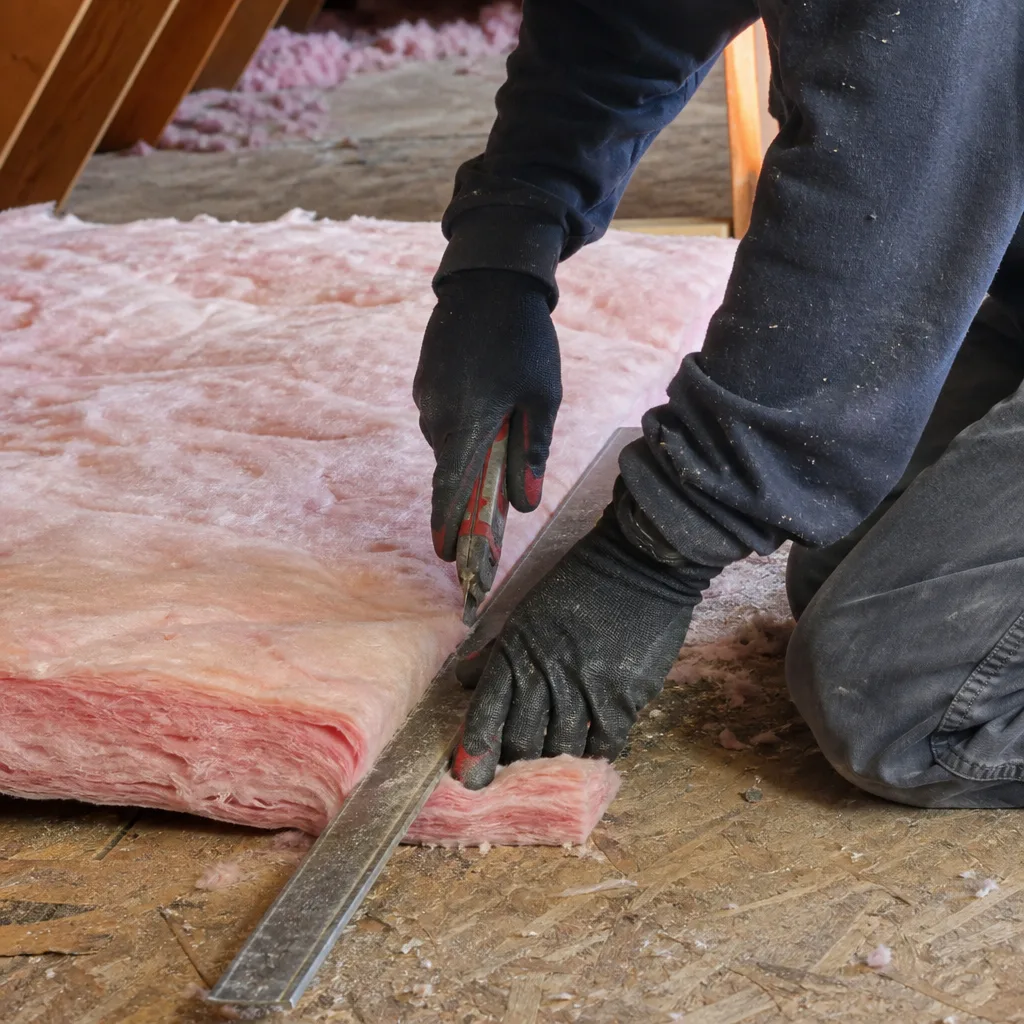
Insulation removal and replacement in Stanford is most often triggered by moisture damage in crawl spaces, rodent contamination in pre-WWII attics, or failed vermiculite installations in mid-century faculty housing. Because Stanford properties are university-owned, contamination events require documented remediation with photo records for Facilities Management files. We remove and replace insulation with written scope, hazardous material protocols when needed, and disposal documentation.
Contaminated Insulation Removal
Signs you need it
Insulation that is discolored, compressed, or emitting odors, or evidence of rodent nesting with associated waste contamination, requires removal before new material can be installed.
What it costs in Stanford
Contaminated insulation removal and disposal in a typical Stanford attic or crawl space runs $2,400-$4,600.
How we do it
We erect containment, use HEPA-filtered extraction equipment, bag waste per California DTSC guidelines, and provide disposal manifests.
Vermiculite & Old Insulation Removal
Signs you need it
Gray-brown, pebbly vermiculite insulation, particularly in homes built 1920-1980, may contain asbestos and requires testing before disturbance.
What it costs in Stanford
Vermiculite removal with asbestos abatement protocol in Stanford ranges $5,500-$11,000 depending on volume and access constraints.
How we do it
We collect samples for laboratory analysis, and if asbestos is present, engage a licensed abatement contractor with Stanford Facilities coordination for containment and air monitoring.
What Insulation Removal & Replacement Costs in Stanford
| Item | Typical range in Stanford |
|---|---|
| Contaminated insulation removal | $2,400 - $4,600 |
| Vermiculite removal (with abatement) | $5,500 - $11,000 |
| Insulation replacement after removal | $2,800 - $6,400 |
Does Stanford Facilities require special documentation for contaminated insulation removal?
Yes. We provide a Documented Photo Record, waste manifest, and written completion scope to both the tenant and Facilities Management for every removal job.
How do I know if my insulation contains asbestos?
We collect bulk samples for PLM analysis; if vermiculite is present, we assume asbestos content until lab results prove otherwise and proceed under abatement protocol.
Attic Air Sealing in Stanford
Attic air sealing in Stanford delivers outsized returns because the foothills microclimate creates pressure differentials between cool marine air and hot valley air that drive infiltration through every unsealed penetration. In mid-century faculty homes with original construction, top plates, can lights, and duct boots are rarely sealed, meaning conditioned air escapes continuously. We perform attic air sealing as a standalone service or as the mandatory first step before any insulation upgrade, with before-and-after blower-door numbers on every job.
Top Plate & Penetration Sealing
Signs you need it
Dust streaks on insulation around wall top plates, or rooms that are consistently colder in winter despite adequate insulation depth, indicate top plate leakage.
What it costs in Stanford
Sealing top plates, wire penetrations, and plumbing stacks in a typical Stanford attic runs $1,600-$3,200.
How we do it
We remove insulation along plate lines, apply fire-rated caulk and foam sealant to all penetrations, then replace insulation with depth markers photographed.
Can Light & Duct Boot Sealing
Signs you need it
Can lights that are hot in summer or cold in winter, or supply ducts that blow conditioned air into the attic instead of the room, signal failed boot seals.
What it costs in Stanford
Sealing can light housings with fire-rated covers and mastic-sealing duct boots in a standard Stanford home costs $1,200-$2,600.
How we do it
We install pre-formed fire-rated enclosures over IC and non-IC can lights, then apply fiber-reinforced mastic to all duct boot connections.
What Attic Air Sealing Costs in Stanford
| Item | Typical range in Stanford |
|---|---|
| Top plate & penetration sealing | $1,600 - $3,200 |
| Can light & duct boot sealing | $1,200 - $2,600 |
| Full attic air sealing package | $2,800 - $5,400 |
Will attic air sealing alone improve my comfort in Stanford?
Yes. Blower-door tests in Stanford homes typically show 25-40% reduction in air leakage from sealing alone, with corresponding temperature uniformity improvements.
Do you seal before adding insulation in Stanford?
Always. Under Haven Standard Clause 1, we never install insulation over an unsealed attic floor; sealing is completed first, verified by blower-door test, then insulation follows.
Wall Insulation in Stanford
Wall insulation in Stanford presents distinct challenges because the housing stock spans pre-WWII faculty homes with no wall cavities, mid-century structures with empty stud bays, and multi-unit complexes where exterior disruption must be minimized. The Inner Quad historic district adds complexity: sandstone and unreinforced masonry walls require vapor-permeable approaches that standard cavity-fill methods cannot accommodate. We install wall insulation using injection foam, dense-pack cellulose, or rigid foam assemblies selected for each wall type and Stanford’s specific moisture dynamics.
Injection Foam Wall Insulation
Signs you need it
Walls that are cold to the touch in winter, or rooms with exterior walls that never reach set temperature despite functioning HVAC, indicate empty or poorly filled stud cavities.
What it costs in Stanford
Injection foam wall insulation for a typical Stanford single-story home runs $4,200-$7,800 depending on cavity count and access.
How we do it
We drill 5/8-inch holes through exterior siding or interior drywall at stud-bay intervals, inject slow-rise foam, then plug and match finish.
Drill & Fill Wall Insulation
Signs you need it
Mid-century homes with original empty stud bays or settled batt insulation that has compressed below effective R-value need dense-fill retrofit.
What it costs in Stanford
Dense-pack cellulose drill-and-fill for a standard Stanford home ranges $3,600-$6,400.
How we do it
We drill access holes, dense-pack GreenFiber cellulose to 3.5 pounds per cubic foot to prevent settling, then seal and finish all penetrations.
What Wall Insulation Costs in Stanford
| Item | Typical range in Stanford |
|---|---|
| Injection foam wall insulation | $4,200 - $7,800 |
| Drill & fill dense-pack cellulose | $3,600 - $6,400 |
| Exterior rigid foam assembly | $8,500 - $14,000 |
Can you insulate historic Inner Quad sandstone walls?
No. Stanford’s Historic Preservation guidelines prohibit cavity injection in original sandstone buildings; we work with Facilities to specify vapor-permeable interior or exterior assemblies that preserve masonry breathability.
Does wall insulation require Stanford Facilities approval?
Yes. All wall insulation in university-owned properties requires written Facilities authorization, and we coordinate our written scope and warranty documentation through their work order system.
Attic Cleaning & Rodent Proofing in Stanford
Attic cleaning and rodent proofing in Stanford addresses a specific pattern: pre-WWII and mid-century faculty homes with mature tree canopy and accessible roof lines provide entry points for roof rats and squirrels, while university maintenance schedules may not prioritize attic inspection. Contaminated insulation, gnawed wiring, and entry gaps at eaves and vents create both health hazards and fire risks. We clean and rodent-proof attics with full decontamination, exclusion sealing, and photo documentation for Facilities Management.
Attic Sanitizing & Decontamination
Signs you need it
Odors from the attic, visible rodent droppings on insulation surfaces, or staining from urine saturation indicate active or recent infestation requiring decontamination.
What it costs in Stanford
Attic sanitizing and decontamination with HEPA vacuuming and enzymatic treatment in a typical Stanford attic runs $1,800-$3,600.
How we do it
We remove contaminated insulation if needed, HEPA-vacuum all surfaces, apply enzyme neutralizer, and provide before-and-after photo documentation.
Rodent Proofing & Exclusion
Signs you need it
Scratching sounds in walls or ceiling, gnaw marks on fascia boards, or daylight visible through eave gaps confirm active entry points that require sealing.
What it costs in Stanford
Rodent proofing with exclusion sealing, vent screening, and entry point closure for a standard Stanford home costs $1,400-$2,800.
How we do it
We inspect roofline, eaves, vents, and utility penetrations, install 1/4-inch hardware cloth over vents, seal gaps with rodent-resistant materials, and photograph all work.
What Attic Cleaning & Rodent Proofing Costs in Stanford
| Item | Typical range in Stanford |
|---|---|
| Attic sanitizing & decontamination | $1,800 - $3,600 |
| Rodent proofing & exclusion | $1,400 - $2,800 |
| Full attic restoration (cleaning + proofing + re-insulation) | $4,200 - $8,500 |
Does Stanford Facilities handle rodent issues or do I call you directly?
Facilities manages pest control for some properties, but attic insulation contamination and entry-point exclusion often fall outside their scope; we coordinate with them for access authorization.
How do you prevent rodents from re-entering after proofing?
We seal all gaps larger than 1/4 inch with rodent-resistant materials, screen vents with hardware cloth, and provide a written exclusion map with photo documentation of every sealed point.
Home Energy Audit in Stanford
Home energy audits in Stanford serve two distinct needs: university tenants seeking documentation to justify Facilities-funded upgrades, and Facilities Management itself requiring baseline data for carbon-neutrality tracking under Stanford Energy System Innovations. The foothills microclimate with its sharp diurnal swings means standard audit protocols may underestimate cooling-load impact if they do not account for rapid afternoon temperature rises. We perform home energy audits with blower-door testing, thermal imaging, and written scope that meets both Title 24 and Stanford’s internal sustainability reporting requirements.
Blower Door Test
Signs you need it
Drafts, uneven temperatures between rooms, or energy bills that exceed comparable Stanford units indicate excessive building envelope leakage measurable by blower door.
What it costs in Stanford
A standalone blower-door test with written report for a typical Stanford home runs $350-$650.
How we do it
We install a calibrated fan in an exterior door, depressurize to 50 Pascals, and measure CFM50 to quantify total envelope leakage with infrared imaging for location.
Thermal Imaging Inspection
Signs you need it
Persistent cold spots, ice damming in winter, or rooms that overheat in afternoon sun suggest insulation gaps or thermal bridges detectable by infrared camera.
What it costs in Stanford
Thermal imaging inspection of walls, ceilings, and foundation in a standard Stanford home costs $400-$750.
How we do it
We scan all building envelope surfaces with a FLIR camera during conditions that maximize delta-T, then annotate images with R-value estimates and remediation priorities.
What Home Energy Audit Costs in Stanford
| Item | Typical range in Stanford |
|---|---|
| Blower door test | $350 - $650 |
| Thermal imaging inspection | $400 - $750 |
| Full home energy audit | $650 - $1,200 |
Will Stanford Facilities accept your energy audit for upgrade approval?
Yes. We format our written reports to Stanford Facilities specifications, including blower-door CFM50, infrared documentation, and prioritized scope with estimated savings.
How long does a full home energy audit take?
A comprehensive audit with blower-door and thermal imaging typically requires three to four hours on site, with the written report delivered within five business days.
Brands We Service in Stanford
We source materials from Owens Corning, Johns Manville, Knauf, Rockwool, CertainTeed, Icynene, Demilec, and GreenFiber, with no proprietary product lock-in. For Stanford jobs, we stock Owens Corning fiberglass and GreenFiber cellulose locally for rapid response, and specify Icynene or Demilec spray foam when assembly conditions require it. See our brands for full specifications.
Pricing for Insulation in Stanford, CA
| Service | Typical range in Stanford |
|---|---|
| Crawl space vapor barrier | $1,800 - $3,500 |
| Crawl space encapsulation | $5,500 - $9,200 |
| Attic radiant barrier foil | $1,400 - $2,800 |
| Radiant barrier roof deck | $2,200 - $4,100 |
| Contaminated insulation removal | $2,400 - $4,600 |
| Vermiculite removal (with abatement) | $5,500 - $11,000 |
| Top plate & penetration sealing | $1,600 - $3,200 |
| Can light & duct boot sealing | $1,200 - $2,600 |
| Injection foam wall insulation | $4,200 - $7,800 |
| Drill & fill dense-pack cellulose | $3,600 - $6,400 |
| Attic sanitizing & decontamination | $1,800 - $3,600 |
| Rodent proofing & exclusion | $1,400 - $2,800 |
Prices in Stanford trend toward the upper end of these ranges for homes near the Stanford Dish with difficult access, for historic properties requiring Facilities coordination, and for jobs needing asbestos abatement protocol. Under Haven Standard Clause 1, every job begins with a flat written price, written scope, and written warranty before anyone lifts a tool.
Neighborhoods We Serve in Stanford
Our crews serve all Stanford neighborhoods with same-day response for urgent moisture or contamination issues, and scheduled appointments for planned upgrades. Dispatch is coordinated from our San Francisco Bay Area office.
- Frenchman’s Hill
- Escondido Village
- Stanford Faculty Ghetto (Galvez Street area)
- Stanford West (VA vicinity)
- Inner Quad (historic district, preservation-coordinated work only)
Service Area - Cities Near Stanford
We serve Stanford and surrounding communities from our San Francisco Bay Area office, with crews regularly dispatched to Palo Alto, CA, Menlo Park, CA, Atherton, CA, and Los Altos, CA. Each city has distinct housing stock, permit requirements, and climate exposures that affect insulation specification.
Serving Stanford, CA - Our Local Coverage Area
We’re based in the Stanford area and know this community well. Use the map below to see our service coverage - if you’re nearby, we can almost certainly help.
FAQs About Insulation in Stanford
Yes. Because virtually all Stanford residential properties are university-owned, tenants cannot directly authorize contractor access. We coordinate with Stanford Facilities Management for written approval, submit our scope and warranty documentation through their work order system, and schedule around academic calendars when possible.
We answer calls with a live person 24/7, and for active moisture or contamination issues in Stanford we typically schedule within 24-48 hours. Same-day response is often available for crawl space flooding or failed vapor barriers.
Yes. Our materials and assemblies comply with California Title 24, and we document blower-door performance improvements that support Stanford Energy System Innovations carbon-neutrality tracking. We provide the written records Facilities needs for their internal sustainability reporting.
Ready for a written price before any work starts? Call (510) 876-4113 for your free estimate. Under Haven Standard Clause 1, you’ll receive a flat price, written scope, and written warranty before anyone lifts a tool, plus a Documented Photo Record when the crew leaves. We’re independently owned and operated under The Haven Standard since 2016, and we’ve sealed and insulated 9,000+ homes with before-and-after blower-door numbers on every applicable job.
What happens when you call
- 1A real person answersNo phone trees - talk to a local insulation pro.
- 2You get an upfront price rangeHonest numbers before anyone is dispatched. No surprises.
- 3A background-checked tech heads outLicensed & insured, typically same-day.
- 4You approve before work beginsNothing starts until you say go.
What Stanford Customers Say
"Two other companies quoted to blow more insulation on top of what was there. These were the only ones who said the existing material had to come out first, and explained why."
- Clifford E."Turned up on time, protected the hallway, and the written scope matched what was actually done."
- Bruno S."They air-sealed the attic floor before insulating and showed me the blower-door number before and after. The upstairs is finally the same temperature as downstairs."
- Marisol D.