
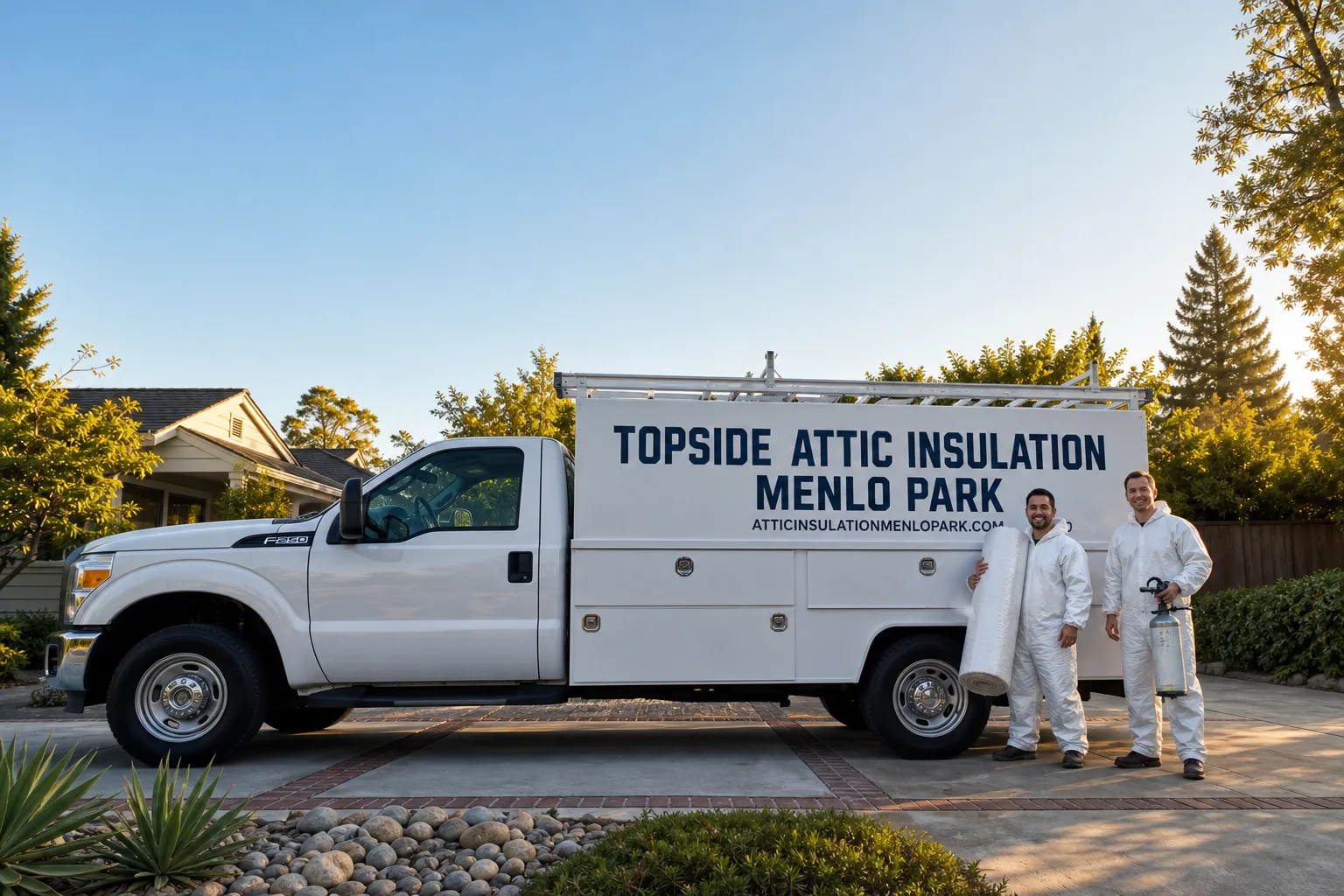
How Much Does Radiant Barrier Installation Cost in Menlo Park?
Radiant Barrier Installation services in Menlo Park, CA typically run between $1,400 and $3,200 for a standard single-story home, with most jobs landing around $1,800 to $2,400 when the attic is accessible and the existing insulation doesn’t need to come out first. That range covers labor, the foil-based barrier material itself, and the documented photo record you receive when the crew leaves.
Menlo Park’s climate sits in a mild coastal-influenced zone, but summer afternoons on the inland side of town – Willowbrook, Belle Haven, and areas east of US-101 – see attic temperatures that regularly climb above 140°F on a clear July day. A properly installed radiant barrier cuts that radiant heat load by 25 to 40 percent, which translates to a measurable drop in cooling demand before you ever touch the thermostat setting.
Radiant Barrier Installation Cost Breakdown (2026)
Radiant barriers – reflective foil laminate sheets or spray-applied coatings that block infrared heat from entering the living space – are priced based on square footage of attic floor area, accessibility, and whether attic air sealing needs to happen first. At Envelope Insulation Co., air sealing is a hard prerequisite, not an upsell. We seal top plates, can-light penetrations, and HVAC chases before any barrier goes up, because a radiant barrier over an unsealed attic floor still leaks conditioned air.
Here is how the numbers break down for the Menlo Park market in 2026:
| Line Item | Typical Range (Menlo Park, 2026) | Notes |
|---|---|---|
| Radiant barrier material (foil laminate, staple-up) | $0.25 – $0.55 per sq ft | Single-sided vs. double-sided reflective; perforated preferred in humid microclimates |
| Labor – standard accessible attic | $0.80 – $1.40 per sq ft | Walk-up or pull-down attic with 30″+ clearance |
| Labor – low-pitch or cramped attic | $1.40 – $2.20 per sq ft | Common in older Menlo Park ranch homes in Midtown and Felton Gables |
| Attic air sealing (prerequisite) | $650 – $1,500 | Top plates, can lights, plumbing penetrations; blower-door verified |
| Insulation removal (if required) | $1.00 – $2.00 per sq ft | Old fiberglass batt or blown cellulose that must clear before barrier goes on rafters |
| Spray-applied radiant coating (alternative to foil) | $0.90 – $1.60 per sq ft | Useful in attics with complex framing; lower emissivity than foil, but faster install |
| Whole-project total, 1,200 sq ft attic | $1,400 – $2,600 | Air sealing included; no removal needed |
| Whole-project total, 2,000 sq ft attic | $2,100 – $3,800 | Air sealing included; assumes standard access |
| Whole-project total with removal | $3,200 – $5,500 | Older Menlo Park homes with degraded or contaminated original insulation |
Those figures assume a written, flat price delivered before anyone starts work – that is not a policy we bend. Under Haven Standard Clause 1, you receive a written scope and written price before our technicians lift a single staple gun. No surprises on the invoice.
What Pushes the Price Up
The biggest cost drivers are attic access and the condition of whatever is already up there. A 1950s ranch in Menlo Park’s Allied Arts neighborhood often has a low-slope roof with 18 to 22 inches of clearance at the peak – that is a crawl job, not a walk job, and the labor rate reflects it. Homes near the Caltrain corridor in downtown Menlo Park sometimes have original blown vermiculite or degraded kraft-faced batts that need full removal and proper disposal before any new work begins, which adds a disposal and labor line.
On the material side, double-sided reinforced foil with a woven scrim costs more than single-sided poly-backed foil, but it holds up better in attics where HVAC technicians need to walk through periodically. For most Menlo Park homes, perforated foil is the better call: the small perforations allow moisture vapor to pass through rather than trapping it against the roof deck, which matters in the wetter months when Bay Area marine layer pushes interior humidity up.
What Pulls the Price Down
If your attic is tall, clear, and already air-sealed from a previous project, installation costs drop significantly. Combining a radiant barrier installation with existing insulation work or an attic cleaning on the same crew visit also reduces mobilization costs. And if you bring us a written estimate from another contractor, we will read it with you at no charge – that is our Free Second Opinion, and it exists specifically so you understand what you are comparing before you commit.
What Affects Radiant Barrier Installation Pricing in Menlo Park
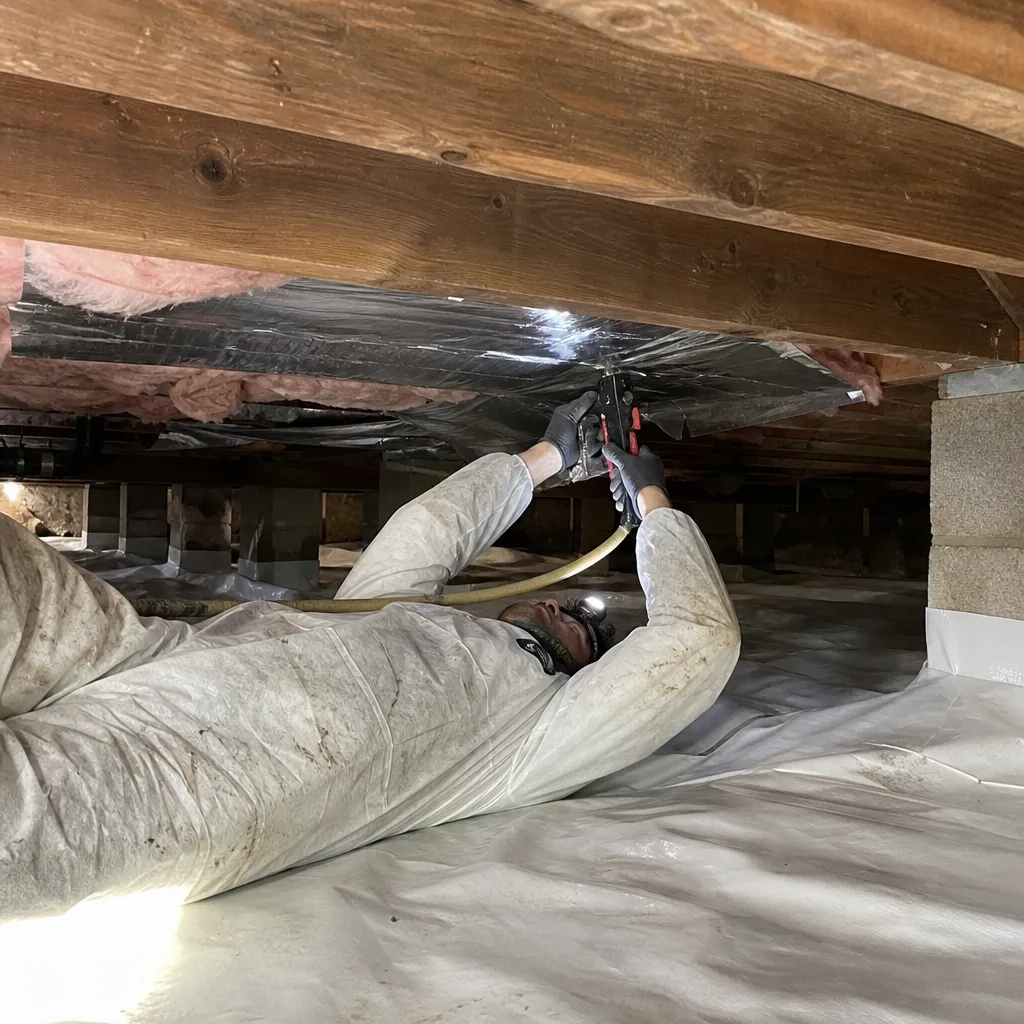
- Attic square footage and geometry: This is the most straightforward variable. A 1,000 sq ft footprint costs less than a 2,500 sq ft footprint. But geometry matters as much as size – Menlo Park’s post-war tract homes in Lorelei Manor often have segmented attics divided by fire blocking that require separate access points and more repositioning time per square foot than an open gable attic.
- Roof pitch and clearance height: Steeper roofs give more headroom and faster installation. Low-pitched hip roofs – common on 1960s contemporaries throughout Menlo Park’s Park Forest neighborhood – force technicians to work on knees or elbows in low zones, which is both slower and physically harder. Expect a labor premium of 40 to 60 percent on clearances under 24 inches.
- Existing insulation condition and depth: If you have adequate, clean insulation on the attic floor, the radiant barrier goes up on the rafters above it and no removal is needed. If the existing insulation is compressed, moisture-damaged, or contaminated with rodent debris – a situation we encounter regularly in older homes near Flood Park – removal is a prerequisite, not optional.
- Air sealing status: We will not install a radiant barrier over an unsealed attic floor. If the air sealing work has not been done, it gets done first, and that adds to the project cost. The reason is simple: a radiant barrier reduces radiant heat transfer but does nothing for the conditioned air escaping through gaps. Both problems need solving, and solving radiant heat while ignoring air leakage produces a fraction of the energy benefit you paid for.
- Foil type and installation method: Staple-up foil on the rafters is the standard and generally least expensive method. Drape-and-staple on roof decking costs more in labor because it requires careful fitting around rafters and blocking. Spray-applied coatings are priced per square foot and require different equipment but can be faster in unusually complex attics. We stock materials from established manufacturers – Owens Corning, Johns Manville, and others – and match the product to the job rather than defaulting to a single option.
- Local permit requirements: In Menlo Park, radiant barrier installation on its own typically does not require a building permit under the 2022 California Residential Code as locally adopted by San Mateo County – but if you are pairing it with new electrical work in the attic or a full re-insulation project, permit requirements can change. We handle the permit research upfront so you are not discovering a compliance issue after the fact.
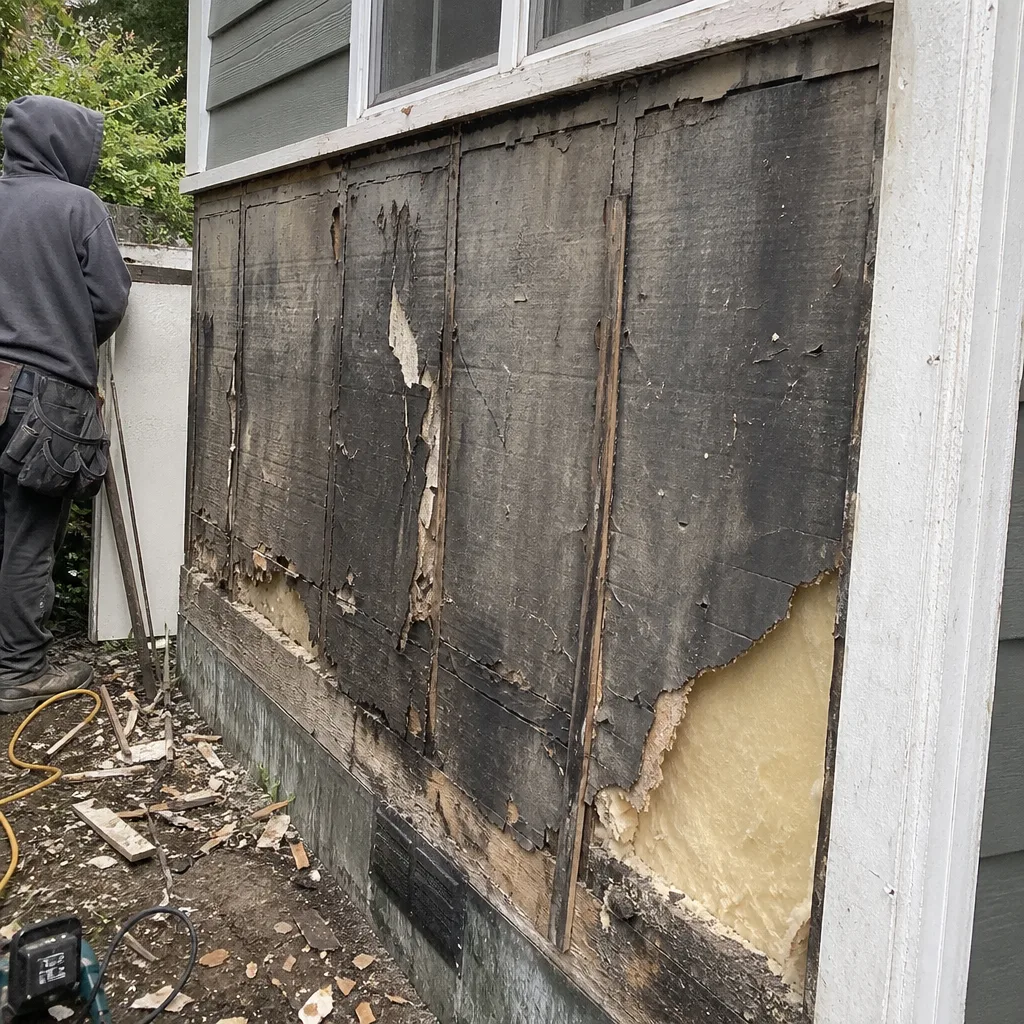 Before
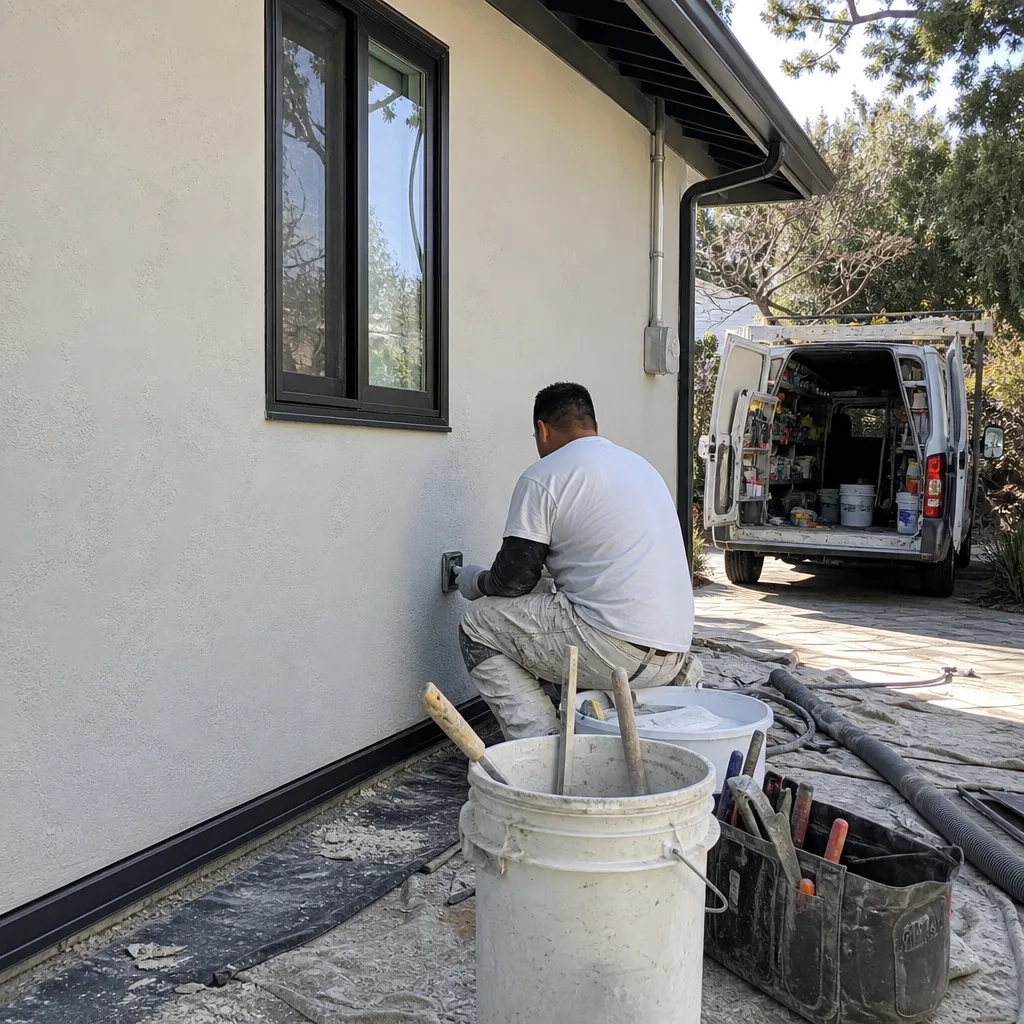 After
AfterHow to Save on Radiant Barrier Installation in Menlo Park
Bundle the Work When the Crew Is Already Up There
The single most practical way to reduce total cost is to combine the radiant barrier installation with other attic work scheduled at the same time. If you are already having existing insulation upgraded, or if an attic cleaning and rodent proofing job is on your list, the mobilization cost – getting a crew to Menlo Park, setting up equipment, staging materials – is shared across a larger scope. That commonly saves $300 to $600 compared to scheduling the same tasks as separate visits.
Get the Air Sealing Done Before the Estimate, Not After
If you have had attic air sealing done in the past five years and have documentation, share it with us when you call for an estimate at (510) 876-4113. If your air barrier is already solid, that is a significant line item that comes off the project. If you are not sure, we can verify it during the initial assessment – and the blower-door test reading gives you a baseline number rather than a guess.
Check for Utility Rebates and State Programs
PG&E’s energy efficiency rebate programs have historically covered radiant barrier installation in California, and the state’s TECH Clean California initiative has at various points included building-envelope improvements. Rebate availability changes year to year, and the specific eligibility rules for Menlo Park residents depend on your current insulation levels and utility account type. We will tell you what documentation you need to submit and what we can supply from our end – the Documented Photo Record we provide on every job is exactly what most utility programs require as proof of installation.
Use the Free Second Opinion
If you have a written estimate from another Menlo Park contractor, bring it to us. We will read through it with you line by line – material specs, square footage assumptions, what is and is not included – and give you an honest read on whether it is priced correctly for this market. There is no charge for that review, and no pressure to switch. It is part of the Free Second Opinion we offer because a homeowner who understands the estimate makes a better decision, regardless of which contractor they choose.
Don’t Over-Spec the Material
Double-sided reinforced foil is more durable, but for an attic that does not receive regular foot traffic, single-sided perforated foil performs essentially the same in terms of radiant heat rejection. The reflectivity values are comparable; the difference is mechanical durability. For most Menlo Park homeowners whose attics are accessed once or twice a year for HVAC maintenance, the less expensive material is the right call.
Time the Project Strategically
Demand for attic work in Menlo Park peaks in late spring – April through June – when homeowners start thinking about summer heat before it arrives. Scheduling in late winter or early fall typically means shorter lead times and occasionally better availability for bundled crews. This is not urgency theatre. It is a practical reality that scheduling during lower-demand windows often moves faster.
Is a Radiant Barrier Worth It in Menlo Park’s Climate?
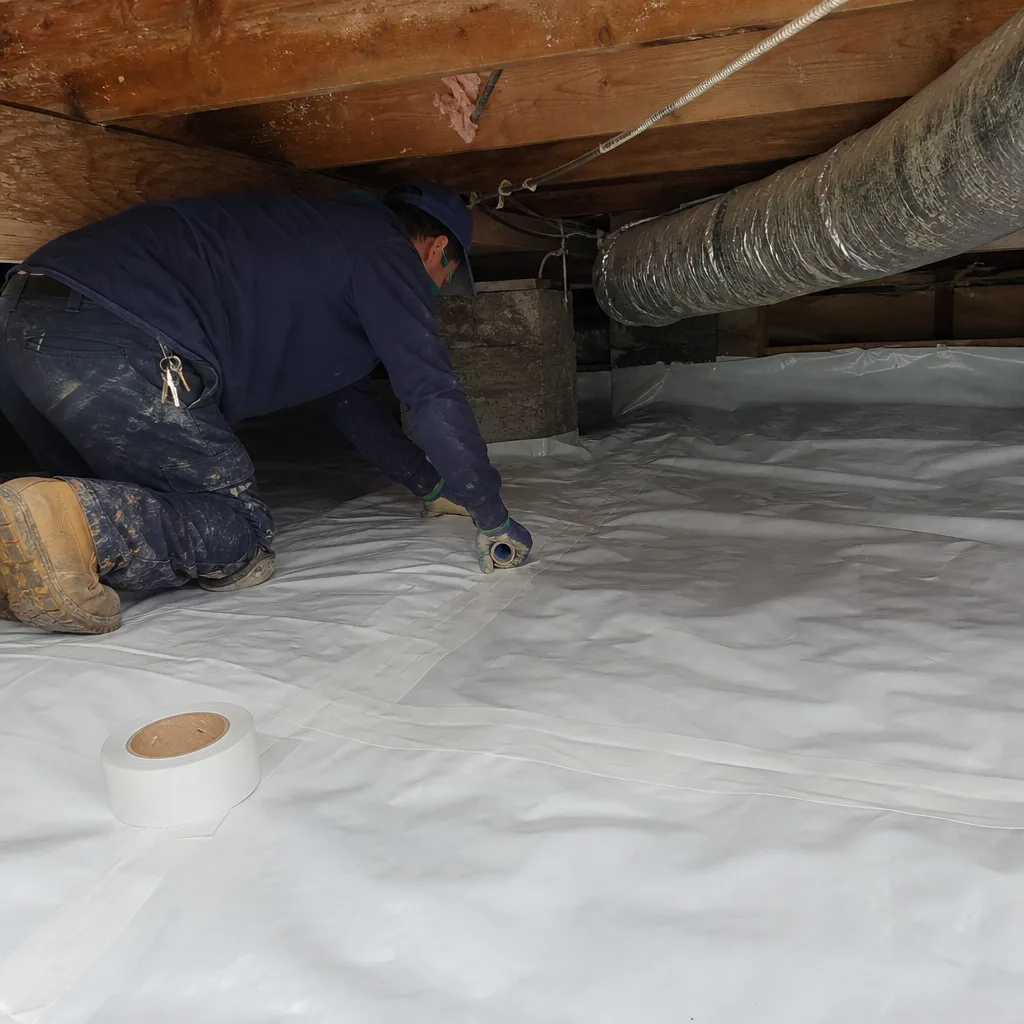
Menlo Park sits in a zone where the climate argument for radiant barriers is more nuanced than, say, Sacramento or Fresno. Average summer highs in Menlo Park run in the high 70s to mid-80s – modest compared to the Central Valley – and marine influence keeps many summer nights cool. That said, the inland neighborhoods east of El Camino Real, particularly in Belle Haven and the areas around Willow Road, see meaningfully higher summer temperatures than the tree-shaded older neighborhoods near downtown. Heat islands from paved commercial corridors also affect radiative heat gain on south-facing and west-facing roof planes.
For a home in those inland Menlo Park neighborhoods with a dark-colored roof, poor attic ventilation, and a two-ton AC system that short-cycles all afternoon, a radiant barrier is worth the investment. For a home in the cooler, heavily treed Menlo Park neighborhoods near the Stanford border, the payback period is longer. We will give you our honest assessment of which category your home falls into when we look at it – not because it is in our interest to upsell or undersell, but because a properly scoped project that actually performs is the only kind that earns a documented result worth showing you.
The before-and-after blower-door numbers we publish on applicable jobs are not a marketing gimmick. They are a pressurization measurement – CFM50, cubic feet per minute at 50 pascals of pressure – that shows in one figure how much conditioned air your building envelope was losing before we worked and how much it loses after. You see the number. You verify the result. That is the standard we operate under.
What the Installation Process Looks Like
When you schedule a radiant barrier installation with us in Menlo Park, the process follows a consistent sequence under the Haven Standard.
First, a technician visits the home, inspects the attic – clearance, current insulation condition, ventilation path, air sealing status – and produces a written scope with a flat price. That price is what you pay. There is no “estimate subject to change once we open things up.” If we find a condition during the job that changes the scope materially, we stop and discuss it with you before proceeding. Under Haven Standard: Have it in writing, you receive that written scope before any work begins.
Second, if the attic floor is not already air-sealed, that work gets done first. Top plates get foam and caulk. Can-light penetrations get sealed with code-compliant covers or foam. HVAC chases and plumbing penetrations are addressed. On applicable jobs, a blower-door test – a pressurization reading using a calibrated fan mounted in an exterior doorway – gives us the before number.
Third, the radiant barrier goes up. For staple-up foil on rafters, we work from the peak toward the eaves, leaving a 2-inch gap at the ridge for ventilation continuity and allowing the perforations to face down toward the attic floor so any condensation vapor can pass through rather than accumulating against the decking. For spray-applied coating jobs, the attic is clear of technicians during application and cure time.
Fourth, you receive the Documented Photo Record – images of the attic before work, during critical stages, and after completion. On air-sealed jobs, you also get the before and after blower-door readings. That documentation is yours. It is useful for permit files, insurance purposes, and future home sale disclosures. We do not treat it as proprietary.
Radiant Barrier vs. Added Attic Insulation: Which Should You Do First in Menlo Park?
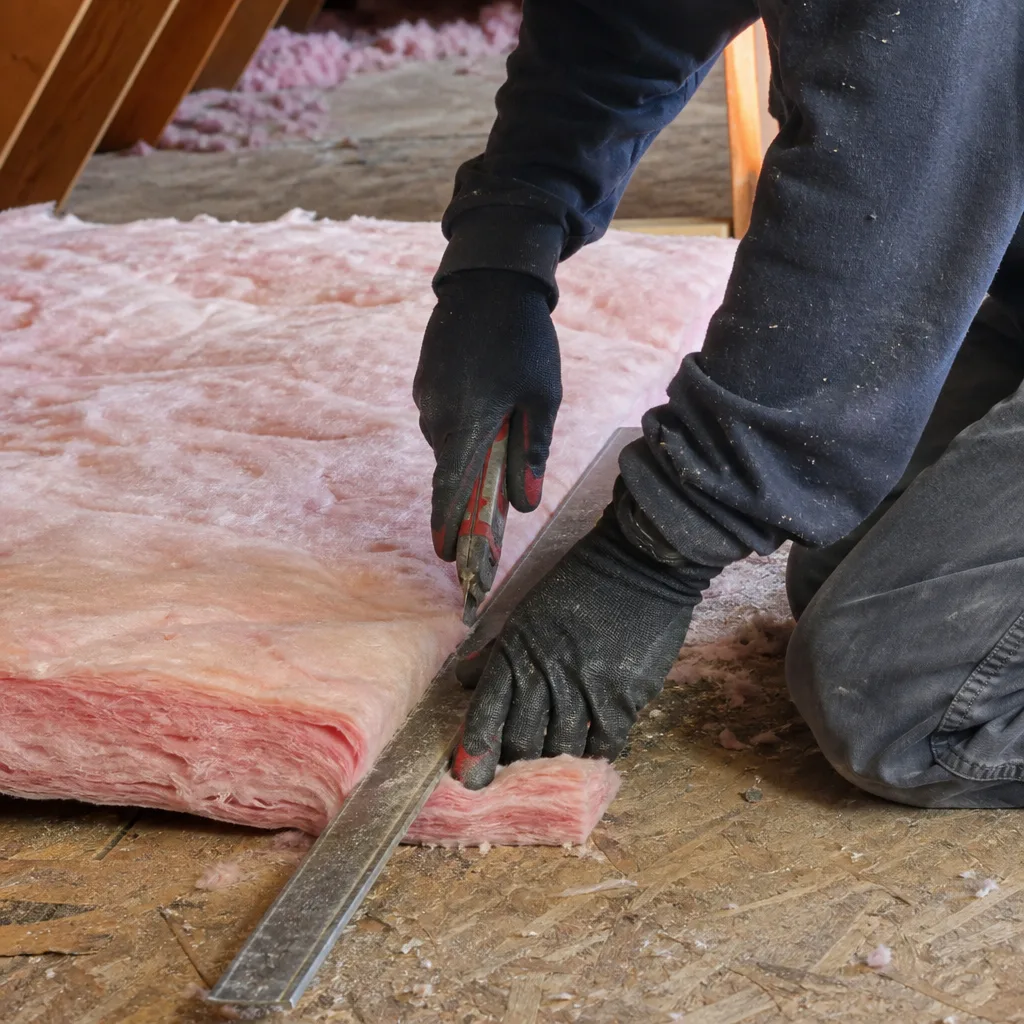
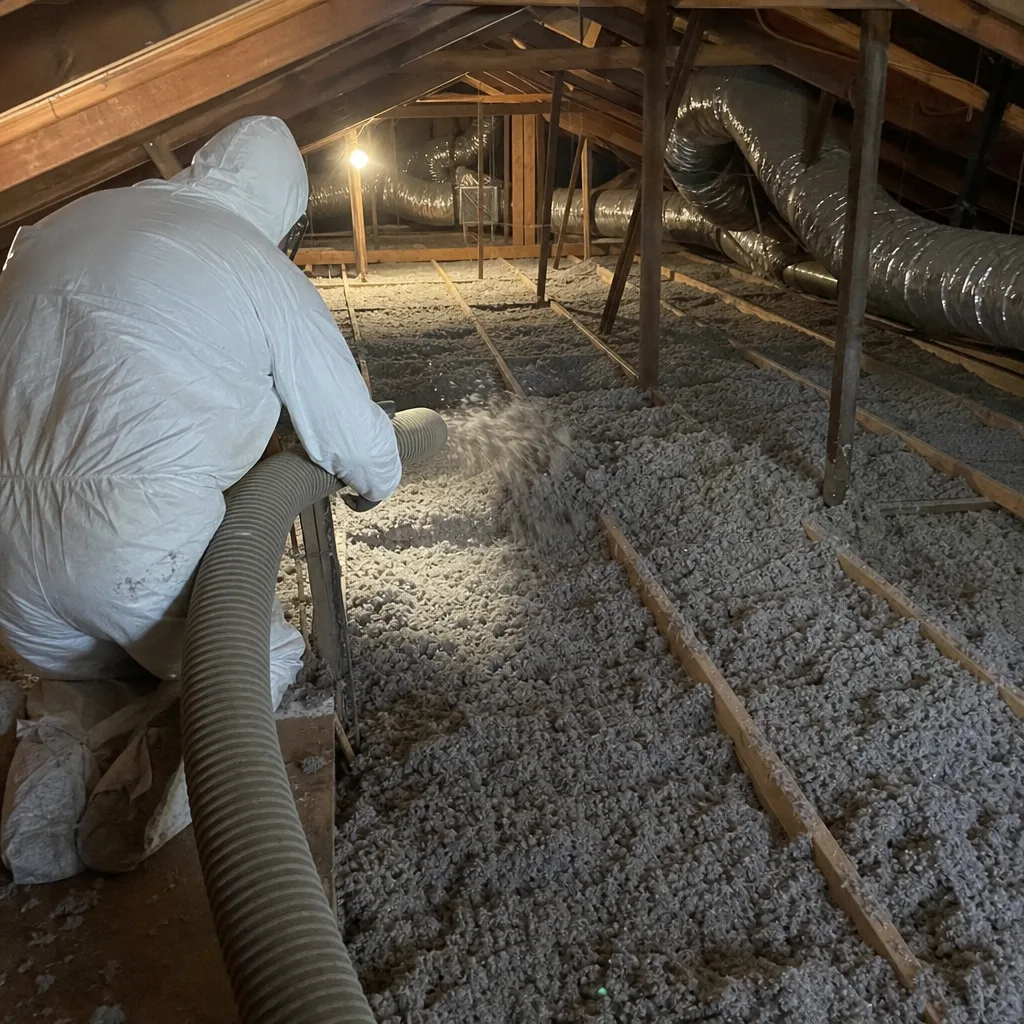
This question comes up often for Menlo Park homeowners whose attics have both a heat-gain problem and an insulation-depth problem. The short answer is: air sealing first, then insulation to the right R-value, then radiant barrier if heat gain is still a documented issue.
Here is why. Attic insulation – blown-in fiberglass or cellulose at R-38 to R-60 for the California climate zone that includes Menlo Park – addresses conductive heat transfer. The insulation slows heat from moving through the ceiling assembly by conduction. A radiant barrier addresses radiant heat transfer – the infrared energy your roof deck radiates downward into the attic space before it even reaches the insulation. Both problems exist; they just work differently.
In practice, a home with only R-19 of old compressed fiberglass batts and no radiant barrier benefits more from bringing the insulation up to current California Title 24 standards first. A home that already has R-49 blown-in insulation and is still seeing high attic temperatures is a stronger candidate for a radiant barrier, because the conductive path is already addressed and radiant gain is the remaining bottleneck.
We will tell you which situation you are actually in. If you are comparing this to what a competing estimate tells you, bring that written estimate and we will review it together.
For a fuller picture of the services available in this area, you can start on our home page or go directly to the Radiant Barrier Installation in Menlo Park service page for a complete scope overview.
FAQs – Radiant Barrier Installation Cost in Menlo Park
How much does radiant barrier installation cost in Menlo Park in 2026?
Radiant barrier installation in Menlo Park runs between $1,400 and $3,800 for most single-family homes, depending on attic size, access difficulty, and whether attic air sealing is included. A typical 1,500 sq ft attic with standard walk-up access and air sealing included comes in around $1,800 to $2,600. Call (510) 876-4113 for a written estimate tied to your actual attic dimensions – not a ballpark over the phone.
Is it cheaper to install a radiant barrier myself?
DIY radiant barrier kits run $200 to $600 in materials for an average Menlo Park attic, but the labor involved is substantial – working in a hot, cramped space, stapling foil accurately without leaving gaps or blocking ridge ventilation, and doing it without disturbing existing insulation. Beyond physical difficulty, improperly installed foil that blocks soffit-to-ridge airflow can trap heat and moisture against the roof deck, which causes sheathing damage that costs significantly more than the installation savings. We are not going to tell you it is impossible to do yourself. We will tell you that a job where the foil is installed with consistent 2-inch ridge gaps, proper soffit clearance, and verified ventilation continuity performs materially better than one where it is not.
Does a radiant barrier reduce energy bills in Menlo Park’s climate?
For homes in the warmer inland parts of Menlo Park – Belle Haven, the blocks east of US-101, and areas with south or west roof exposure – documented cooling load reductions of 15 to 25 percent are realistic following a proper installation. For homes in cooler, more heavily shaded neighborhoods near the Stanford foothills, the measurable impact is smaller, and we will say so honestly. The payback period in Menlo Park’s mild climate is typically 5 to 9 years, longer than in hotter inland California markets.
Do I need a permit for radiant barrier installation in Menlo Park?
In most cases, no. Standalone radiant barrier installation in Menlo Park does not require a building permit under the currently adopted California Residential Code at the San Mateo County level. If the project includes new electrical work, rerouted HVAC, or is combined with a full re-insulation that triggers Title 24 compliance documentation, permit requirements can apply. We verify the permit question for your specific project during the initial assessment – you get a clear answer before any work is scoped, not after.
How long does radiant barrier installation take in Menlo Park?
Most radiant barrier installations in Menlo Park are completed in one day. A 1,200 to 1,500 sq ft attic with standard access and air sealing already in place typically takes 4 to 6 hours. Add attic air sealing to the scope and the job runs 6 to 8 hours. Attics requiring prior insulation removal extend to a full day or occasionally a morning-plus-return depending on disposal logistics. The written scope you receive before work starts will include a time estimate so you know what to plan for.
What is the difference between staple-up foil and spray-applied radiant coating?
Staple-up foil laminate – installed on the underside of roof rafters facing down into the attic – reflects 95 to 97 percent of radiant heat and is the standard method for most Menlo Park homes. It is the higher-performing option when installed with proper air gaps. Spray-applied radiant coatings are painted or rolled directly onto the roof deck surface and reflect 75 to 85 percent of radiant heat. They cost more per square foot in labor but are faster to apply in attics with complex framing, dormers, or very low clearances where stapling foil in long runs is impractical. We specify which method we are recommending and why in the written scope before the job starts.
Key Takeaways
- Radiant barrier installation in Menlo Park costs $1,400 to $3,800 for most single-family homes in 2026, with air sealing included as a prerequisite.
- Attic size, clearance height, existing insulation condition, and foil type are the four biggest cost variables.
- Homes in Belle Haven, Willowbrook, and east-of-101 Menlo Park neighborhoods see higher radiant heat gain and stronger payback from barrier installation than the cooler western neighborhoods.
- Air sealing is completed before any barrier goes in – always. A radiant barrier over an unsealed attic floor leaves the air-leakage problem fully intact.
- You receive a written price before any work starts, a Documented Photo Record when the crew leaves, and before-and-after blower-door readings on applicable jobs.
- The 365-Day Done Right Promise applies to every completed installation – if it is not right, we make it right.
- A Free Second Opinion on any written estimate is available at no charge – bring us a competing quote and we will read it with you.
Get a Written Estimate for Your Menlo Park Home
If you want a flat price tied to your actual attic – not a range pulled from a website – call (510) 876-4113. A live person answers, not a voicemail. We will schedule a time that works, send you a named technician with a text when they are on the way, and leave you with a written scope and written price the same day. No work starts until you have that in hand.
Wes Okafor leads the team at Envelope Insulation Co., and every project we take on in Menlo Park goes out under the same Haven Standard that has governed our work since 2016: sealed first, then insulated, documented throughout, and backed by a written warranty before anyone starts. Over 9,000 homes sealed and insulated since that year – every one of them with a written price before the first tool came out of the van.
Call (510) 876-4113 to schedule your free radiant barrier assessment. If you already have a written estimate from another Menlo Park contractor, bring it. We will review it with you at no charge.
Written by Wes Okafor, Owner at Topside Attic Insulation Menlo Park, serving Menlo Park, CA since 2016.
Pricing reflects the Menlo Park market as of 2026. Topside Attic Insulation Menlo Park offers free estimates – call (510) 876-4113.
What Our Customers Say
"Two other companies quoted to blow more insulation on top of what was there. These were the only ones who said the existing material had to come out first, and explained why."
- Clifford E."Turned up on time, protected the hallway, and the written scope matched what was actually done."
- Bruno S."They air-sealed the attic floor before insulating and showed me the blower-door number before and after. The upstairs is finally the same temperature as downstairs."
- Marisol D.